
The National Security Agency is undertaking a fast and far-reaching reorganization in a bid to get the unique intelligence it gathers to real-world battlefields faster, according to multiple sources familiar with the matter.
In place of existing directorates, the largest electronic spy agency in the world will be recast into five “mission centers” devoted to China, cybersecurity, artificial intelligence, combat support and global intelligence, these people, who spoke on the condition of anonymity, told Recorded Future News.
The Washington Post first reported the ongoing rearrangement.
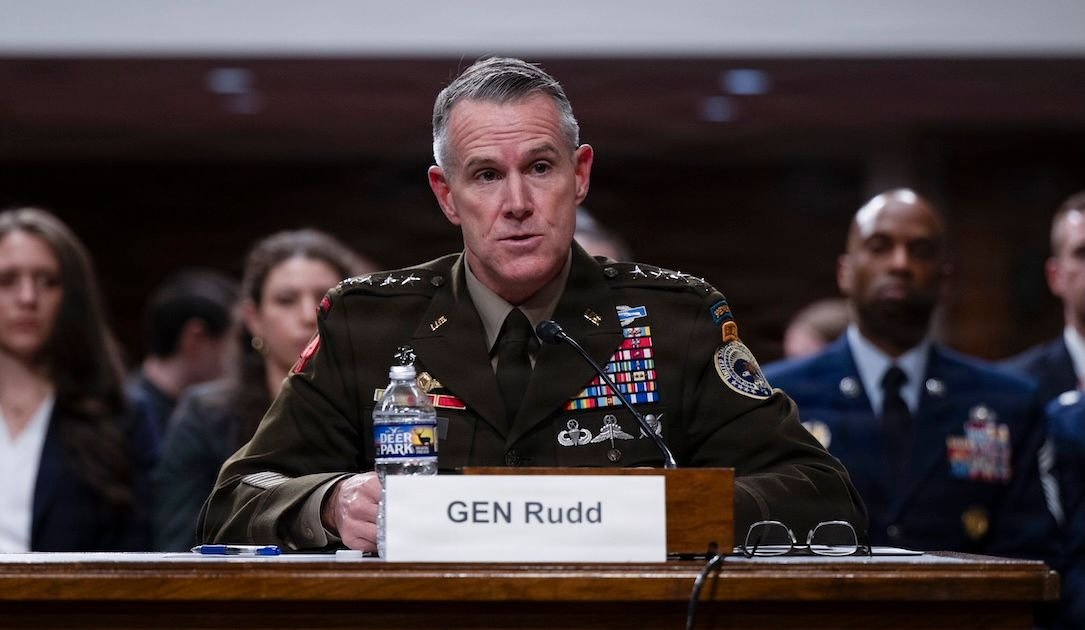
Army Gen. Joshua Rudd, who heads both the NSA and U.S. Cyber Command, shared the changes to the spy agency’s workforce earlier this month, starting a 30-day clock to implement them.
However, some major details have yet to be worked out. For instance, while the elite hacking group known as Tailored Access Operations — which was originally created in the 1990s and was recently resurrected — is expected to be placed under global intelligence, it’s unclear what will happen to other NSA organizations that have cropped up in recent years, such as Cybersecurity Collaboration Center.
It is also hazy how the reorganization will change the NSA’s relationship with Cyber Command. The two entities share resources, and a campus, at Fort Meade, Maryland.
Both a current and a former agency official said Rudd and NSA Deputy Director Tim Kosiba are aware that the rapid realignment will “break things” within the organization’s often slow-moving bureaucracy and will have to adjust on the fly.
Each new mission center will feature its own chief. Some of the names, including the new head of AI, have been selected and could be announced, at least internally, as soon as Monday, according to sources.
The five new bodies are expected to meet “full operational capability,” a military term meaning each can fulfill its required missions, by January, a former NSA official said.
The agency last undertook a restructuring of this scope roughly a decade ago. That effort, dubbed “NSA21,” sought to meld its offensive and defensive organizations. Years later, the reshuffle triggers frustration and anger among both current and former officials, who consider it a failure that created more bureaucratic confusion within the NSA.
Another reorganization, known as “EVO25,” was begun around the start of the second Trump administration. But that plan, which would have consolidated the agency’s offices, was considered by many as a way to avoid having a scheme imposed on the NSA by the U.S. DOGE Service and was ultimately abandoned.
In his second confirmation hearing in January before the Senate Intelligence Committee, Rudd, who served for decades in Special Forces, said that his “first priority is speed.”
“Second one is scale, the next one is innovation and then integration. We’ve got to move as fast as we can to ensure that we’ve got the right technologies, the right capabilities and [be] able to generate multiple options,” according to Rudd, who was eventually confirmed to the dual-hat role in March.
Rudd’s view to get the intelligence gleaned by the NSA pushed out to its military customers more quickly is shared by the rest of his leadership team, including Kosiba and Executive Director Darren Turner, according to multiple sources.
The NSA did not respond to a request for comment.



