
Regardless of how close the United States and Iran really are to a durable peace agreement, or what the exact conditions of it will be, the war’s disruptions to global energy markets are all but guaranteed to persist for months, likely into next year.
The lingering challenges for the oil and natural gas markets (and a host of other commodities, from helium to fertilizer) boil down to three main issues: flows, stocks, and production. The region won’t produce as much energy as it did before the war. It will take ages to get what oil and gas is there to start flowing to global markets again. And the sheer size of the cumulative disruption to energy markets has baked in months of continued pain, no matter what kind of near-term agreement is reached.
Regardless of how close the United States and Iran really are to a durable peace agreement, or what the exact conditions of it will be, the war’s disruptions to global energy markets are all but guaranteed to persist for months, likely into next year.
The lingering challenges for the oil and natural gas markets (and a host of other commodities, from helium to fertilizer) boil down to three main issues: flows, stocks, and production. The region won’t produce as much energy as it did before the war. It will take ages to get what oil and gas is there to start flowing to global markets again. And the sheer size of the cumulative disruption to energy markets has baked in months of continued pain, no matter what kind of near-term agreement is reached.
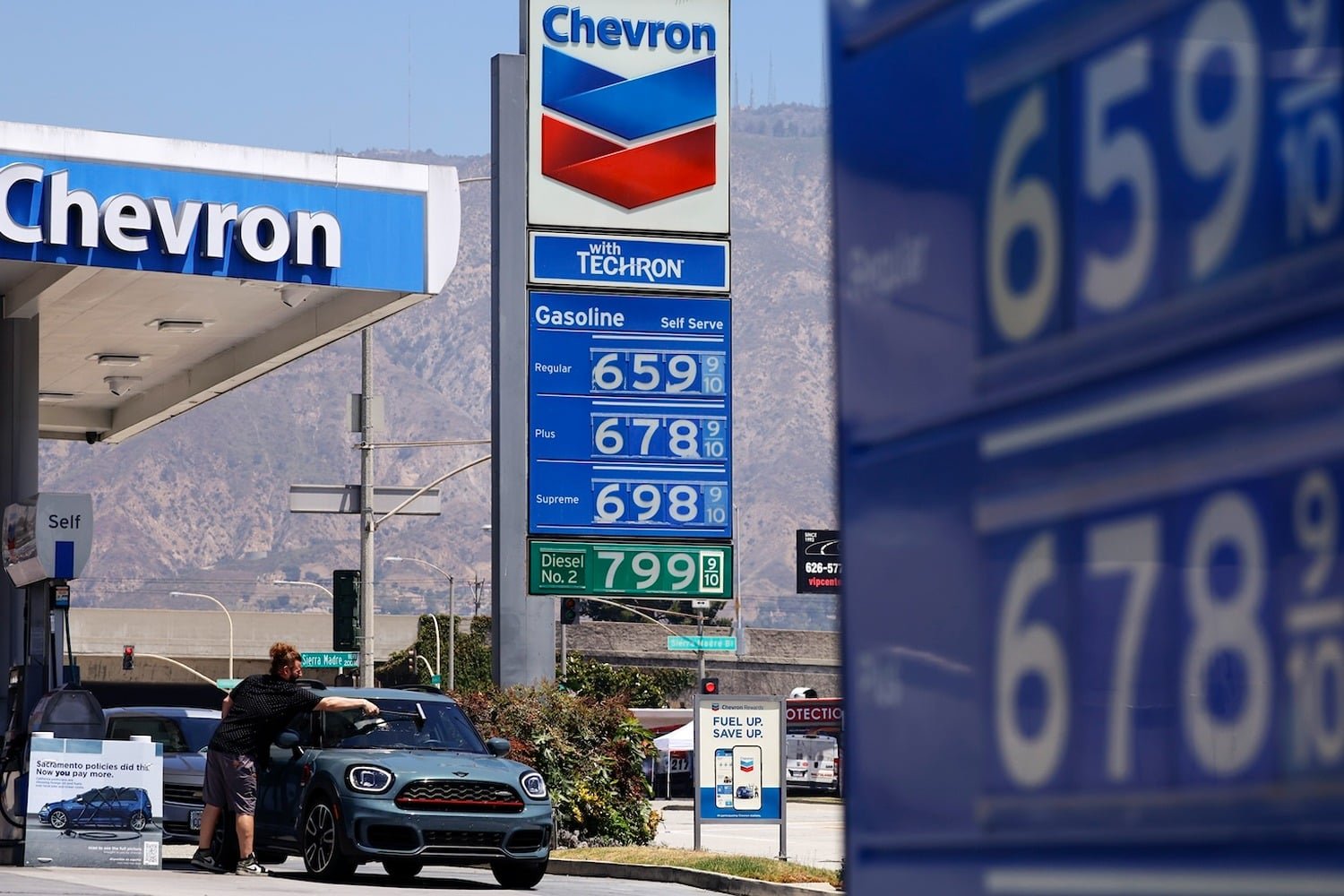
In practical terms, that likely means that oil and gas prices will continue to increase over the summer—not suddenly plummet as the Trump administration has predicted. As the head of Chevron said this week, the lack of shock absorbers remaining in the global energy system will spell rising prices through the peak driving season. That industry outlook contrasts with the sanguine approach still taken by oil traders, who have pushed the benchmark price of crude oil steadily lower in the hopes of a U.S.-Iran deal.
“Navigating this process [of opening the Strait of Hormuz] will take months if everything goes smoothly. An interim deal could turn a trickle [of exports] into a stream. In the meantime, energy flows through the strait will remain severely constrained. The world will have no choice but to exhaust fast depleting inventories—ending prices higher,” said Matthew Reed, the vice president of Foreign Reports, an energy consultancy specializing in the Middle East.
Reopening the Strait of Hormuz, which was fully open before U.S. President Donald Trump began the Iran war in late February, is the United States’ main impetus for an interim deal, even as both sides continue to bicker over larger issues such as Iran’s enriched uranium and support for regional proxies. But even getting to an agreement on the strait is proving wildly challenging.
The first and perhaps biggest question is whether Iran will try to maintain some degree of control over the transit of vessels through the strait, as it has since early in the conflict, including with a system of “tolls” and concerted passage for certain ships. Iran has insisted that the future strait regime will be different than in the past; the United States, and reporting about the draft agreement this week, said that the strait will return to a completely unfettered state.
But it seems apparent to many experts, including former U.S. government officials, that there is little chance of a return to a completely free Strait of Hormuz, now that Iran has discovered its single biggest element of leverage. If the postwar strait regime does include some sort of discrimination, either through tolls, fees, or simply differentiated treatment to transiting vessels, many big exports in the region are likely to limit the amount of oil and gas they ship through the narrow waterway.
“In such a multi-tier system, trade flows are likely to become more volatile, resulting in much higher oil market volatility,” the Oxford Institute for Energy Studies said in a recent report.
The head of the United Arab Emirates’ state oil company said earlier this month that full flows through the strait—formerly well above 100 ships per day—would not return until the first part of 2027.
In any event, there remains the sheer element of physical risk. It’s not clear how many mines Iran may have deployed in the strait or what the timetable would be to clear them. The latest draft agreement would reportedly require Iran to clear all mines in 30 days, but neither Trump nor Iran’s leadership has signed off on the deal yet, and its terms could very well change before they do. Elements of the Iranian regime have also shown willingness to continue targeting ships that have attempted to transit the strait outside of their own system of control. That adds up to continued elevated costs for maritime insurance, higher freight rates, and a lot of hesitance by shipping companies to run any gauntlet.
“To return, they need to believe the strait will stay open. Is an interim deal good enough when it could be a weekslong voyage? Each shipper will have to decide for themselves. All of them have different risk tolerance levels,” Reed said.
Read More
Chairman of the Joint Chiefs of Staff Gen. Dan Caine speaks as he displays a map showing the U.S. Navy’s blockade of the Strait of Hormuz during a press briefing at the Pentagon in Arlington, Virginia. Chairman of the Joint Chiefs of Staff Gen. Dan Caine speaks as he displays a map showing the U.S. Navy’s blockade of the Strait of Hormuz during a press briefing at the Pentagon in Arlington, Virginia. Of Course It’s a War
Trump’s legal evasion regarding Iran reveals the rotten state of constitutional war powers.

A Greek-flagged crude oil tanker seen off the coast of the Syrian Baniyas port refinery, along the Mediterranean Sea. A Greek-flagged crude oil tanker seen off the coast of the Syrian Baniyas port refinery, along the Mediterranean Sea. Why Iran Isn’t Blinking Yet
Trump’s blockade aims to force damaging shutdowns at Iranian oil fields. But Tehran has been through this before.
U.S. President Donald Trump prays during a roundtable discussion with Latino community leaders at Trump National Doral Miami resort in Miami, Florida, on October 22, 2024. U.S. President Donald Trump prays during a roundtable discussion with Latino community leaders at Trump National Doral Miami resort in Miami, Florida, on October 22, 2024. Trump Should Just Admit He Screwed Up
The Iran war was obviously a mistake. Why not say so?


Another big question affecting the duration of the disruption is how much oil and gas will be produced to fill up those tankers, if and when they return.
During the war, around 13 million barrels a day of oil production came offline, as export outlets were mostly closed. Even in a best-case scenario, restoring those oil fields to prewar production levels will take time, but the scale and duration of the outage has raised questions about possible longer-term damage to reservoirs, a particular issue for Iraq and Kuwait. Coupled with the more direct war-related damage to oil and gas facilities, which some estimates put as high as $50 billion, the road to full recovery of production will take months at least.
But there is another very possible constraint on future production in the region that has less to do with actual damage and more with measures to mitigate future threats. Many countries in the region, seeing the success that Saudi Arabia had rerouting oil away from the Persian Gulf through overland pipelines, are considering long-term investments in alternative export infrastructure to avoid putting all their export eggs in a basket under Iran’s control. Such measures would add resiliency to a region that has learned how vulnerable it is to coercion but would take large investments over a long time. In the meantime, some regional producers may be tempted to curtail their prewar production levels and lower the amount of oil they ship past Iran’s guardians.
As the Oxford Institute put it, “Given the long lead times required to develop additional infrastructure, some major [Gulf Cooperation Council] producers may curtail exports through the [Strait of Hormuz] in the interim.”
The likely extended time for a return to previous levels of production and shipping becomes problematic when looking at the scope of the cumulative loss of energy supplies in the three months of war: Many experts estimate that at least 1 billion barrels of production are missing from markets.
In normal times, spare capacity from big oil producers could cushion fears of a tight market, but almost all the readily available spare capacity is in the region most affected by the war. And commercial and government inventories (not counting China’s) are dwarfed by the size of the cumulative loss and have already been mostly tapped. That means the two main shock absorbers for global energy markets are already largely worn out. In turn, rapidly dwindling stocks will continue to fall into the later part of the year, pointing to continued higher prices even after an end to hostilities.
The upshot is that what many oil market watchers (especially investment banks and oil traders) expected would be a manageable, short-term headache lasting only as long as the war did will actually leave lasting scars well into next year. (That’s true for natural gas as well as oil and refined products, such as diesel and jet fuel.)
As ClearView Energy Partners, an energy consultancy, summed up in a recent research note: “De-mining the Strait, evacuating trapped tankers, and restarting production could take weeks to months, and repairing damaged facilities, restoring pre-war output levels, and restocking depleted inventories could take multiple calendar quarters to years.”
There likely won’t be any quick dividend for consumers, regardless of what kind of deal Washington and Tehran finally agree to.



