
For months, the Trump administration has justified carrying out lethal military strikes on civilian boats in the Caribbean and eastern Pacific by asserting that the United States is targeting dangerous “narcoterrorists” transporting illicit drugs that kill Americans. But two U.S. senators say that, according to classified briefings they’ve received, the U.S. military doesn’t require a boat to have drugs or weapons on board to be targeted in a deadly strike.
It’s a stunning revelation that, if true, raises huge new questions about the administration’s already controversial campaign and could undermine the White House’s public rationale for the deadly strikes.
For months, the Trump administration has justified carrying out lethal military strikes on civilian boats in the Caribbean and eastern Pacific by asserting that the United States is targeting dangerous “narcoterrorists” transporting illicit drugs that kill Americans. But two U.S. senators say that, according to classified briefings they’ve received, the U.S. military doesn’t require a boat to have drugs or weapons on board to be targeted in a deadly strike.
It’s a stunning revelation that, if true, raises huge new questions about the administration’s already controversial campaign and could undermine the White House’s public rationale for the deadly strikes.
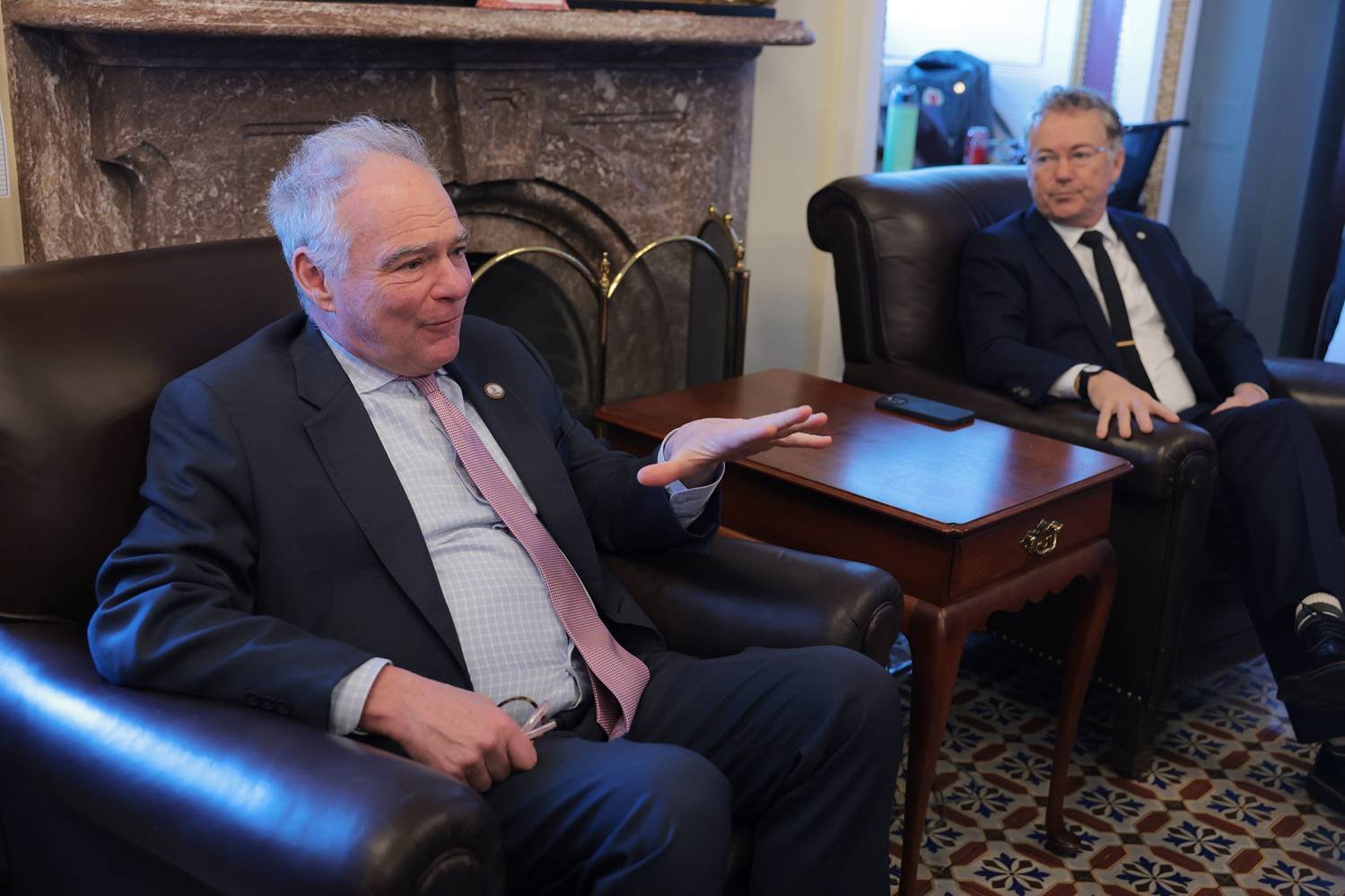
Democratic Sen. Tim Kaine and Republican Sen. Rand Paul made the claims during a Tuesday Senate hearing where U.S. Secretary of State Marco Rubio was testifying. During his questioning of Rubio, Kaine said that he knows what the administration’s targeting criteria for the boat strikes are because of briefings he’s attended but that he could not publicly share that information because it’s classified. However, he said that he didn’t think he was prohibited from sharing what’s not included in the criteria.
“Here’s one that’s not so obvious, and that surprised me,” Kaine said. “There’s evidence of narcotics on the boat—that is not a targeting criteria.”
Kaine, who said there are “three elements” to the targeting criteria but did not offer specifics, said this struck him as “odd” given the Trump administration “always announced this is against narcotraffickers, we’ve attacked narcotraffickers.”
Rubio, who also serves as national security advisor, told Kaine that he was not involved in conversations on the targeting criteria because “those are largely legal decisions.”
“Every strike has a legal officer on the deck that has to make a determination about whether the call is legal or not, and this is done by the Department of War, the way it’s been done in other theaters around the world,” Rubio said. “There have been strikes that they’ve walked away from, because it doesn’t meet the criteria, or because there’s doubt.”
Kaine did not dispute that the strikes met the targeting criteria, but he repeatedly emphasized how notable it was that “the presence of narcotics on a boat is not one of the targeting criteria.” He then encouraged his colleagues to “get the same briefing I’ve got, take a look at the strike files, you’ll be as surprised as I am.”
The fact that evidence of the presence of narcotics is not listed “is very contradictory to the administration’s public messaging and the way that they have framed Operation Southern Spear,” said a Senate source familiar with the matter, who spoke on the condition of anonymity due to the sensitive nature of the issue.
The White House, Defense Department, and Justice Department’s Office of Legal Counsel (OLC) did not immediately respond to requests for comment.
Kaine has been among the most vocal critics of the strikes on alleged drug boats, among other military actions taken by U.S. President Donald Trump during his second term, and he has decried them as illegal. The strikes have not been authorized by Congress. But congressional lawmakers have so far failed in various efforts to prevent the Trump administration from continuing the strikes, which are also linked to the military operation in January that led to the capture of Venezuelan President Nicolás Maduro.
Top legal experts have also contended that the strikes violate both domestic and international law and that drug trafficking does not constitute grounds for the use of lethal military force. Counterterrorism experts have also underscored that drug traffickers, while dangerous, should not be considered terrorists.
The Trump administration has not provided concrete evidence to back up its public justifications for the strikes, which have killed over 200 people since the campaign began in September, and questions have been raised by congressional lawmakers over whether the boats targeted actually belonged to drug cartels. In a sign that the Trump administration is aware it’s operating in legally dubious territory, the OLC in a classified memo last summer said that U.S. troops involved in the lethal strikes would not be exposed to prosecution in the future.
During Tuesday’s hearing, Republican Sen. Rand Paul—another vocal critic of the strikes on the alleged drug boats—also brought up the targeting criteria. “It’s interesting that the three secret criteria we’re using to blow up the boats doesn’t include whether they have drugs on board,” said Paul, who has criticized GOP colleagues for not speaking out against the strikes.
Paul went on to say that possessing arms is also not included in the targeting criteria for the strikes on alleged drug boats. “In order to blow them up, we don’t have to say that they’re armed or have drugs. I think a lot of people would have questions, which I still do,” Paul said.



