

Ukraine has had enough of Russian fonts.
Amid the country’s invasion by Russia, Ukrainians will no longer have to read any official documents set in a Russian typeface after a just-unveiled typeface goes into full effect. The new national font is called Zakon, “law” in Ukrainian.
Designers, military personnel, and Ukrainian citizens have for years called for their country to swap out Russian-designed Cyrillic fonts like Izhitsa, which appears on official documents, certificates, awards, diplomas, battle flags, and plaques, according to Ukraine’s Ministry of Culture. Though the Russian font and others are widely used in Ukraine, they’re designed by the Russian type foundry ParaType, which Ukraine’s ministry says cooperates with Russian authorities.
To change that, Ukraine’s government and the country’s largest online jobs board partnered to hire a team of Ukrainian type designers to make something imbued with the country’s typographic heritage. A beta version of the font became available on October 29, and after a feedback period, a refined, expanded version is expected to be released early next year and will appear on official Ukrainian documents.
Ukraine’s parliament adopted a resolution in January to create the country’s own national typeface, saying that it would address the legacy of Russian cultural influence from when Ukraine was part of the Soviet Union.
A team of four Ukrainian type designers designed Zakon, which was unveiled last month in Cyrillic and Latin characters. The designers are Oleksiy Chekal, who designed lettering for the Orthodox Church of Ukraine; the typographic and type designer Hennadiy Zarechniuk; Dmytro Rastvortsev, who designed fonts including UAF Sans, for the Ukrainian military; and Andrij Shevchenko, a former winner of Ukraine’s modern business font competition.
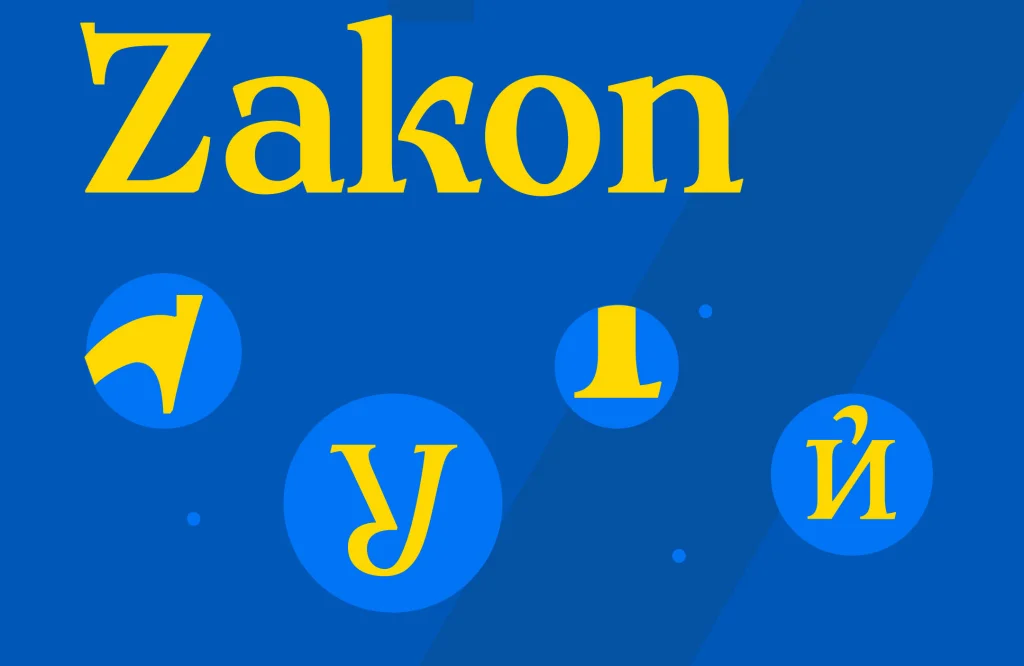
Zakon is a serif typeface that features elements distinct to Ukrainian typography, like flared, asymmetrical serifs and diamond tittles that dot letters like I or Yi, a Cyrillic letter unique to Ukrainian. Its proportions resemble those of classical Roman typefaces, placing Ukrainian type within the wider European tradition. The type family’s letterform was inspired by the work of six Ukrainian artists, including Vasyl Krychevsky, who designed Ukraine’s 1918 trident coat of arms and banknotes.
These forms “help Ukrainians connect with their own visual heritage,” the Ukrainian Ministry of Culture tells Fast Company in a statement. “This matters because state awards, military battle flags, and government building signs in Ukraine are still often set in typefaces whose Cyrillic versions were produced by ParaType.”

The project was led by Taras Ishchyk, who previously designed the visual identity for the Armed Forces of Ukraine. Funding came from Ukraine’s largest online jobs board, Work.ua, which said it hoped its involvement shows that businesses can play an active role in shaping a country’s cultural landscape.
“A country’s visual language is more than its coat of arms and flag,” the company said in a statement. “The way letters appear in laws, orders, diplomas and awards also shapes the country’s image—and can either perpetuate someone else’s tradition or develop its own.”
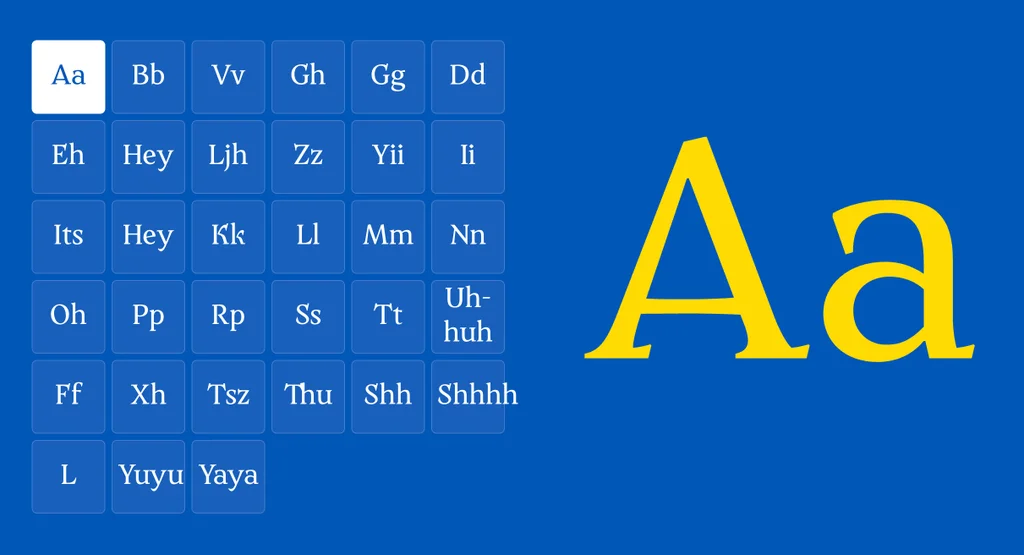
Zakon has appeared in a promotional video for Ukraine’s national football (soccer) team, but its main purpose is for official documents and ceremonial papers. Full implementation will come after beta testing of how well it handles large volumes of text like official paperwork, newspaper layouts, and print publications.
Zakon text is free to download and use, and its makers are soliciting feedback about readability, weight, and performance at different sizes. Other versions of the font are exclusive, such as Zakon Decor for ceremonial inscriptions. Zakon Letterpress is reserved for use by Ukraine’s parliament, the Verkhovna Rada. Extended characters are expected to be released in early 2027, and the plan is to make it a multilingual typeface by releasing additional writing systems over the next year.
Ukraine blames centuries of policies from Moscow for erasing what made Ukrainian lettering distinct in the past, but Ukraine’s typographic style has been revived before, such as during its brief independence after 1917 as well as in the Ukrainian diaspora after World War II. Today, Zakon is reviving that tradition once again.



