
Recipe Highlights
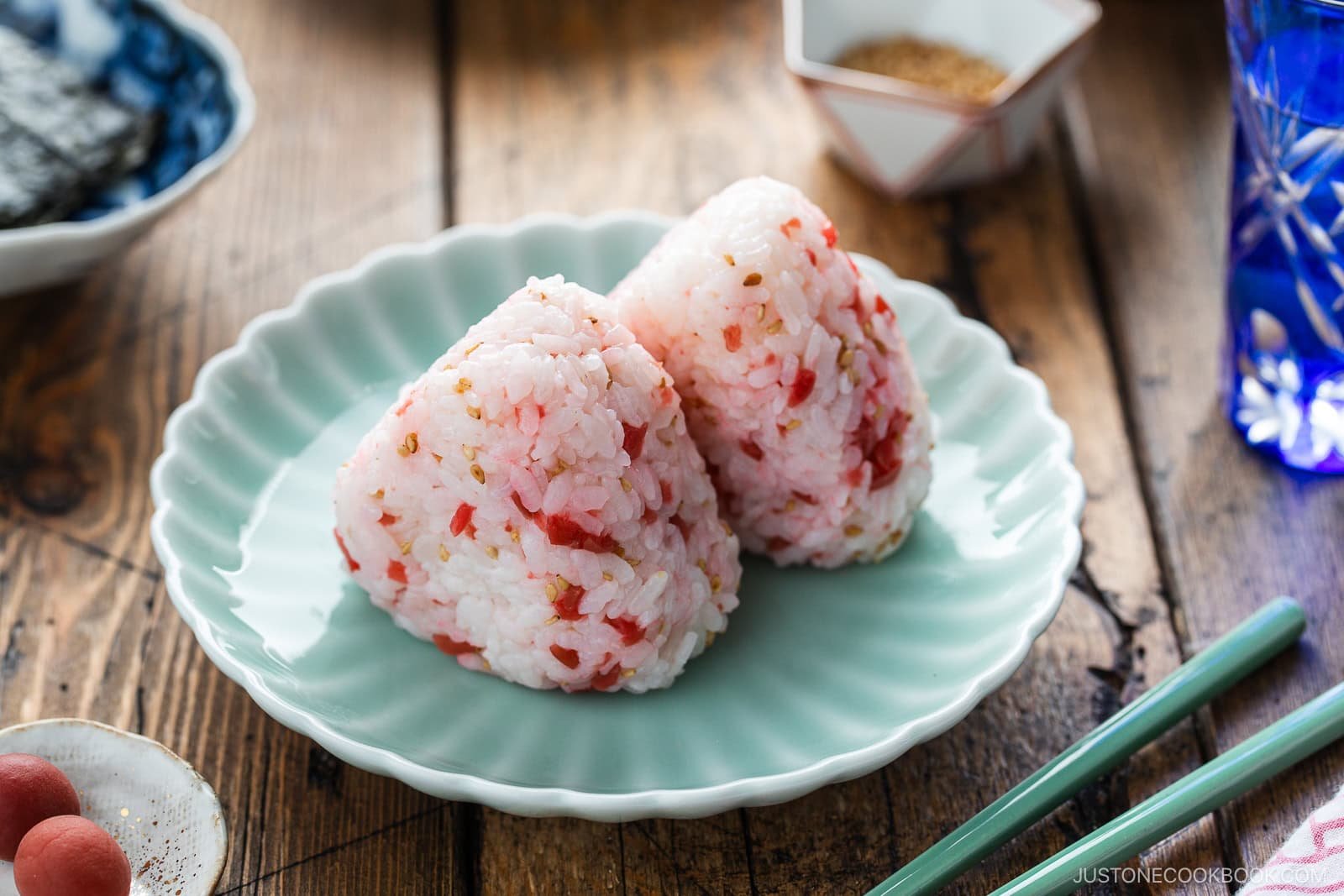
After watching season 2 of Midnight Diner: Tokyo Stories on Netflix, I started to recreate recipes from the show. In one episode, a regular named Umejii asks for pickled plums and eats ten of them in a row. My mouth watered watching him. It sent me to the kitchen to make Umeboshi Onigiri or plum rice ball, the salty and tangy snack from the show.
Here’s why I keep coming back to this recipe:
- Quick to shape, no special tools needed
- Built from five ingredients
- Salty, tangy plum balanced by warm, nutty sesame rice
If you love onigiri, try my Onigiri, Tuna Mayo Onigiri, and Yaki Onigiri recipes next!

What is Umeboshi Onigiri?
Umeboshi onigiri (plum rice ball) is a classic Japanese lunchbox favorite, traditionally made by placing a whole umeboshi (梅干し)—a salty, tangy pickled plum—in the center of a rice ball.
However, to recreate the onigiri from Midnight Diner, look for mince ko-ume (小梅), a smaller type of pickled plum known for its firm, crunchy texture. Finely mince it and fold it throughout rice so you get a tangy, crunchy bite in every mouthful.
Ingredients for Umeboshi Onigiri
- Small pickled plums (ko-ume) – the small, crunchy kind of umeboshi, available online at Nihon Ichiban
- Cooked Japanese short-grain rice – freshly steamed and still warm
- Toasted white sesame seeds
- Nori seaweed – cut into thirds
- Kosher salt – or sea salt
Find the printable recipe with measurements below.


How to Make Umeboshi Onigiri
- Mince the plums. Pit and finely chop the pickled plums.
- Season the rice. Fold the minced plums and toasted sesame seeds into the warm rice using a cutting motion (don’t stir).
- Wet and salt your hands. Moisten your palms with water and rub a pinch of salt between them to prevent sticking.
- Shape the triangle. Gently mold the rice into a triangle. (See my Onigiri (Japanese Rice Balls) recipe for step-by-step photos.)
- Wrap and serve. Place a strip of nori around each rice ball and serve warm or at room temperature.


Make Ahead Tips
- Rinse and soak the rice ahead – Wash and soak the rice in the inner pot earlier in the day, then press start an hour before you plan to shape the onigiri.
- Mince the plums early – Pit and mince the plums a day ahead, then refrigerate until ready to use.
Storage and Reheating Tips
To store: Keep onigiri at a cool room temperature, 61–68°F (16–20°C), and enjoy within 6–8 hours.
To avoid hardening: Refrigerating hardens the rice, so avoid it if possible. If you must refrigerate, wrap the onigiri in a thick towel before placing it in the fridge to protect the grains from excess cold.
To freeze: Wrap each rice ball tightly in plastic wrap and store in an airtight bag for up to 1 month.
To reheat: Place frozen onigiri on a plate, cover with a damp paper towel, and microwave for 1½–2 minutes until warmed through.
Variations
A few easy swaps to suit your taste or pantry.
- Skip the chopping. Place one whole small ume in the center of the rice ball instead of mincing it into the rice.
- Swap in regular umeboshi. If ko-ume is hard to find, regular umeboshi (the wrinkled, soft kind) works great.

- Use low sodium umeboshi. Choose low-sodium pickled plums for a milder, less salty bite. Find them at Nihon Ichiban.
- Try furikake. Mix in Japanese rice seasoning in place of the sesame seeds fore extra flavor.
What to Serve with Umeboshi Onigiri
Enjoy this plum rice ball alone or as part of a complete meal. Here are some serving ideas:


FAQ
Is umeboshi onigiri vegan?
Yes. Rice, pickled plum, sesame seeds, and nori are all plant-based, so this onigiri is naturally vegan.
Why did my rice ball fall apart?
Cold rice loses its stickiness. Shape the onigiri while the rice is still warm, and use Japanese short-grain white rice rather than long-grain or brown rice.
Can I use table salt instead of kosher salt?
Yes, but use less. Fine table salt is denser and saltier by volume than Diamond Crystal kosher salt.
How long can umeboshi onigiri sit out?
Thanks to the salt and sour plum, these rice balls stay safe at a cool room temperature (61–68°F / 16–20°C). Enjoy them within 6–8 hours for the best texture and safety.
I’d love to hear how yours turned out! 💛 Please leave a star rating and comment below to share your experience. Your feedback not only supports Just One Cookbook but also helps other home cooks discover recipes they can trust.
Umeboshi Onigiri (Plum Rice Ball)
To Prepare the Ingredients
To Shape the Rice Balls
Prepare a small bowl of water and a separate small bowl of 1 tsp Diamond Crystal kosher salt. Wet your palms to keep the rice from sticking. Dip 2 moist fingertips in the salt and spread it between your palms.
- Scoop one rice portion onto your non-dominant palm (my left) and always keep it underneath the rice. Bend your other hand into a mountain shape. Press from the top to form a triangle corner (I use my right thumb, index finger, and middle finger). At the same time, squeeze with the fingers and heel of your bottom hand to flatten the sides.Nami’s Tip: You can also use an onigiri mold or plastic wrap to shape the rice balls. For step-by-step photos and instructions, see my Onigiri recipe.
- Keep hands just firm enough to hold the shape, never squeezing tightly. Keep the density as airy as possible. Rotate the rice ball and form the second corner, then rotate again to form the third. Repeat 2–3 times until all corners feel firm and hold together.Transfer to a tray or plate lined with parchment paper. Repeat with the remaining rice.
To Store
- Pack rice balls for lunch, keep them cool, and consume within up to 6 hours. Individually wrap freshly made onigiri in plastic wrap, put in an airtight freezer bag, and freeze for up to 1 month. Reheat from frozen in the microwave for 1½–3 minutes until warmed through.Onigiri gets hard when you refrigerate it, so I don‘t recommend making it too far in advance. If you really need to, wrap the onigiri with thick kitchen towels and store it in the fridge. The onigiri will stay cool and safe, but won’t get cold and dry.
- Cooked rice: 1½ cups (300 g, 2 rice cooker cups) of uncooked Japanese short-grain rice yield 4⅓ cups (660 g) of cooked rice. See how to cook short-grain rice with a pot over the stove, Instant Pot, or donabe.
Variations
- Skip the chopping. Place one whole small ume in the center of the rice ball instead of mincing it into the rice.
- Swap in regular umeboshi. If ko ume is hard to find, regular umeboshi (the wrinkled, soft kind) works well without the artificial coloring some brands use.
- Use low sodium. Choose low-sodium pickled plums for a milder, less salty bite. Find them at Nihon Ichiban.
- Try furikake. Sprinkle in Japanese rice seasoning in place of the sesame seeds.
Calories: 149kcal, Carbohydrates: 32g, Protein: 2g, Fat: 1g, Saturated Fat: 1g, Sodium: 289mg, Potassium: 35mg, Fiber: 1g, Sugar: 1g, Vitamin A: 49IU, Vitamin C: 8mg, Calcium: 21mg, Iron: 2mg
Did you make this recipe?
Tag @justonecookbook on Instagram so we can see your delicious creation!
Editor’s Note: This post was originally published on February 11, 2020. It was republished with more helpful tips on August 12, 2026.



