
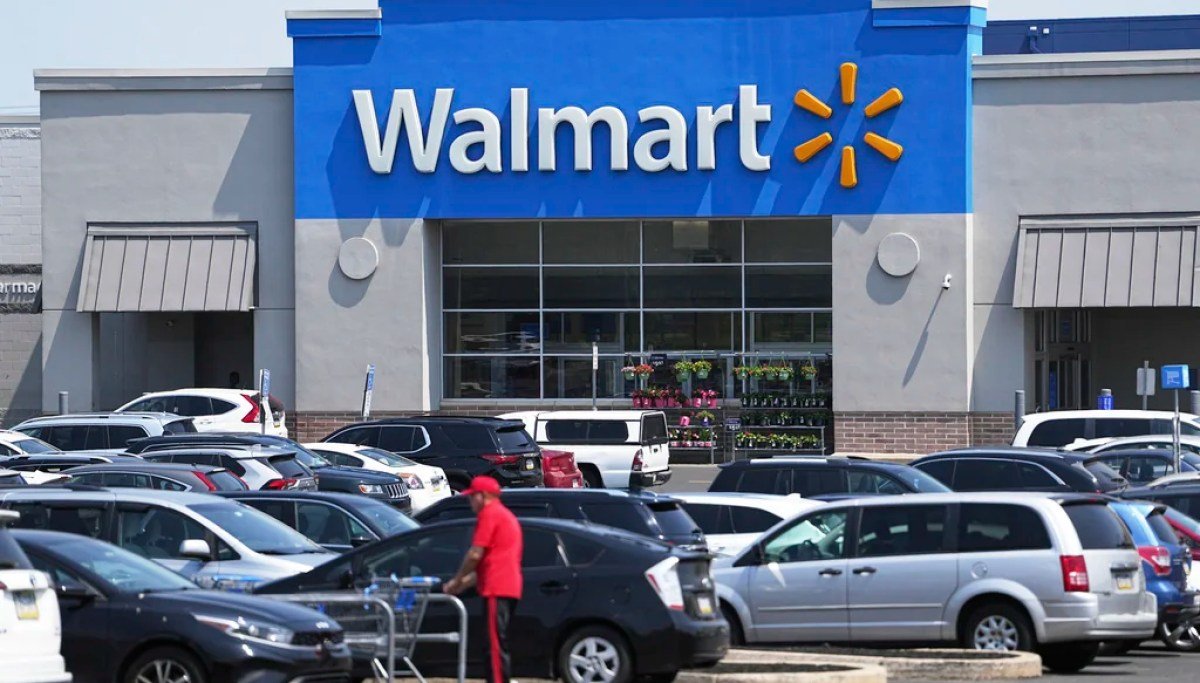
Walmart on Thursday released a quarterly earnings report indicating it received roughly $3 billion in tariff refunds from the Trump administration, revealing that it passed some of the reimbursement on to shoppers through price cuts.
Walmart said the government has returned all but about $100 million of the $2.9 billion it was owed in refunds for tariffs the company paid that were reversed by the Supreme Court earlier this year. Those “Liberation Day” tariffs, issued by President Donald Trump in April 2025, were ruled to have an unlawful underlying basis by the high court in February.
In its update on the financial performance of the largest retailer in the United States, Walmart CEO John Furner said it is using the refunds to spur spending by lowering prices at locations nationwide. Walmart delivered 11,000 rollbacks, or temporary price cuts, in its second quarter, compared to 7,200 in the first quarter, he said during the company’s earnings call. The company hopes to see the impact of the strategy in its third quarter.
The announcement comes as Walmart warned that consumers are grappling with a higher cost of living, driven by rising fuel prices spurred by the war in Iran. For Walmart, fuel price spikes have led the company to project it will face over $2 billion in added costs this year.
“We’re investing heavily in price because customers need us to and because we believe it drives market share gains over time,” Walmart’s chief financial officer, John David Rainey, said.
“As you go through month by month in the last quarter, you can tell when fuel prices increased and got above $4, and perhaps there’s a psychological impact to that, that there are choices that consumers are making,” he continued. “It’s why we have leaned so heavily into lower prices … there’s a psychological impact to that. That there are choices that consumers are making.”
“Customers tell us they’re still feeling some pressure,” Furner added. “Having the best prices across a basket of goods helps us continue to build trust with our customers and members by helping them save money at a time when many households are carefully managing their budgets.”
Walmart’s U.S. same-store sales growth came in at 2.6% on Thursday, which was less than the 3.5% increase Wall Street expected, according to FactSet. The development marked the slowest sales growth in six years, as Walmart grappled with the pandemic, and led the company’s stock to plunge by around 10% during Thursday morning trading.
Other fiscal indicators were more positive in the company’s quarterly earnings report, with the retailer saying that revenue rose 5.9% in its fiscal second quarter, and e-commerce sales jumped 23% globally.
“Our business is strong,” Rainey told CNBC. “We feel really good about the progress we’re making.”
“Consumers are still spending, and real wage growth is keeping pace, and so they’ve been very resilient in this environment,” he added. “But all that said, we would love to be able to bring prices down more and see less pressure on their wallets.”
TRUMP PAUSES 50% TARIFFS ON CANADA HOURS BEFORE DEADLINE
Walmart’s share of the tariff refunds is part of $100 billion in reimbursements the U.S. has doled out to businesses as of July 31.
Customs and Border Protection is processing the refunds through its new Consolidated Administration and Processing of Entries portal, where around 300,000 companies can apply for up to $175 billion in reimbursements for tariffs they paid.



