
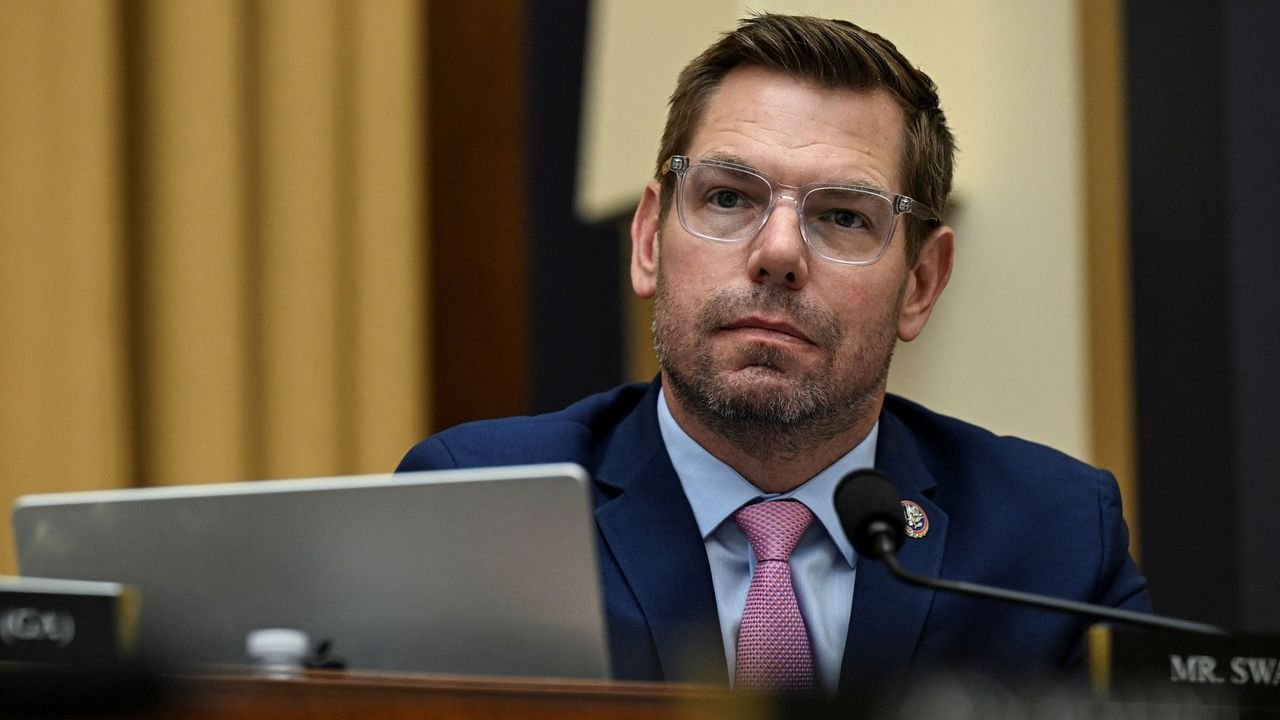
According to a detailed time line published by Politico, that story began when Arielle Fodor, an education content creator known as Mrs. Frazzled, posted positively about Swalwell’s nascent gubernatorial bid, only for several people to reach out, alleging, among other things, that he had slept with an intern. Fodor and another prominent online personality, Cheyenne Hunt, a former Democratic congressional candidate, took the lead in posting about the rumors that Swalwell eventually responded to. At the same time, behind the scenes, they brought together his accusers and steered them in the direction of CNN, which had the institutional heft—and, most important, high-powered media lawyers—that they lacked. (Hunt told Politico that her and Fodor’s crusade should not be seen as “a green light to creators who think that they should be breaking sensitive news.”)
In the end, it took a time-honored brand of journalism to actually bring Swalwell down, even if influencers rolled the pitch. Viewed narrowly, the latter’s role might even be seen as a version of the reporter-source relationship. But that isn’t quite right, either. As Hunt has put it, she and Fodor developed the sort of “parasocial relationships that get built on social media”—itself a form of reporting—to win the trust of Swalwell’s alleged victims. And, as Politico noted, political operatives have been left wondering whether their initial online salvos against Swalwell reflect a “new normal.” Already, political campaigns had been navigating their own awkward symbiosis—or, perhaps, a less reciprocated relationship—with content creators, courting them for their huge audiences (see again: “Beez in the Trap,” Swalwell, 2025) while remaining wary of their loose editorial standards and primary incentive to chase clout. Earlier this year, a TikToker in Texas claimed that James Talarico, a Democratic candidate for Senate, had privately described Colin Allred, an opponent who had dropped out of the primary, as a “mediocre Black man.” Talarico denied attacking Allred on the basis of race. He won his primary anyway, but not before the controversy blew up—both on social media and in the traditional mainstream press.
The modern attention economy, of course, has been blamed, including by me, for offering the scandal-plagued an out from critical scrutiny by allowing them to sidestep mainstream-media gatekeepers and make their case to a public that is atomized, polarized, and distracted. President Donald Trump is the foremost avatar of this trend: since the beginning of his political career, he has flooded old and new media alike with such a constant churn of outrage that typically career-ending infamies—including multiple claims of sexual assault (which he denies)—have more or less bounced off. But many big names have indeed been disgraced in the Trump era, despite their attempts to use the rhythms of the attention economy to rebound: Andrew Cuomo, after resigning as governor of New York, started a podcast, then ran for mayor; George Santos, the Republican congressman exposed as a serial liar, used his notoriety as a springboard to meme-ification. Cuomo’s podcast and mayoral bid flopped. Santos went to prison, even if Trump ultimately let him out. (You can still book him on Cameo.)
Swalwell’s downfall might even show that, if old-school journalism can still mete out consequences for bad behavior, new media can sometimes accelerate this process, rather than dilute it. Expulsions from the House are rare—there have only ever been six, the latest of which saw Santos kicked out, in 2023—but, as of the beginning of this week, it looked plausible that Swalwell would soon join their number, and that three other lawmakers might, too: the Democrat Sheila Cherfilus-McCormick (accused of financial fraud) and the Republicans Tony Gonzales (sexual misconduct) and Cory Mills (both). Their expulsions were never guaranteed; two-thirds of their colleagues would have to consent, which is a high bar, and leaders in both parties reportedly remain leery of removing elected representatives without first affording rigorous due process. (Even the expulsion of Santos was controversial, since he hadn’t yet been convicted of a crime, but he had at least been put on blast by the House Committee on Ethics, which recently declared the guilt of Cherfilus-McCormick but wasn’t done weighing in on the other cases.) There was also an unseemly whiff of insider partisan horse-trading here—two Democrats for two Republicans—in a razor-close chamber. But the mere consideration of such extreme punishment seemed to reflect another dynamic of this moment, itself very much downstream of the modern media environment: an increasingly sulfurous anti-establishment energy, and the incentive for denizens of that establishment to be seen taking it seriously.



