
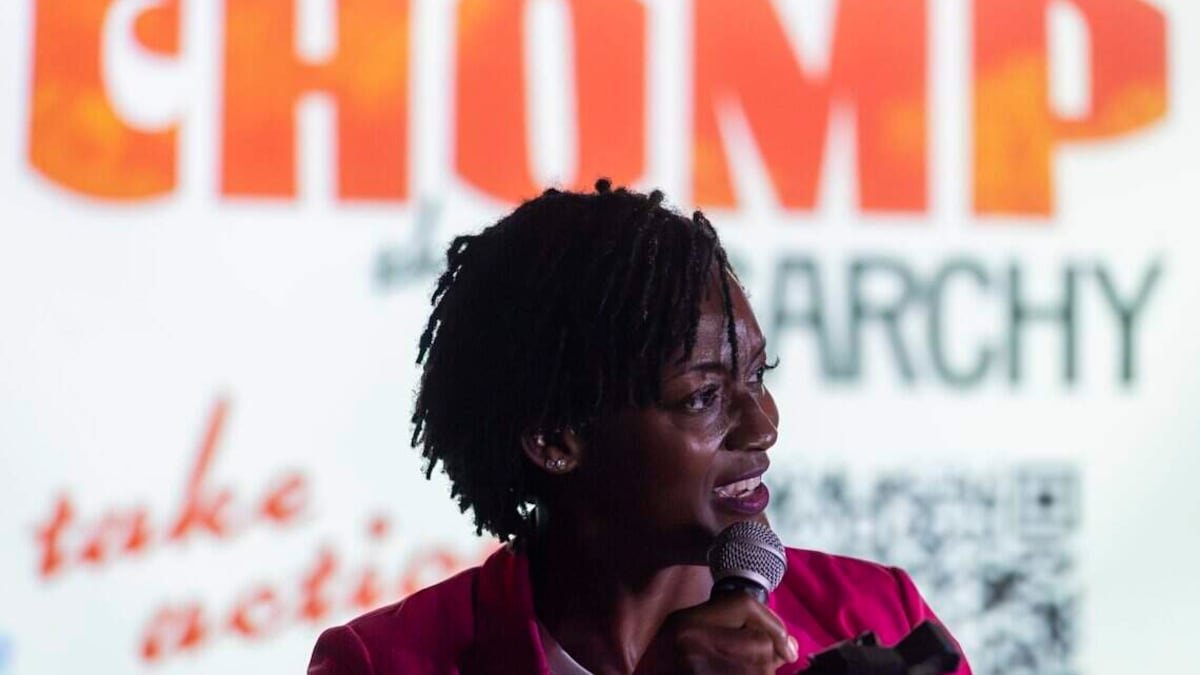
Two weeks before the primary, state Rep. Angie Nixon posted a timeline on Instagram depicting how long she had lived in Florida compared to her well-funded Democratic primary opponent, retired Lt. Col. Alex Vindman.
For Vindman, the timeline goes back three years. For Nixon, the timeline stretches back 42 years — pointing to Nixon’s lifelong roots in the Jacksonville area.
Particularly in Jacksonville, that message appeared to resonate: In Duval County, Nixon got 80% of the vote to Vindman’s 20%.
In Broward County, where Vindman lives, Nixon still won by about 15 points.
Nixon notched Tuesday night’s biggest upset, besting Vindman by 12 points despite the retired lieutenant colonel outraising her by about $18 million.
To an outsider, a progressive like Nixon prevailing over a more moderate Democrat is a continuation of the trend seen in places like Michigan and New York. One could conclude that Democratic primary voters in both red and blue states are hungry for a firebrand this election cycle.
But on Tuesday, Nixon was the outlier. Two South Florida progressives running against U.S. House incumbents — organizers Oliver Larkin and Elijah Manley, who campaigned alongside Nixon — each lost by more than 20 points to U.S. Reps. Jared Moskowitz and Debbie Wasserman Schultz, two figureheads of Florida’s Democratic establishment. In Tampa Bay, moderate Democrat Leela Gray won her primary in minutes over progressive teacher Brandt Robinson.
So what was it about Nixon that led her to victory where other progressives failed?
Vindman’s missteps
For months, Vindman looked like the clear front-runner.
But weeks before the primary, a video made the rounds on Facebook and Instagram. It captured Vindman walking briskly away from content creators at Florida Democrats’ annual Leadership Blue gala, as one influencer shouted questions about the deaths of U.S. service members abroad.
It gave firepower to Nixon’s attack: Vindman was inaccessible, chosen in Washington by corporate interests.
“We just don’t know his stances because he hasn’t stated them at all, and he runs away from people,” Nixon said in a July interview with the Tampa Bay Times.
Vindman’s campaign shot back, arguing that the vast majority of his donations are small-dollar, a sign of grassroots support. Florida was the first place the longtime U.S. service member had truly chosen for himself, Vindman said.
Key pillars of Vindman’s platform included fighting corruption, lowering costs and banning congressional stock trading. He focused his attacks on incumbent GOP Sen. Ashley Moody, holding a news conference last month that focused on her ties to the Hope Florida scandal.
Out of more than $19 million raised, he spent around $2 million on primary advertisements. In interviews and news conferences, he rarely talked about Nixon, instead positioning himself for the general election.

While Vindman went after Moody, Nixon was making her case against Vindman — and touting progressive economic proposals that may have gone further with disaffected voters sick of rising costs. She supports Medicare for All, a $25 minimum wage and universal child care.
“I’m not pie in the sky in terms of what this means for November, but I think for last night … it was people saying, ‘Damn the consultants. I want to vote for somebody who I believe in,’” said Dwight Bullard, senior political adviser for Florida Rising, a progressive organization.
Chelsea Rivera, a St. Petersburg-based organizer with labor group Central Florida Jobs with Justice, said that when she worked alongside Nixon, she found the state representative has a deep sense of the pulse of her community.
“She speaks people’s love language essentially,” Rivera said. “She shows up in their spaces, at their events … she’s there.”
The two candidates also clashed over Israel. Nixon called the conflict a genocide and Israeli Prime Minister Benjamin Netanyahu a war criminal.
Vindman said the conflict had gone on too long, but refused to call it a genocide, citing his status as a Jewish refugee. That may not have played well with Democratic primary voters who have turned against the U.S. ally. An April Pew Research Center study found that 80% of Democratic-leaning voters held somewhat or very unfavorable views of Israel.
“It’s important to be clear about calling it (a genocide) because at a baseline … we should never be okay with just wiping people out,” Nixon said in an interview Monday, the day before the primary.
Recognition in Florida
Larkin and Manley, the two South Florida progressives who lost Tuesday night, went up against incumbents who have name recognition and relationships in the state.
That wasn’t the case for Nixon, who faced a challenger who also had to introduce himself to the Florida electorate.
Vindman’s national profile generated headlines. But it’s not clear Florida voters caught on. Out of about 10,500 individual Vindman donors recorded on the Federal Election Commission website, a third were from Florida, according to a Tampa Bay Times analysis.
Vindman got national endorsements from figures like U.S. Sen. Mark Kelly of Arizona. But in large Florida metro areas, Nixon won the support of elected officials of color, like U.S. Rep. Maxwell Frost in Orlando and state Rep. Michele Rayner in Tampa Bay.
Nixon saw the biggest wins in some of Florida’s most populous and most Black areas, from Orange and Broward counties to tiny Gadsden County near Tallahassee. She also won in some of the state’s least-educated counties, according to a Washington Post analysis. Vindman won majority-white places like Palm Beach and Sarasota counties.
(function(){function e(){window.addEventListener(`message`,function(e){if(e.data[`datawrapper-height`]!==void 0){var t=document.querySelectorAll(`iframe`);for(var n in e.data[`datawrapper-height`])for(var r=0,i;i=t[r];r++)if(i.contentWindow===e.source){var a=e.data[`datawrapper-height`][n]+`px`;i.style.height=a}}})}e()})();
Nixon assembled a “formidable coalition” of progressives and voters of color, said Jackson McMillan, CEO of Democratic consulting group Key Lime Strategies.
Bullard, the progressive organizer, recalls an older Black woman texting him months ago calling on Nixon to drop out, lest she spoil the race for Vindman. But shortly before the primary, she posted a picture beaming next to Nixon, professing her support.
“It’s this unwavering energy and intention that she has when she’s leaning into something,” he said of Nixon.
What does this mean for the general election?
Democrats now have two very different officials at the top of the ticket: former GOP Rep. David Jolly for governor, who is running as a centrist, and Nixon for Senate.
Republicans have already tried to tie Jolly to the most left-leaning members of his party. But it could be in his best interest to campaign alongside Nixon, McMillan said, and together attract independents, Black voters and younger progressives.
Even if Nixon loses, her energy on the ticket could help other statewide and down-ballot candidates, Bullard said.
Nixon is emphasizing her coalition-building and populist economic policies, rather than her status as a democratic socialist. She has said she doesn’t agree with all of the group’s stances.
“I don’t care about labels,” she said in an interview with the Tampa Bay Times on Tuesday night. “We can argue all day about people’s labels. These elections … are about people’s needs.”
Tampa Bay Times staff writers Emily L. Mahoney and Ashley Borja contributed to this report.
.subtext-iframe{max-width:540px;}iframe#subtext_embed{width:1px;min-width:100%;min-height:750px;}
fetch(“https://raw.githubusercontent.com/alpha-group/iframe-resizer/master/js/iframeResizer.min.js”).then(function(r){return r.text();}).then(function(t){return new Function(t)();}).then(function(){iFrameResize({heightCalculationMethod:”lowestElement”},”#subtext_embed”);});



