
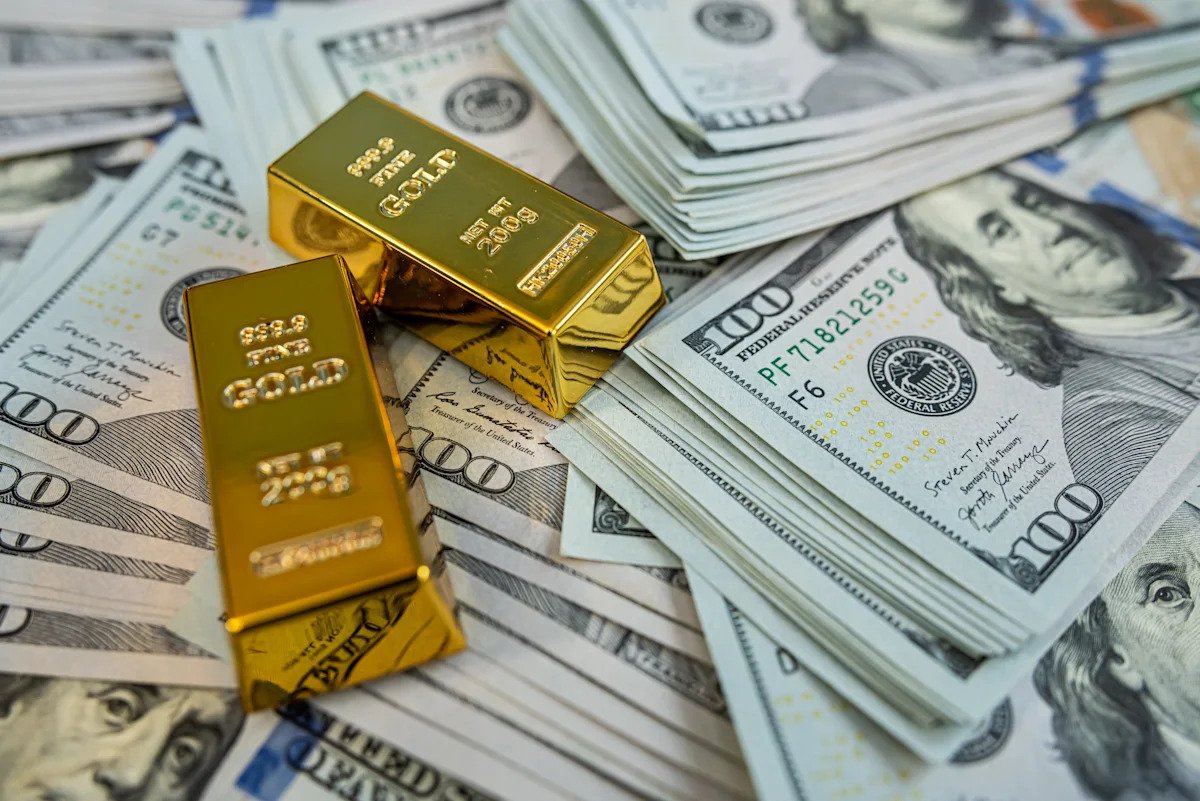
Gold and the U.S. dollar tend to move in opposite directions. When the dollar weakens, gold often rises. When the dollar strengthens, gold often falls.
One reason is that gold is typically priced in U.S. dollars. A weaker dollar can make gold cheaper for foreign buyers, increasing demand. A stronger dollar can make gold more expensive. But this relationship isn’t guaranteed. Interest rates, inflation, geopolitical events, central bank purchases, and other factors can also affect the price of gold.
Key takeaways
Gold and the U.S. dollar typically have an inverse relationship.
A weaker dollar can make gold cheaper for foreign buyers, increasing demand and potentially pushing prices higher.
A stronger dollar can make gold more expensive for foreign buyers and put pressure on gold prices.
The relationship isn’t perfect, and the U.S. dollar is only one factor that affects gold prices.
What is the relationship between gold and the U.S. dollar?
Gold and the U.S. dollar often move in opposite directions. When one rises, the other tends to fall.
Gold is typically priced per troy ounce in U.S. dollars. When the dollar weakens against other currencies, gold becomes cheaper for some international buyers. That can increase demand and push gold prices higher.
When the dollar strengthens, the opposite can happen. Gold becomes more expensive for buyers using other currencies, potentially reducing demand.
However, a weaker dollar doesn’t guarantee higher gold prices, and a stronger dollar doesn’t guarantee lower prices. The relationship is a correlation, and other factors affect gold’s price too.
Tips on Buying Precious Metals
- Portfolio diversification and stability: Gold often holds its value or rises when stock and other asset prices fall. When inflation rises or the dollar falls gold’s price stability offsets a weaker dollar and market volatility.
- Potential tax advantages with a gold IRA: Eligible precious metals held in an IRA receive the same tax treatment as other IRA investments. With a traditional IRA, investment gains generally aren’t taxed while they remain in the account; taxable distributions are generally subject to ordinary income tax. Qualified Roth IRA distributions may be tax-free.
- Gold can be relatively liquid: Gold is generally easier to buy and sell than less-liquid physical assets such as real estate or collectibles. How quickly you can sell and the price you receive depend on the type of gold, dealer, and market conditions.
Why does gold rise when the dollar falls?
There are a few reasons gold prices often rise when the dollar weakens:
Gold becomes cheaper for foreign buyers: Because gold is priced in U.S. dollars, a weaker dollar gives some buyers using other currencies more purchasing power. That can increase demand for gold.
Investors may look for a safe haven: Economic conditions that weaken the dollar can also cause investors to seek out assets like gold as a store of value.
Inflation can increase demand for gold: Investors often turn to gold as a long-term hedge against inflation and declining purchasing power. However, gold doesn’t always move with inflation over shorter periods.
The relationship between gold and the dollar changed significantly in the 1970s. Under the Bretton Woods system, the U.S. dollar was convertible to gold at a fixed price of $35 per ounce. In 1971, President Richard Nixon ended the dollar’s convertibility into gold, ending the Bretton Woods system and allowing gold prices and currency exchange rates to move more freely.
Why do gold prices fall when the dollar strengthens?
A stronger U.S. dollar can make gold more expensive for international buyers. That can reduce demand and put downward pressure on gold prices.
Interest rates can also affect gold’s appeal. When rates are higher, investors can earn more from savings accounts, bonds, and other interest-bearing investments. Gold doesn’t pay interest, so higher rates can increase the opportunity cost of holding it.
However, higher interest rates don’t always lead to lower gold prices. Other factors, including economic uncertainty and central bank demand, can have a greater influence on gold at different times.
What other factors affect gold prices?
The U.S. dollar isn’t the only factor that affects gold prices. Other factors include:
Interest rates: Higher rates can make interest-bearing investments more attractive compared with gold. When rates decline, the opportunity cost of holding gold also declines.
Inflation: Investors may buy gold as a hedge against inflation and declining purchasing power. But gold’s relationship with inflation isn’t consistent over shorter periods.
Geopolitical issues: Demand for gold may rise during periods of geopolitical conflict or economic uncertainty as investors look for assets they view as stores of value.
Central bank purchases: Central banks hold gold as part of their reserves. When they buy large amounts of gold, the additional demand can help push prices higher.
Investor demand: Changes in demand from investors can also affect gold prices.
Does gold always move opposite to the dollar?
No — gold and the U.S. dollar don’t always move in opposite directions. There have been periods when both moved in the same direction. That’s because the dollar is only one factor that affects gold prices. Interest rates, inflation, economic conditions, geopolitical events, and investor demand can all play a role. The inverse relationship between gold and the dollar is a correlation, not a rule.
Should you buy gold based on dollar movements?
The U.S. dollar can help explain why gold prices are moving, but it isn’t a reliable indicator of what gold will do next.
Gold prices are affected by several factors at once, and those factors don’t always move in the same direction. Trying to time a gold investment based only on whether the dollar is rising or falling can be risky.
Instead, consider how gold fits into your overall investment strategy. Gold can add diversification to a portfolio, but whether it makes sense for you depends on your goals, risk tolerance, and other investments.
FAQs
Why does gold usually rise when the U.S. dollar falls?
Gold is typically priced in U.S. dollars. When the dollar weakens, gold can become cheaper for buyers using other currencies. That can increase demand and help push gold prices higher.
Why is gold priced in U.S. dollars?
Gold is primarily traded and quoted in U.S. dollars on global markets. The connection also has historical roots. Under the Bretton Woods system, the U.S. dollar was convertible to gold at a fixed price of $35 per ounce. President Nixon ended that convertibility in 1971, but the dollar remained the dominant currency in international markets.
Does a stronger dollar mean gold prices will fall?
Not always. A stronger dollar can put downward pressure on gold prices by making gold more expensive for international buyers. But interest rates, economic conditions, geopolitical events, central bank purchases, and investor demand can outweigh the effect of the dollar.
Should long-term investors worry about the gold-dollar relationship?
The gold-dollar relationship is one factor to consider, but investors shouldn’t rely on it alone. For long-term investors, it may be more useful to consider how gold fits into a diversified portfolio rather than trying to time gold purchases based on movements in the dollar.



