
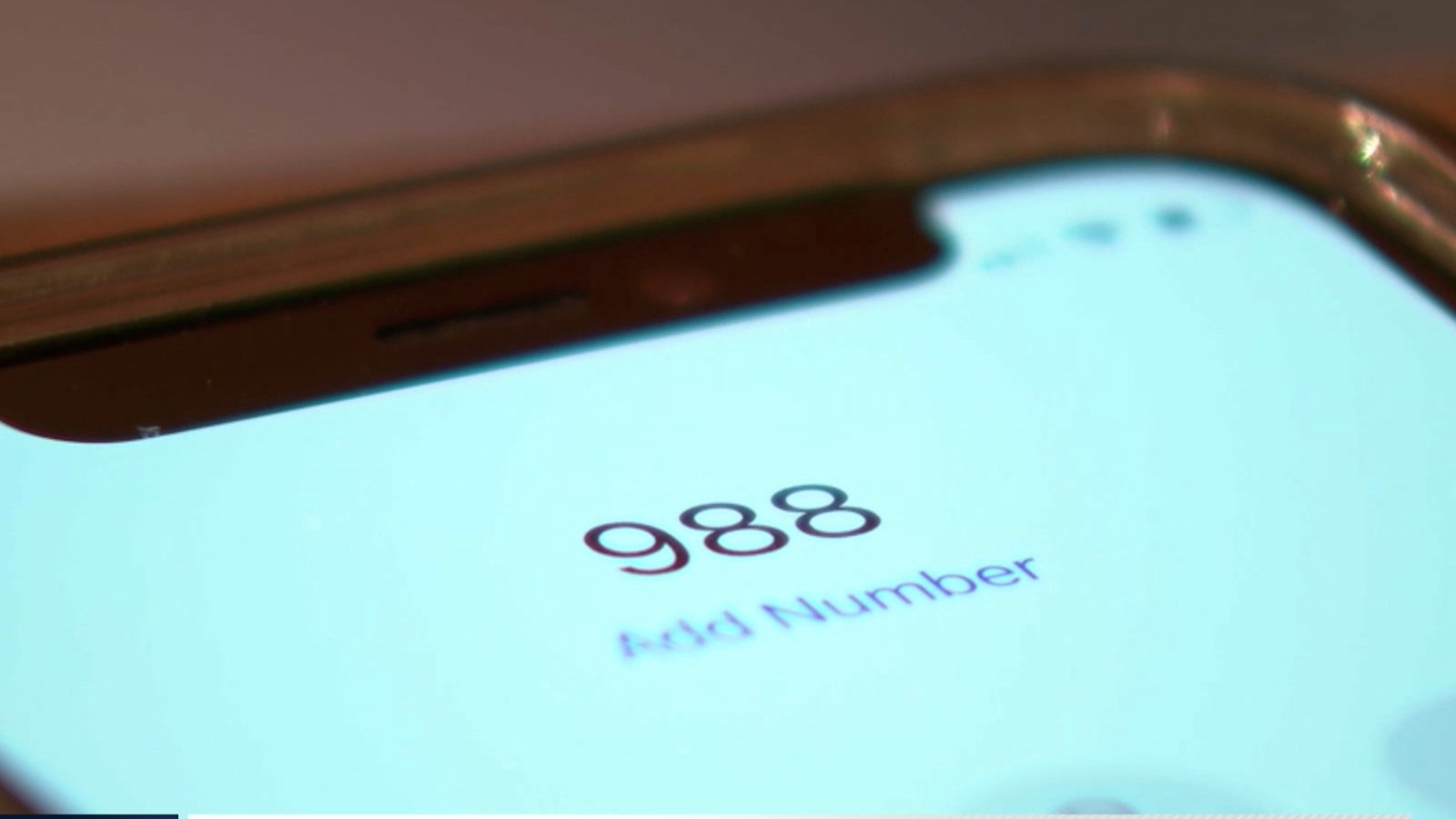
 Funding for New Jersey’s 988 suicide prevention hotline and related services in the next state budget is among the key issues still up for consideration in the Legislature this month.
A budget plan put forward in March by Gov. Mikie Sherrill, a first-term Democrat, calls for providing flat funding for 988, according to budget documents.
If lawmakers go along, it would mean another nearly $30 million in state funding for the hotline for the fiscal year that begins July 1.
In New Jersey, the 988 system links those experiencing a crisis with trained counselors who provide support and connections to key resources. The system is four years old and requests for help are steadily rising, according to data collected by the state.

Some lawmakers have suggested the system itself needs more funding to meet demand. They have backed the establishment of a tax on phone lines to bring in that revenue. A new tax, though, requires approval from a majority of lawmakers in both houses, and support from the governor.
A bill seeking to create the 988 tax remains pending in the Assembly and Senate. It’s up for consideration as affordability concerns are running high in New Jersey, and after previous efforts failed. The broader, $60.7 billion budget plan for state government put forward by Sherrill earlier this year calls for a modest year-over-year increase in spending.
A former congresswoman who is a newcomer to state government, Sherrill has emphasized a need to hold taxes flat for individuals on the heels of a 2025 gubernatorial election that saw affordability concerns emerge as a prevailing issue, according to public polling data.
Also pending in the Legislature this month is the formal introduction of a spending bill that will become state government’s next annual budget.
This bill must be introduced and passed by both the Assembly and Senate, and then win approval from Sherrill, all before the July 1 start of the fiscal year. If the governor and lawmakers miss that deadline, the state constitution requires a government shutdown.
Millions of calls
New Jersey’s help line, officially called the 988 Suicide & Crisis Lifeline, started operating in July 2022. In April alone, more than 7,000 people made use of 988.
Nationally, the service has logged 23,291,465 contacts via call, chat and text, according to data maintained by the Substance Abuse and Mental Health Services Administration.
The hotline is part of a nationwide care effort backed by the U.S. Congress that aims to better connect people experiencing a mental health crisis with trained counselors using a number that’s easier to remember than some of 988’s predecessors.
When calls or texts are received, the counselor can determine whether additional care is needed, and a local mobile crisis response team is supposed to be dispatched to provide aid, according to state officials.
The state budget for the current fiscal year was enacted during former Gov. Phil Murphy’s last year in office. It includes $28.8 million in funding for the 988 system through June 30, according to budget documents. That’s the same amount of annual funding that Sherrill has proposed.
In the current fiscal year budget, $16 million has been allocated for the local mobile crisis response teams, state officials said.
Another $10 million was earmarked for the four statewide call centers that can respond to the 988 number: Rutgers Health University Behavioral Health Care, the Mental Health Association in New Jersey, Caring Contact and Contact of Mercer County, the officials said.
About $2 million was set aside for a health care contractor providing 988 oversight, they said.
Full build-out
Last year, officials from the Murphy administration told lawmakers it would cost approximately $67 million to fund a fully built-out 988 continuum of care, which for the first time would include a series of crisis care centers throughout the state.
Murphy, a two-term Democrat, also backed a plan that called for establishing a monthly 40-cent tax on most telephone lines as the revenue source.
Funding 988 through dedicated taxes would mean the system would not be subject to the whims of the annual budget-making process, according to mental health advocates.
They’ve also noted many other states are operating successfully with such a system in place, even as federal funding for several mental health programs has been pulled back during President Donald Trump’s second term. Eleven months ago, Trump discontinued federal funding for 988’s “Press 3” option, which was designed for LGBTQ+ callers. More than one-third of LGBTQ+ youth seriously considered taking their lives in 2024, according to The Trevor Project, an advocacy group. In all, 44% who reported a need for mental health care did not get it.
Enacting the proposed tax on phone lines in New Jersey would likely provide enough state funding to pay for the more built-out continuum of care once sought by Murphy.
An analysis prepared by the nonpartisan Office of Legislative Services determined a 40-cent monthly tax on phone lines would generate more than $67 million in annual revenue.
This story is made possible in part by the Corporation for Public Broadcasting, a private corporation funded by the American people.



