
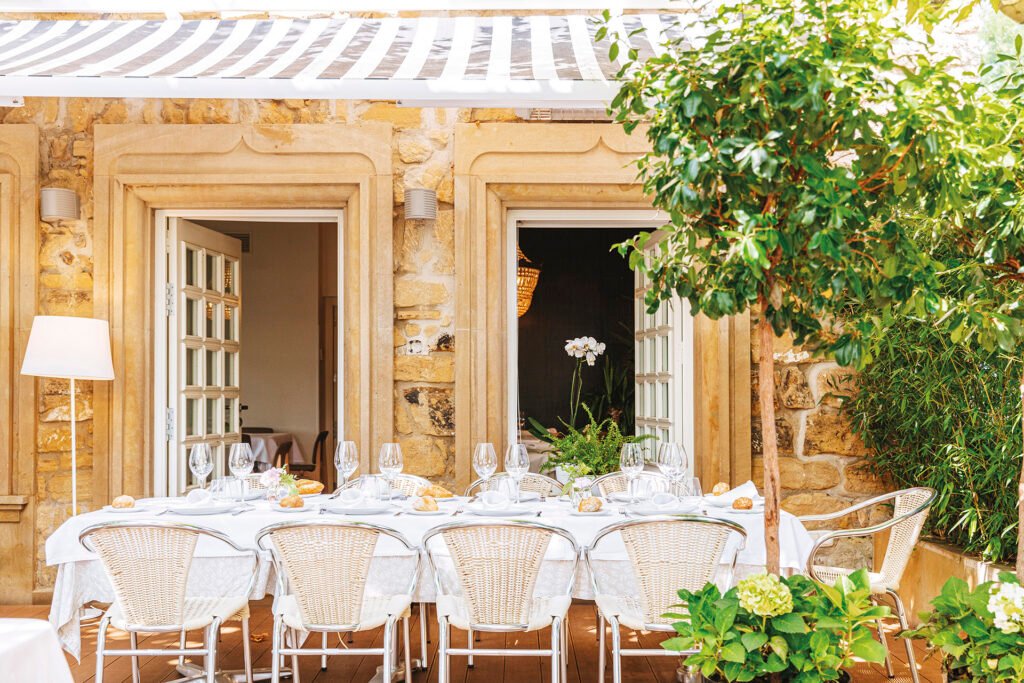
On the top of a hill at the edge of La Concha Bay in San Sebastián, Spain, you’ll find Rekondo, a quaint family-run restaurant that has served traditional Basque cuisine since 1964.
Its founder, Txomin Rekondo, is an avid oenophile, ever in search of wines that pair with the restaurant’s dishes. During his travels throughout Spain and France in the ’60s, he purchased bottles at a rate that quickly outgrew the storage capabilities at Rekondo.
So, in 1970, to accommodate this growing collection, Rekondo dug a cellar beneath the restaurant to store and protect wine from the elements. Today, that collection has grown to more than 100,000 bottles from over 20 countries. Its exceptional breadth, deep holdings of Rioja and Burgundy, and carefully maintained historic vintages have earned Rekondo recognition as one of the world’s great restaurant cellars.
The Design

The underground cellar at Rekondo is divided into three rooms, each housing white wines, reds, and historic bottles. Lourdes Rekondo, Txomin’s daughter and the restaurant’s general manager, renovated portions of the cellar about five years ago. The cellar’s entrance is new and polished, with backlit racks of white wines and glass display cases showcasing some of the owner’s most impressive bottles. During the redesign, the white wines were moved into the renovated area, while the reds were considered too delicate to disturb.
Inside, tastings and special events are hosted in a private, modern dining room near the cellar entrance. The dining room features elegant place settings, two crystal chandeliers over the table, and large windows that let in natural light. Much of the original cellar remains intact, with many bottles still in their original locations.
The cellar’s dense rows, low lighting, large-format bottles, and rare vintages from across generations make it feel more like a historical archive than a typical restaurant storeroom. Its largest chamber contains roughly 80,000 bottles arranged in numbered wooden bins according to Txomin’s organizational system, with clear plastic wrap protecting the oldest labels. “It’s not very elegant, but it works,” Lourdes says.
The Collection

Rekondo’s 376-page wine list spans more than 20 countries and reflects Txomin’s particular passion for wine from the Rioja and Burgundy areas. Historic Spanish holdings include a vertical of Imperial and collections of Vega Sicilia and Marqués de Riscal, including an 1880 Marqués de Riscal—one of the cellar’s oldest bottles.
French producers represented in the collection include Domaine de la Romanée-Conti, one of Burgundy’s most coveted names; Bordeaux First Growths Château Latour, Château Margaux, and Château Lafite Rothschild; and Château d’Yquem, the only Sauternes estate ranked Premier Cru Supérieur in the 1855 classification. Together, they reflect the collection’s depth in some of France’s most historic, ageworthy, and sought-after wines.

Champagne, Port, and wines from Priorat also appear throughout the cellar, many of them in magnum and larger formats. Local identity comes through txakoli and reds from Rioja Alavesa, the subregion located within the Basque Country. Txakoli is a natural match for oysters, clams, hake, and lobster, while Rioja Alavesa reds complement the menu’s heartier dishes such as venison, suckling pig, filet mignon, and rib-eye.
Why It Stands Out

Despite its museum-caliber holdings, Rekondo treats wine as something to drink rather than collect and preserve indefinitely. “Our policy is that we want to sell to buy more,” Lourdes says. Even bottles that remain in single quantities may be opened, but only for true oenophiles—people their team believes will truly appreciate the wine.
Many have signed empty bottles that are displayed throughout the cellar, marking shared celebrations. For example, Txomin opened a Romanée-Conti after golfer José María Olazábal won his first Masters in 1994, while an enormous bottle of Alión was poured for Real Sociedad football players after a major win.
Some of the cellar’s greatest treasures remain hidden for protection, and Lourdes says even she doesn’t know where they are (only her father does). Ultimately, she says, the cellar’s prevailing philosophy is one of generosity: “My father always said that the wine is to share.”
The post With Over 100,000 Bottles, This Basque Cellar Is Like a Museum for Wine Lovers appeared first on Wine Enthusiast.



