
Ethics approval and consent
This study is being conducted in accordance with the following:
Consensus ethical principles derived from international guidelines including the Declaration of Helsinki and Council for International Organizations of Medical Sciences (CIOMS) international ethical guidelines
Applicable International Council for Harmonisation (ICH) Good Clinical Practice guidelines
All participants provided written informed consent before the performance of any study-related procedures. Each study center received approval for participation from their respective institutional review board (IRB). Local IRB approval was obtained from Tisch Cancer Institute, Icahn School of Medicine at Mount Sinai (Institutional Review Board of the Mount Sinai School of Medicine), Dana-Farber Cancer Institute (Dana-Farber IRB), Memorial Sloan Kettering Cancer Center (Memorial Sloan Kettering IRB), Cleveland Clinic (Cleveland Clinic IRB) and Massachusetts General Hospital Cancer Center (Dana-Farber IRB). Central IRB approval was obtained from Sarah Cannon Research Institute at Tennessee Oncology (Castle IRB), Smilow Cancer Hospital at Yale New Haven Health (Advarra), START Center for Cancer Research (Salus IRB), NEXT Oncology (Salus IRB) and UNC Lineberger Comprehensive Cancer Center (Advarra).
The study was preregistered with ClinicalTrials.gov (NCT05929235) on 3 July 2023 at the following link: https://clinicaltrials.gov/study/NCT05929235.
Protocol amendments
Over the course of the study, changes to the protocol were implemented through amendments that were implemented at the sites and reviewed with IRBs and patients. A summary of the amendments is provided in the Supplementary Information (Summary of FX-909-CLINPRO-1 Protocol Amendments).
Study patients
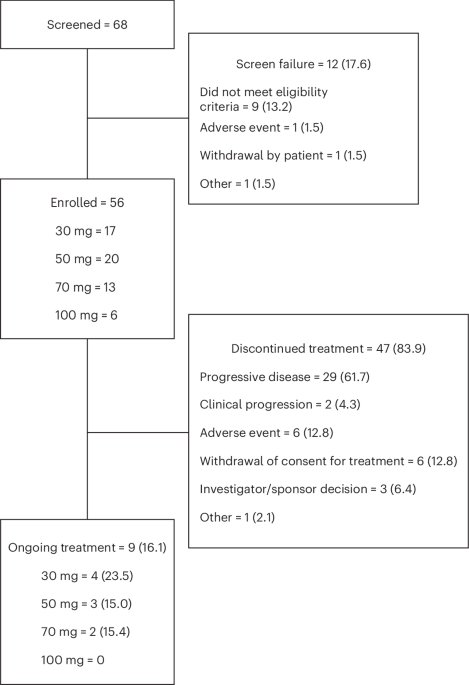
Approximately 24 patients were to be enrolled in part A (dose escalation) of the study (Supplementary Fig. 2). The Sponsor chose to backfill approximately 30 patients with UC in part A. The study was originally planned to dose participants from 20 mg to 500 mg. The 30 mg and 70 mg dose levels were not specified in the dose escalation table in the protocol. However, in all versions of the protocol, the protocol indicates ‘based on the emerging data and SRC recommendations, the Sponsor may choose to explore an alternative dosing schedule (eg, BID), intermittent dosing (eg, 21 days on, 7 days off), and/or intermediate dose levels.’ Exploring the 30 mg and 70 mg dose levels was approved by the SRC and the Steering Committee during the conduct of part A. As of amendment 6, the protocol indicates that part B will explore dose levels 30 mg and 50 mg (on the basis of the results of part A).
Inclusion criteria
-
(1)
Able to understand and willing to provide informed consent. A legally authorized representative (for example, parent or legal guardian) may consent on behalf of a patient who is otherwise unable to provide informed consent, if acceptable to and approved by the site and/or site’s IRB or ethics committee (EC).
-
(2)
Age ≥18 years.
-
(3)
Eastern Cooperative Oncology Group performance status (ECOG PS) 0, 1 or 2.
-
(4)
An archival, paraffin-embedded, formalin-fixed tumor sample that in part A is no more than 30 months old at the time of screening. If providing formalin-fixed paraffin-embedded (FFPE) slides, all slides (20–30) must come from the same tumor specimen. If an archival tumor sample is not available or is older than 30 months, the patient must consent to provide a fresh biopsy during screening. Biopsies must be collected from a tumor lesion that has not been previously irradiated (or has progressed following radiation therapy), and tumor lesions planned for biopsy must not be followed as target lesions for disease assessments unless the biopsy occurred before the baseline/screening tumor assessment evaluation.
-
(5)
Histologically or cytologically diagnosed, locally advanced (unresectable) or metastatic solid malignancies that have progressed after all available standard therapy for the specific tumor type or for which no standard therapy exists. Patients for whom standard therapies are intolerable or considered inappropriate by the investigator are eligible.
-
(6)
Patients with and without measurable disease (as defined by RECIST version 1.1) will be eligible for enrollment.
-
(7)
Screening laboratory values meet the criteria outlined below.
∘ Hematologic criteria may be met with transfusion of blood products or administration of G-CSF, provided that they are not given within 7 days of enrollment. The post-transfusion counts must remain stable without additional transfusion for at least 72 h before C1D1 to confirm sustained hematologic recovery.
∘ Hematologic
Absolute neutrophil count: ≥1.5 × 10⁹ per liter
Hemoglobin: ≥8.5 g dl−1
Platelets: ≥150 × 109 per liter
∘ Clinical chemistry
Fasting triglycerides: ≤200 mg dl−1 (may be achieved with lipid lowering medication, such as fibrates)
Fasting glucose: ≤140 mg dl−1 (may be achieved with oral hypoglycemic agents (not thiazolidinediones)).
Hemoglobin A1c (HbA1c): ≤7.0%
∘ Renal
∘ Hepatic
Total bilirubin: ≤1.5 × ULN (except patients with Gilbert’s syndrome who must have total bilirubin ≤3 mg dl−1)
AST and ALT: both ≤2.5 × ULN (except patients with liver metastases or tumor infiltration where the limits are ≤5 × ULN)
∘ Cardiac
Exclusion criteria
-
(1)
Female patients who are pregnant (confirmed with a positive pregnancy test) or breastfeeding. Female patients of childbearing potential who engage in heterosexual intercourse and male patients who are sexually active with female partners of childbearing potential must agree to use a highly effective form of contraception (for example, women: male partner sterilization, estrogen plus progestogen or progestogen-only hormonal contraceptives associated with inhibition of ovulation (oral, intravaginal, transdermal, depot or implant), intrauterine devices or intrauterine hormone-releasing systems; men: male condoms or vasectomy) throughout the study, starting at the time of consent and for at least 90 days after the last dose of the study drug. Female patients of childbearing potential are those who have begun menstruating. To be considered not of childbearing potential, female patients must have had a hysterectomy or bilateral oophorectomy or be 1 year post-menopausal or have had amenorrhea for a period of 12 months or longer in the absence of chemotherapy, anti-estrogens or ovarian suppression. Male patients must not donate sperm throughout the study period and for 90 days after the last dose of FX-909.
-
(2)
Previous anticancer chemotherapy or small-molecule targeted therapy, either investigational or commercially approved and available, within 2 weeks or five half-lives (whichever is shorter) before the start of study drug administration. When the most recent therapy was a biological therapy (including antibody–drug conjugates), an immune checkpoint inhibitor (for example, anti-PD(L)1 or anti-CTLA4) or immune agonist, patients should wait 4 weeks before starting therapy with FX-909 (see exclusion criterion 6 for required radiotherapy windows).
-
(3)
Previous therapy directly inhibiting PPARγ or RXRA. Note that previous treatment with rosiglitazone or pioglitazone for type 2 diabetes would not preclude participation in this study, provided that there is not a need for ongoing treatment with a thiazolidinedione during the study. If given, these agents must have been discontinued at least 2 weeks before the start of study drug administration.
-
(4)
AEs from previous therapy that have not returned to baseline or stabilized at grade 1 (except alopecia, hearing loss, vitiligo, endocrinopathy managed with replacement therapy and grade ≤2 neuropathy) before study drug administration.
-
(5)
Previous major surgery (excluding placement of vascular access) within 4 weeks before study drug administration. Patients must have fully recovered from surgery or its complications before the start of study treatment.
-
(6)
Previous radiation therapy with an inadequate washout between the last dose and the start of the study drug, defined as follows: (1) at least 2 weeks for palliative radiation to the extremities for osseous bone metastases are required and (2) at least 4 weeks for radiation to nonextremity sites are required.
-
(7)
History of another malignancy in the previous 2 years, unless cured by surgery alone and continuously disease free. Exceptions include appropriately treated carcinoma in situ of the cervix, nonmelanoma skin carcinoma, melanoma in situ status post full-thickness resection without recurrence, stage 1 uterine cancer, localized prostate cancer that has been treated surgically with curative intent and presumed cured or other malignancies with an expected curative outcome. Patients requiring adjuvant therapy within the past 2 years for another malignancy will not be considered to have been cured.
-
(8)
QT interval corrected using Fridericia’s formula (QTcF) >470 ms in screening, congenital long QT syndrome, family history of long QT syndrome or unexplained sudden death under 40 years of age in first-degree relatives. QTcF is QT corrected for heart rate according to Fridericia’s correction formula (QTcF = QT/RR0.33) and can be machine calculated or manually overread.
-
(9)
Known active diagnosis of lipodystrophy/lipoatrophy or an ongoing need to receive medications known to cause lipodystrophy/lipoatrophy. Screening for lipodystrophy/lipoatrophy without a known previous diagnosis is not necessary for enrollment in the study.
-
(10)
Any active uncontrolled systemic bacterial, viral or fungal infection requiring treatment.
-
(11)
Known history of human immunodeficiency virus seropositivity. Those who have no detectable viral load on highly active antiretroviral therapy are permitted.
-
(12)
Patients with chronic hepatitis B virus infection (indicated by a positive hepatitis B virus surface antigen and/or hepatitis B core antibody). Patients are permitted with either universal prophylaxis or a pre-emptive treatment approach consistent with regional or national guidelines for patients who receive anticancer therapies.
-
(13)
Active hepatitis C virus infection. Those who have completed curative therapy for hepatitis C virus and have no detectable viral load are permitted.
-
(14)
Previous diagnosis of chronic or recurrent (more than one episode) pancreatitis at any time or a diagnosis of acute pancreatitis within the 6 months before screening (note that elevations of amylase or lipase in the absence of clinical signs and symptoms that are consistent with a diagnosis of pancreatitis do not meet the criteria for exclusion).
-
(15)
Significant impairment of lung function indicated by resting oxygen saturations below 92% on room air or requiring chronic use of ambulatory supplemental oxygen.
-
(16)
Uncontrolled or symptomatic central nervous system metastases, leptomeningeal disease or carcinomatous meningitis. Asymptomatic brain metastasis is allowed if they have been stable after appropriate radiotherapy for 1 month.
-
(17)
Need for treatment with high doses of oral or intravenous steroids (>10 mg per day prednisone or equivalent). Physiologic doses of corticosteroids for treatment of endocrinopathies may be continued if the patient is on a stable dose for at least 1 month.
-
(18)
Need or anticipated need for treatment with a prohibited therapy during the treatment phase of this study.
-
(19)
Concurrent participation in any other investigational therapeutic study.
-
(20)
History of any of the following cardiovascular diseases:
Recent history (within the 6 months before screening) of serious uncontrolled cardiac arrhythmia (including atrial fibrillation without adequate rate control) or clinically significant electrocardiogram abnormalities including second-degree (type II) or third-degree atrioventricular node block
Documented cerebrovascular event (stroke or transient ischemic attack), cardiomyopathy, myocardial infarction, acute coronary syndromes (including unstable angina pectoris), coronary angioplasty, stenting or bypass grafting within the 6 months before enrollment
Congestive heart failure (class III or IV) as defined by the New York Heart Association functional classification system
Recent history (within the past 6 months) of symptomatic pericarditis
-
(21)
Thromboembolic events and/or bleeding disorders ≤28 days (for example, deep vein thrombosis or pulmonary embolism) before the first dose of the study drug.
-
(22)
Any evidence of severe or uncontrolled systemic diseases, including uncontrolled hypertension (systolic blood pressure ≥160 mmHg and/or diastolic blood pressure ≥100 mmHg) and active bleeding diatheses, which, in the investigator’s opinion, makes it undesirable for the patient to participate in the study or would jeopardize compliance with the protocol. Screening for chronic conditions is not required.
-
(23)
Patients with type 1 diabetes mellitus or type 2 diabetes mellitus that is not adequately controlled with diet, exercise or oral hypoglycemic agents and/or injectable agents other than insulin (as defined by HbA1c and fasting plasma glucose criteria above). Patients taking insulin are excluded from the study. Medication for type 2 diabetes mellitus should have remained stable for the past 14 days before screening.
-
(24)
Known hypersensitivity to FX-909 or any of its excipients.
-
(25)
Patients with gastrointestinal disorders that may interfere with the ability to swallow tablets or absorb study medication.
-
(26)
Patient is or has an immediate family member (for example, spouse, parent or legal guardian, sibling or child) who is a member of the study site or sponsor staff directly involved with this study, unless prospective IRB/EC approval (by chair or designee) is given allowing exception to this criterion for a specific patient.
-
(27)
Patients with any psychological, familial, sociological or geographical condition potentially hampering compliance with the study protocol and follow-up schedule; those conditions should be discussed with the patient before study entry.
-
(28)
Any condition that, in the opinion of the investigator, would interfere with evaluation of the investigational product or interpretation of the patient’s safety or study results.
End points
The primary end points are incidence of DLTs and incidence and severity of AEs and SAEs as reported in this publication.
The secondary end points are: the totality of the safety and tolerability, pharmacokinetic and pharmacodynamic data for FX-909; plasma pharmacokinetic parameters of FX-909, as applicable, including AUC, Cmax, time to maximum plasma concentration (Tmax) and terminal elimination half-life (t½); urine pharmacokinetic parameters of FX-909, as applicable, including renal clearance and percentage of FX-909 in urine; objective response rate (ORR), duration of response (DOR), time to response, disease control rate (DCR) and progression-free survival based on investigator assessment using RECIST version 1.1 criteria; and overall survival. DOR, progression-free survival, overall survival, time to response and urine pharmacokinetics are not reported in this manuscript, as these end points are part of the final analysis at the end of the ongoing phase 1 study.
Exploratory end points reported in this manuscript include: tumor subtyping, PPARγ gene expression, tumor microenvironment and mutations associated with treatment response using genomic and transcriptomic next-generation sequencing (NGS), IHC and/or immunophenotypic assays and methods; longitudinal monitoring of genomic (acquired mutations and tumor burden) changes by ctDNA using a liquid NGS assay; and evaluation of biomarker associations with preliminary antitumor activity.
Treatment
The study drug was administered under a fasted state (that is, no food 2 h before the dose and 1 h after each dose). The cohorts received the study drug QD at doses of 30 mg, 50 mg, 70 mg and 100 mg.
A total of three patients were enrolled into an open cohort. If no DLTs were observed, the next three patients were enrolled at the next highest dose level. If one DLT was observed, three additional patients were entered at the same dose level until six patients were enrolled and completed the DLT observation period. If ≥2 DLTs were observed in any cohort, the next patient was entered at a lower dose level following a review by the safety review committee (SRC) unless six patients had already been dosed at the next lower dose level with ≤1 DLT.
The DLT observation period was 28 days or until the first dose of cycle 2 if cycle 2 was delayed. During the DLT observation period, dose interruptions were allowed but dose reductions were not. After the DLT observation period, both dose interruptions and dose reductions were allowed. The dose modification guidelines and adverse event management algorithms are outlined in the clinical trial protocol.
Safety assessments
All patients underwent safety assessments during the treatment period to include nondirective questioning regarding AEs, physical examinations, vital sign assessments, 12-lead electrocardiograms, clinical laboratory assessments and other protocol-specified tests that are deemed critical to the safety evaluation of the study.
An SRC reviewed available safety, tolerability, pharmacokinetic and pharmacodynamic data for the purposes of study oversight and to make recommendations to the sponsor as it related to dose escalation or de-escalation; choice of schedule; maximum tolerated dose determination; patient, cohort or study termination; changing study eligibility criteria; and adapting dose-modification guidelines.
Pharmacokinetics
Blood samples for FX-909 plasma pharmacokinetics were collected on cycle 1 days 1 and 15, before the dose and at 0.5, 1, 2, 4, 6, 8 and 24 h after the dose (N = 40) (Supplementary Table 2). Additional pre-dose samples were collected on day 1 of the subsequent cycles.
Plasma concentrations of FX-909 were determined, using a validated high-performance liquid chromatographic–tandem mass spectrometry method. In brief, plasma samples were fortified with an internal standard (deuterated analog) and extracted by protein precipitation. Following liquid chromatographic separation, tandem mass spectrometry detection was performed at mass transitions of m/z 361.0 → 282.2 for FX-909 under atmospheric pressure chemical ionization, in positive ion mode. The standard curve had a dynamic range of 2–2,000 ng ml−1.
Key pharmacokinetic parameters evaluated by noncompartmental analysis (Phoenix WinNonlin, Certara) included maximum observed plasma concentration (Cmax), Tmax, area under the plasma concentration–time curve from time zero to 24 h after the dose (AUC0–24 h), t½ and accumulation ratio.
Pharmacodynamics
Paired skin punch biopsies were collected from patients at screening and cycle 1 day 15 (±2 days), after the dose (N = 41) (Supplementary Table 3). Biopsies were taken from the patient’s abdomen, upper arm or shoulder, with baseline and C1D15 taken from the same anatomical location. RNA was isolated from FFPE skin punch biopsies with the RNeasy DSP FFPE Kit (Qiagen, cat. no. 73604) and quantified using the Qubit RNA High Sensitivity Assay Kit (ThermoFisher, cat no. Q32852). Gene expression for nine PPARγ target genes (FABP4, RBP7, APOC1, IGFL3, ISG15, PLIN4, ANGPTL4, CD36 and IL7) was measured on samples with RNA yield >1,000 ng (N = 35) with a custom QuantiGene Plex Gene Expression Assay kit (ThermoFisher, cat no. QGP-180-M23052501) on the Luminex2000 (ThermoFisher). See the “Pharmacodynamic statistical analysis” section for additional details.
Exploratory biomarker assessments
Pre-treatment baseline archival tumor tissue or a fresh tumor biopsy was collected from patients with UC at screening to evaluate potential predictive biomarkers of response to FX-909 and their association with antitumor activity. Molecular characterization of tumors—including lineage classification and subtyping, gene expression, genetic alterations and tumor microenvironment—using whole exome sequencing (WES) and RNAseq was performed. Blood was collected at baseline and on treatment to enable longitudinal circulating tumor DNA analysis, using a liquid biopsy-based assay.
PPARγ IHC
Pre-treatment baseline tumor tissue was obtained from archival specimens or fresh tumor biopsies collected at screening (patients with UC, N = 41) (Supplementary Table 4). FFPE tumor tissue sections of 5-μm thickness were prepared. Following deparaffinization and antigen retrieval, IHC was performed by Roche CDx CAP/CLIA Laboratory (Tucson) using an IHC antibody for PPARγ (SP500; Roche Diagnostics) and standard chromogenic detection. The negative control was performed using an immunoglobulin-matched rabbit monoclonal negative control antibody (Roche Diagnostics, cat. no. 790-4795). Whole-slide images were reviewed by a board-certified pathologist. PPARγ staining was observed in the nucleus of tumor cells. Nuclear staining was assessed specifically in tumor cells, and stromal and immune elements were excluded from tumor scoring. The nuclear tumor positivity was calculated as the percentage of tumor cells staining at any (1+) intensity in the nucleus. This value is referred to as the TPS throughout the report.
Circulating tumor DNA
Blood samples for ctDNA analysis were longitudinally collected from patients at screening, cycle 2 day 1 and cycle 3 day 1, and at the end of treatment. Plasma and buffy coat were isolated from blood for all patients with UC with baseline screening collections (N = 29) (Supplementary Table 6). Somatic mutations in ctDNA were analyzed using the Caris Assure assay, which sequenced plasma cell-free DNA (cfDNA) across the whole exome using a custom hybridization and/or capture methodology28. Matched buffy coat DNA was sequenced to identify and filter out potential germline variants and variants arising from clonal hematopoiesis. WES data were processed through Caris’ proprietary bioinformatics pipeline28.
Aggregate variant allele frequency (aVAF) was calculated by summing the individual VAFs of clinically reported tumor mutations for each sample, excluding genes on the sex chromosomes (chr. X/Y). The list of ~293 clinically reportable genes included PPARγ, RXRA and FGFR3; PPARγ amplification was not among clinically reportable alterations. When buffy coat DNA was ‘quantity not sufficient’ but plasma cfDNA WES data passed quality control, VAFs were reported for such samples using its filtered cfDNA variant call format (VCF) and other samples’ clinically reported mutations and germline VCF collected for the same patient at other time point(s) (Supplementary Table 6). Liquid biopsy response was evaluated using the pre- to on-treatment percentage change in aVAF on the basis of the proposed LB-RECIST criteria25 (Supplementary Table 7).
Efficacy
The antitumor activity of study treatment was evaluated on the basis of the investigator’s assessment, according to RECIST version 1.129. Baseline tumor assessments were performed up to 28 days before cycle 1 day 1 during screening. Post-baseline tumor assessments were performed every 8 weeks ± 7 days using the same imaging techniques as used for the baseline assessment. Confirmatory disease assessments should be done ≥4 weeks after the first partial or CR. PD will include both clinical and radiographical progression.
As this was a phase 1 dose-escalation study and efficacy was only a secondary end point, no formal futility analyses were planned or conducted.
Molecular real-world data
Tumor tissue collected from 2,685 patients with muscle-invasive UC were sequenced using the Tempus xT assay. Molecular classification as luminal (luminal-papillary, luminal and luminal-infiltrated subtypes) or nonluminal (basal squamous and neuronal subtypes) was performed using non-negative matrix factorization with rank 5 following the Robertson method4, excluding PPARγ from the gene set to eliminate inference bias.
Statistics and reproducibility
During the progress of the study, the statistical analysis plan (SAP) was updated to align with protocol amendments and other changes in study procedures. The following is a summary of the updates made to the SAP.
SAP version 2.0 (7 January 2026)
This version replaced version 1.0 (15 May 2024).
Study design changes
Study schema updated to reflect part B randomization between doses and patient pre-selection by PPARγ IHC
Part B design changed from Simon two-stage to randomized dose-optimization design
Sample size increased from 33 to 40 patients
Alternative hypothesis updated from ORR ≥35% to ORR ≥40%
New appendix added with type I error and power calculations for the revised design
Analysis populations
Safety analyses
Baseline safety assessment values may be obtained from unscheduled visits before first dose
TEAEs of special interest (TEAESIs) defined by combining preferred terms:
∘ Thrombocytopenia: thrombocytopenia or platelet count decreased
∘ Fatigue: fatigue, lethargy, malaise, or asthenia
∘ Hyperglycemia: hyperglycemia, diabetes or glucose intolerance
TRAE summaries added to reporting
Safety monitoring
As per the SAP, several analysis sets were defined for this study. The safety analysis set included all patients who received at least one dose of FX-909 and was used for all safety end points except DLT evaluation. The DLT-evaluable analysis set included all part A patients who received at least 75% of planned doses during the DLT observation period or who discontinued treatment owing to AEs and was used to assess the maximum tolerated dose and inform dose selection for expansion cohorts.
The response-evaluable analysis sets involving patients enrolled in part A included the following: patients with UC enrolled in part A who have at least one post-baseline response assessment or discontinued the treatment phase owing to disease progression (including death caused by disease progression), tolerability or toxicity before the first post-baseline response assessment without any disqualifying major protocol deviations; part A PPARγhigh UC: subset of the part A patients with UC with PPARγ TPS score ≥60%; part A genetically altered: subset of the part A patients with UC with alterations in PPARγ, RXRA and FGFR3 genes; part A RXRAm: subset of the part A patients with UC with mutations in the RXRA gene; part A FGFR3m: subset of the part A patients with UC with mutations in the FGFR3 gene.
The pharmacokinetic analysis set included all patients who received at least one dose of FX-909 and had at least one post-dose pharmacokinetic measurement.
Summary statistics for continuous variables include n, median, mean, standard deviation, minimum and maximum. For categorical variables, frequencies and percentages are presented. Graphical displays will be provided as appropriate.
DCR is defined as a best confirmed response of stable disease for at least 16 weeks, PR or CR.
Wherever applicable, confidence intervals are reported using the following methods:
A patient with mixed responses at different tumor sites (Supplementary Fig. 4) is handled differently in the reporting of efficacy summaries, as below:
Counted as PD in confirmed ORR calculation but is counted as a responder in unconfirmed response summaries
Counted in DCR because that patient had two consecutive assessments of PR after initial progression
Counted as responder in TTR and DOR calculation
For DOR, the time of progression after assessment of response is used as the event time
The following coding standards will be used in the analysis:
AEs and medical histories: MedDRA version 26.0 or higher
Previous and concomitant medications: WHODrug B3 Global, March 2023 or higher
Safety and tolerability were assessed by the incidence and severity of AEs as determined by the NCI CTCAE v5.0.
Safety analysis consisted of summaries for AEs, summarized by system organ class and preferred term for all AEs, SAEs, TEAEs, AEs by maximum severity grade and for DLTs.
Sex was self reported during the study. No analysis based on sex or gender was completed given the small size of the cohort.
All statistical analysis outputs were produced using SAS version 9.4 (or a later version) or R version 4.5.0 in a secure and validated environment.
Pharmacodynamic statistical analysis
After background subtraction and normalization with housekeeping genes, fold change in the nine genes was associated with dose and exposure parameters (Cmax, AUC0–24 h) using
Linear mixed models for visit and/or replicate-level data
Linear regression models (LMs) for fold change from baseline (and adjusting for baseline expression of the gene)
Pre-determined composites of the nine genes were associated with dose or exposure using Spearman and Pearson correlation tests. These pre-determined composite are: mean log fold change, median log fold change, maximum/minimum log fold change and their standardized versions by standardizing individual genes by median absolute deviation after subtracting the dose group median. FDR was used to adjust P values for multiplicity.
WES
Pre-treatment baseline archival tissue or fresh tumor biopsies were collected from patients with UC at screening (N = 41 total; N = 38 with sufficient tissue sections available; Supplementary Table 8). Dual DNA and RNA isolation from patients’ FFPE tissue sections (N = 27, N = 8 pending) was performed using proprietary method (Discovery Life Sciences); sections containing low tumor area were macrodissected (N = 6). For samples with sufficient DNA (N = 25), WES libraries were generated using NEBNext Ultra II FS, hybridized to IDT V2 Exome panel and sequenced to 100× the average coverage using NovaSeq X Plus (Illumina). For a subset of patient samples (N = 3) (Supplementary Table 8), dual DNA and RNA isolation was performed on microdissected sections and libraries were generated using the MI Cancer Seek assay (Caris) and sequenced using NovaSeq 6000 (Illumina).
WES bioinformatics pipelines were run on the Seven Bridges Platform (Velsera). Trimmed WES reads were aligned to the human reference genome (hg38; GENCODE release 27, GRCh38.p10) using BWA-MEM (v0.7.17) with a mismatch penalty of 3, followed by the GATK Pre-Processing workflow (v4.2.0.0) that includes duplicate marking and base recalibration (BQSR). Somatic copy number variants (CNVs) were analyzed using the consensus of the GATK Somatic CNV Pair workflow (v4.2.5.0) and CNVkit (v0.9.9) in tumor-only mode with platform-matched panel-of-normal reference files generated from nine gold-standard samples available through Google Brain Genomics30. Somatic short variant calling was performed using the GATK Somatic single-nucleotide variants (SNVs) and INDELs (Mutect2) workflow (v4.2.5.0) in tumor-only mode with gnomAD as germline resource VCF and a panel of normal VCF generated from the 1000 Genomes Project (GATK Resource Bundle; hg38 data sets), followed by annotation and effect prediction for variants with PASS filter using SnpEff (v5.1 d). One patient sample was excluded from further analysis owing to low mean coverage (<40 reads per base; Supplementary Table 8). For the 81.5% (22/27) of patients with germline WES data available through the Caris Assure blood test (see ‘Circulating tumor DNA’ in Methods), germline short variants were defined as those having VAF ≥0.3 in ≥50% of buffy coat samples profiled from the same patient at different time points. For the 18.5% (5/27) of patients without matched germline data, germline short variants were inferred using PureCN (v2.6.4).
Tumor mutational burden was defined as the number of somatic nonsynonymous SNVs and indels per callable coding territory (Mb). Specifically, germline-subtracted short variants with moderate or high SnpEff impact, variant reads ≥5, total reads ≥30, tumor log odds (TLOD) >6.3 and tumor purity-adjusted VAF ≥0.05 were counted for tumor mutational burden. Callable coding territory was defined as the number of bases (in Mb) within the target exome regions with total reads ≥30.
RNAseq
Pre-treatment baseline archival tissue or fresh tumor biopsies were collected from patients with UC at screening (N = 41 total; N = 38 with sufficient tissue sections available; Supplementary Table 8). Dual DNA and RNA isolation from patients’ FFPE tissue sections (N = 27, N = 8 pending) was performed using the proprietary method (Discovery Life Sciences). RNAseq libraries were generated using KAPA HyperPrep with RiboErase (Roche) and sequenced to obtain >50 M 100-base pair paired-end reads using NovaSeq X Plus (Illumina). For a subset of patient samples (N = 3), dual DNA and RNA isolation and libraries were generated using the MI Cancer Seek assay (Caris) and sequenced using NovaSeq 6000 (Illumina).
RNAseq bioinformatic pipelines were run on the Seven Bridges Platform (Velsera). RNAseq reads were trimmed for adapter, poly-N and low-quality sequences using fastp. Trimmed clean reads were mapped to the human reference genome (hg38; GENCODE Release 27, GRCh38.p10) with STAR (v2.7.10a) using default parameters and gene-level quantification was performed with RSEM (v1.3.3). For the subset of samples analyzed by MI Cancer Seek (N = 3), data were processed through Caris’ proprietary bioinformatics pipeline and gene-level quantification (TPM) was obtained using Salmon31.
We obtained an independent real-world transcriptomic dataset from tumors from patients with advanced UC (N = 29, Tempus xT RNAseq assay) to develop a method to adjust for differences between the Tempus-reported PPARγ TPM values and those obtained using the RSEM pipeline with the DLS assay. For each sample, RSEM TPMs were renormalized for the subset of genes included in TEMPUS xT (20,061 genes). Next, platform-adjusted PPARγ TPM values (Supplementary Table 10) were obtained by applying an LM, which was developed to associate the renormalized RSEM TPMs with TPM values reported by the TEMPUS assay, using the real-world transcriptomic data processed by both RSEM and TEMPUS pipelines for training. Samples analyzed by MI Cancer Seek (N = 3) were excluded from this analysis. PPARγ mRNA expression values of all clinical study samples are being reported using this method.
Gene signature scores were defined as the mean log2(TPM + 1) mRNA expression of genes comprising each published signature: luminal, basal and squamous markers4; epithelial–mesenchymal transition (EMT) and IFNα signatures from the MSigDB Hallmark gene sets32; B cell, T cell, CD8+ T cell, exhausted CD8+ T cell and macrophage markers33; granulocytic myeloid-derived suppressor cell (MDSC) signature34; and immune checkpoint genes (CD274, CTLA4, HAVCR2, LAG3, PDCD1, PDCD1LG2 and TIGIT). The basal/squamous gene expression profile score was defined as the mean of the basal and squamous gene expression profile scores. To obtain expression values comparable across samples, we computed trimmed mean of M-values (TMM)-normalized TPMs used for signature score calculations as follows. RSEM expected counts were divided by effective lengths to obtain length-normalized abundances, which were scaled across samples using TMM normalization (edgeR; v4.0.16). Scaled values were then renormalized to 1 million per sample to generate TMM-normalized TPMs (Supplementary Table 11). Samples analyzed by MI Cancer Seek (N = 3) were excluded from this analysis.
Molecular classification of UC tumor tissues as luminal (luminal papillary, luminal and luminal-infiltrated subtypes) or nonluminal (basal squamous and neuronal subtypes) was performed by applying the BLCAsubtyping classifier to each sample’s UQ-normalized RSEM expected count or Salmon TPM values using the ‘TCGA’ method (https://github.com/cit-bioinfo/BLCAsubtyping) (ref. 3). For samples analyzed by MI Cancer Seek (N = 3), genes boosted by additional baits were removed from the analysis.
Genetic alteration calling for PPARγ, RXRA and FGFR3
PPARγ amplification was reported on the basis of tissue WES data and defined with a tumor purity-adjusted copy number (CN) ≥3. Samples with <50 reads per base mean on-target coverage across chr. 3 (containing PPARγ) were called ‘indeterminate’ for PPARγ amplification. RXRA hotspot mutations (S427F and S427Y) and FGFR3 activating mutations (S249C, Y373C, R248C and G370C) were reported on the basis of both tissue and ctDNA WES data. Any tumors not containing these pre-specified genetic alterations are called ‘wild type’ as shorthand. For tissue WES, mutations supported by SNVs with VAF >0.05 and TLOD >6.3 were called ‘positive’; otherwise, the gene was called ‘negative’ for mutations of interest if its mean coverage was ≥50 reads per base or ‘indeterminate’ if its mean coverage was lower. For ctDNA WES, mutations comprising aVAF at baseline (see ‘Circulating tumor DNA’ in Methods) were called ‘positive’; otherwise, the gene was called ‘negative’ for mutations of interest if the baseline aVAF was >0 and ‘indeterminate’ if the baseline aVAF was 0. Genetic status was determined from the combination of PPARγ amplification, tissue-based and baseline ctDNA-based RXRA/FGFR3 mutations of interest: patients ‘positive’ for any of the alterations were labeled ‘Gen+’; otherwise, they were labeled ‘Gen−’ (Supplementary Table 10).
FX-909 molecular structure
FX-909 is a covalent inverse agonist that was discovered using a ligand-based approach with a sulfone leaving group19. The molecular structure of FX-909 shown in Supplementary Fig. 1 was generated by Flare Therapeutics using ChemDraw Professional 23.1.1.13 software. FX-909 robustly enforces a conformationally ‘repressive’ state of PPARγ, even in highly activated contexts such as RXRA S427F mutation and PPARγ amplification. FX-909 is a potent, highly selective and powerful suppressor of PPARγ transcriptional activity through enhancement of PPARγ nuclear corepressor binding affinity. FX-909 (CAS 2924573-90-8) has been registered on the National Institutes of Health Development Therapeutics Program data warehouse site, which includes the 2D and 3D chemical structures, and with the FDA Global Substance Registration System (https://pubchem.ncbi.nlm.nih.gov/source/FDA%20Global%20Substance%20Registration%20System%20(GSRS)) v3.1.2. Additional details on the compound are available on PubChem (https://pubchem.ncbi.nlm.nih.gov/compound/fx-909).
Reporting summary
Further information on research design is available in the Nature Portfolio Reporting Summary linked to this article.



