
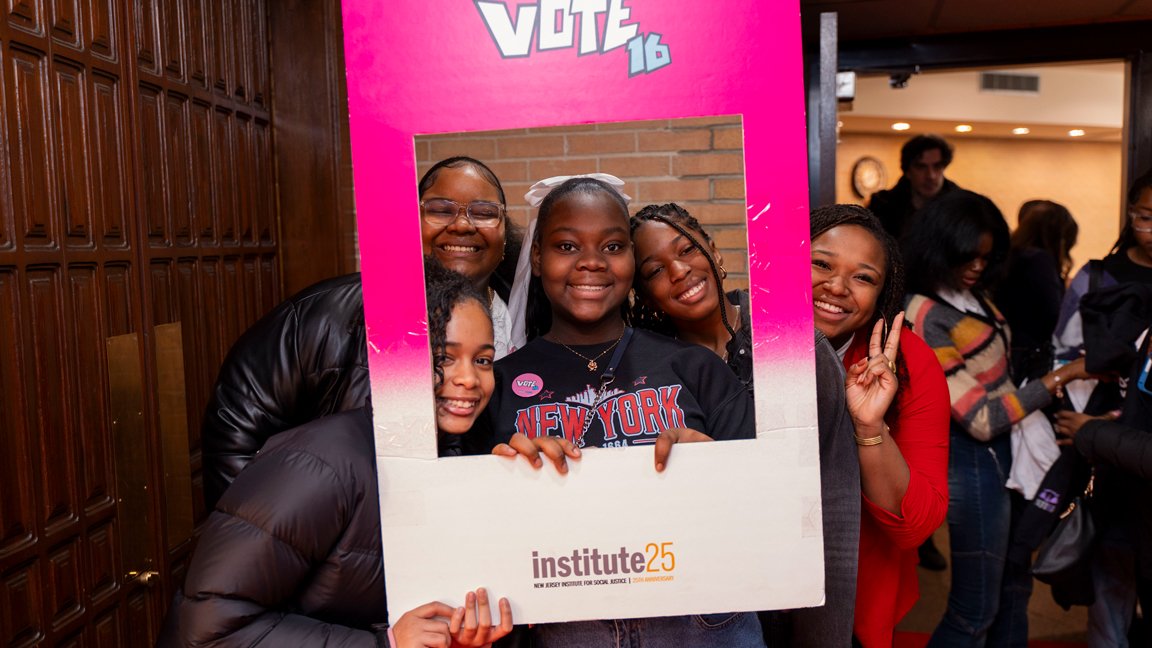
This was no sprint. It was a marathon, marked by lessons and kinship from allies who have prioritized youth voices against structural barriers too great to ignore.
Two years ago, Newark passed an historic ordinance allowing 16- and 17-year-olds to vote in school board elections. In 2025 that policy was implemented, opening the door for young people to shape decisions that directly impact their daily lives.
Yet turnout numbers raised a familiar question: Where were the youth?
If I had not witnessed the organizing myself, the depth of it, the discipline of it, I might believe the narrative of youth apathy. That narrative is false. What happened this election cycle cannot be dismissed as disinterest. It demands accountability from the systems meant to support young voters. This was not a failure of young people. It was a failure of the adults who control and influence the system.

Newark has always been a place where youth power drives change. For 22 years, its public schools were under state control. Local oversight was restored in 2018 after sustained organizing by parents, educators and young people who refused to be ignored. Lowering the voting age is the next chapter. It is not the finish line. It is an invitation to build a full youth voting bloc, ages 16 to 24, and to establish civic habits that last into adulthood.
As the late Rep. John Lewis reminded us, democracy requires good trouble, necessary trouble. Then-Newark City Council President LaMonica McIver, who sponsored the ordinance, was inspired to pursue elected office by her fifth-grade teacher, now Mayor Ras Baraka. The student became the legislator. The teacher became the mayor. Power builds over time, but only if we nurture it. That responsibility sits with all of us.
The Youth Power Action Coalition did not arrive fully formed. It grew.

In August, young people began showing up to Board of Education meetings with specific questions rooted in their lived experiences, from school infrastructure to mental health support. They were not there to complain. They came with purpose. By October, they brought agendas and youth-authored white papers. Month after month, they returned. By April, the coalition had grown to 292 members across Newark and neighboring cities. Between 20 and 40 youth attended every board meeting since August, often outnumbering adults. They knocked on 3,000 doors across Newark between mid-February and late March, organizing in rain and cold.
In January, their policy proposal moved through the governance committee. It called for a co-designed, district-wide youth survey to track program impacts on students across schools, building toward a transparent accountability system shaped by young people themselves. The district said no in February. They came back anyway.
Organizations like The Gem Project, the convener of the Youth Power Action Coalition, worked to match that energy with infrastructure. We prioritized online voter registration to reduce errors, tracked pledges, sent deadline reminders and hosted weekly civic education sessions where young people learned their rights, confirmed polling locations and registered.
Coalition allies showed up, too.
Newark Youth Career Pathways organized students across five partner schools to attend those same sessions, moving young people from awareness to online registration. Great Oaks Legacy Charter School engaged its juniors and seniors in a schoolwide vote-by mail-effort, marching youth together to deposit ballots in a secure mailbox the day before the election. Complex Visions Newark, hearing directly from students that there was little to no chatter about the election across school spaces, launched youth-targeted social campaigns to fill that gap.
Each organization brought something different. Together, they built what no single organization could have built alone.
On April 21, people ages 16 and 17 cast their ballots. More than 25% of them rode our buses. In all, Newark has 1,524 registered voters of those ages — and only 45 came out. That gap tells a story.
The young people arrived at the polls, and the system broke down in real time. Young voters who had registered weeks in advance could not find their names in the system, even with voter acknowledgment cards in hand. Others were sent to incorrect polling locations instead of being offered provisional ballots. Some arrived at locations where staff did not know an election was taking place. Some were told they were not eligible to vote because of their age, despite the ordinance.
These barriers did not affect only 16- and 17-year-olds. Eighteen-year-olds faced them, too. We know because we were there. Chaperones advocated in real time. Without that support, many young people would have walked away without voting.
What keeps me up at night are the young people who believed they were not eligible and left. The ones who did not know they could request a provisional ballot. The ones who encountered resistance without anyone beside them. That is the part of this story we may never fully know. These are not minor errors. They are systemic failures.
Grassroots organizations cannot carry this alone. Civic tradition does not survive on momentum alone. It requires repetition, coordination and institutional commitment: year-round, across every school, at every level. What was built in Year 1 was not sustained into Year 2. Poll workers must be trained on current ordinances. Registration systems must minimize error and include follow-up. Young people must know their rights before they arrive at the polls, not after they have been turned away.
As a city and as a state, we must do better. It will take parents, educators, community organizations and institutions working together to build something that lasts, not just when it makes history. Youth are watching whether the adults in power mean what they say about prioritizing their voices. You do not invest only when it is new and the cameras are present. You invest over and over again until it becomes tradition.
One thing is certain: We will be there alongside them, whether in moments of visibility or in the quiet years between. Young people deserve to be not only invited into democracy, but also fully supported in participating in it.



