
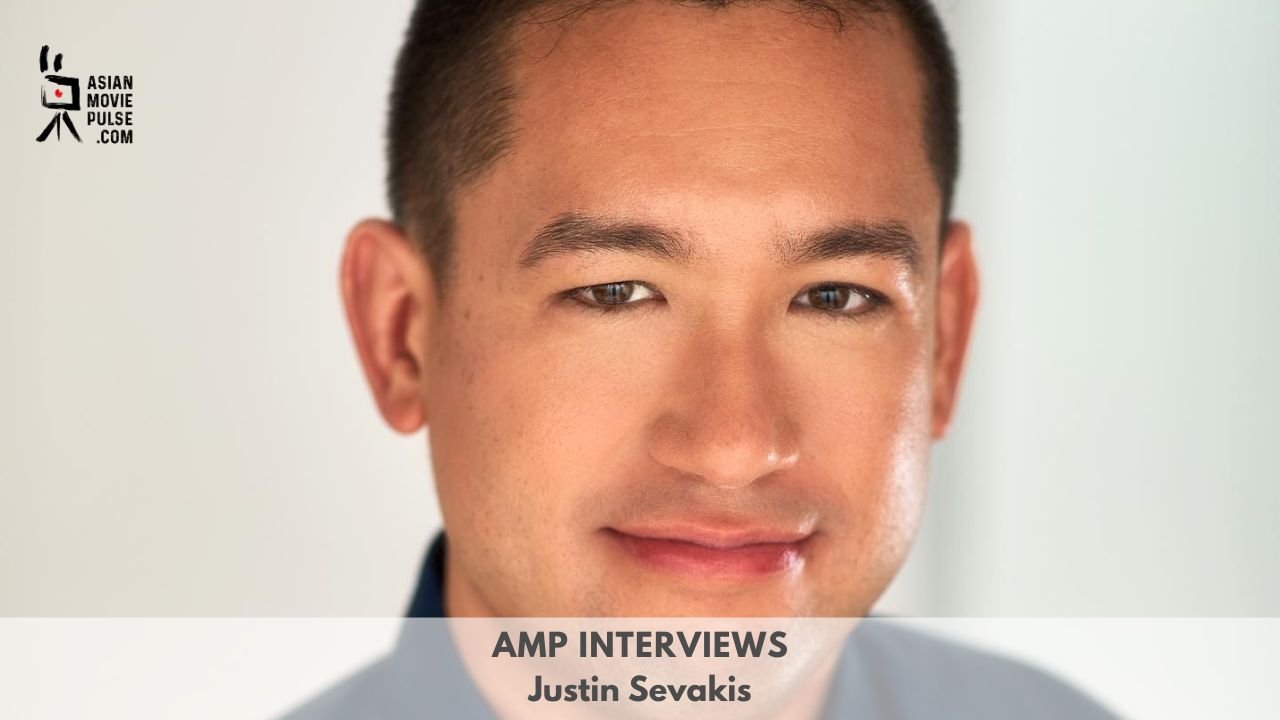
Justin Sevakis has occupied a rare position in the history of anime and Asian cinema in North America. Across his work with Anime News Network, MediaOCD, Discotek Media, AnimEigo and, more recently, Whole Grain Pictures, he has moved between journalism, fan culture, restoration, disc production, distribution and preservation, while remaining deeply connected to the collector and enthusiast communities that shaped his career from the beginning.
Sevakis recalled that his fascination with cinema began with the mechanics of the medium itself. As a child, even when a movie bored him, he would lean back and watch the light coming from the projection booth. His discovery of anime came around the age of 13, when his local Blockbuster in Detroit began carrying a small selection of titles. At a time when Western animation often felt infantilizing to him, anime appeared as something vibrant, adult and underappreciated. Soon, Hong Kong cinema and, later, the Korean wave also entered his field of interest, placing him at the front edge of what he describes as a major Asian content boom.
That same need for reliable information eventually led to the creation of Anime News Network in 1998. Sevakis explained that, while writing a newsletter for his high school anime club, he realized how difficult it was to find basic, verified information about new releases, licensing news and industry developments. At the time, fans depended on scattered reports from newsgroups and forums, while magazines were slow, limited or closely tied to specific publishers. Anime News Network was conceived as a central clearing house for news, reviews and industry questions, and Sevakis says it was intended to be a real business from the start, even if internet journalism in 1998 offered almost no clear path to profitability.
The site also changed how he understood the relationship between fans and the professional side of the industry. Although it did not immediately open up the Japanese business to him, it did bring him into contact with American anime companies. Through those conversations, he began to understand why certain things worked the way they did, particularly in terms of licensing, publishing and release strategies. He also saw how fan speculation filled the gaps when there was no reliable information, and he tried to share the realities of the business with Anime News Network readers.
Sevakis’ transition from journalism to production was not a clean break, since he had already been involved in VHS fansubbing before founding Anime News Network. His group, Kodocha Anime, became known in fan circles for trying to make its releases look as polished and professional as possible. After moving to New York for film school, he eventually found his way into Central Park Media after a chance meeting with founder John O’Donnell on a plane. The company had released many of the tapes Sevakis had rented as a teenager, and by the end of the flight he had a job.
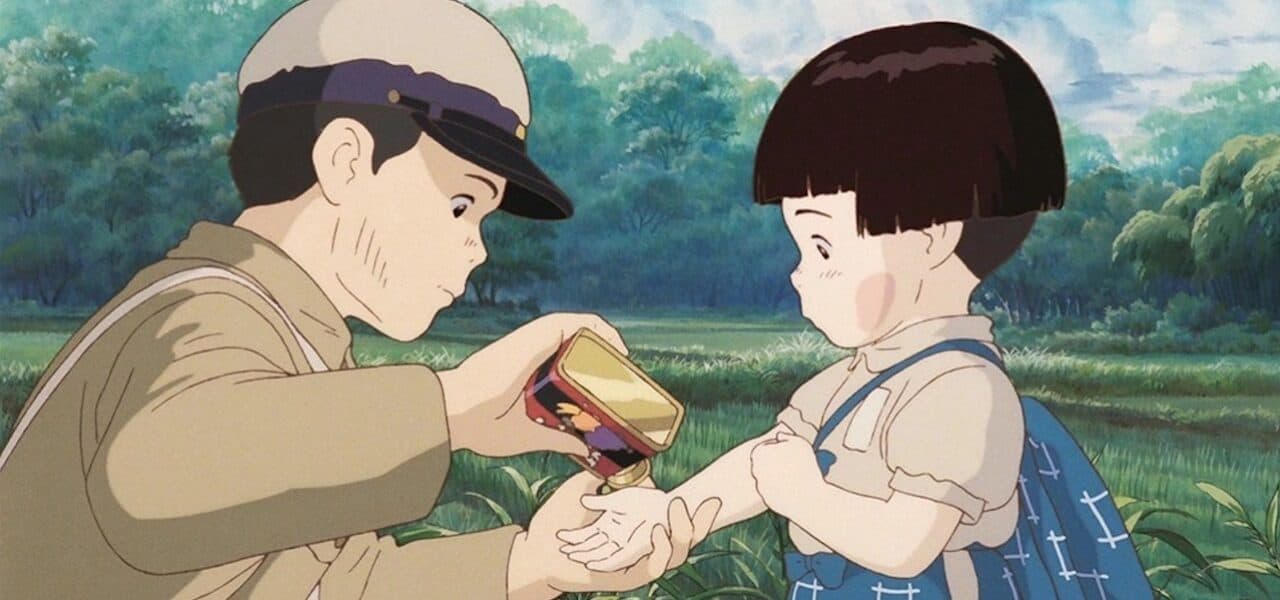
At Central Park Media, Sevakis worked on a wildly varied selection of titles, from “Grave of the Fireflies” and “Project A-Ko” to far more extreme adult material. More importantly, he became one of the few openly fan-oriented voices inside the company. He often represented the company in online spaces and helped bring fan feedback into the production process. According to Sevakis, that communication improved the quality of the releases, helped the company respond to technical criticism and created a healthier connection between the audience and the professional side of the business.
After Central Park Media, Sevakis worked at ImaginAsian TV, a startup focused on Asian content, where he learned about licensing and theatrical distribution, as well as many lessons about what not to do. He later returned to Anime News Network and explored streaming, although he notes that the effort came too early and lacked the resources to compete with larger platforms. From there, he moved into freelance Blu-ray production, at a time when many companies that had handled DVD production internally were struggling to master the more demanding Blu-ray format.
That path eventually led to his long association with Discotek Media. Sevakis recalls that the company, then a small anime publisher in Florida, approached him when it wanted to move into Blu-ray. The collaboration began modestly but developed into one of the most distinctive restoration and collector-focused operations in the field. Sevakis describes Discotek as a place where, once trust was established, he and his team were given remarkable freedom. This allowed them to create releases packed with technical care, archival attention and the kind of fan-minded detail rarely seen on anime discs before.
Another major project grew out of Sevakis’ desire to document the history of the North American anime and manga industries, through Anime Business. He was less interested in telling a general story about fandom and more interested in the people who fought to bring anime legally into the marketplace, convince stores to stock it and get it on television. During the pandemic, he realized that many of the pioneers of the 1980s and 1990s were getting older, and that their stories needed to be recorded. He eventually shot more than 30 interviews in New York, London, Los Angeles and elsewhere. Although the larger documentary project proved difficult to finish, the interviews found a new home online as part of the AnimEigo ecosystem.
AnimEigo entered Sevakis’ life in an unexpected way. While interviewing founder Robert Woodhead, Sevakis was asked whether he would be interested in buying the company, since Woodhead was approaching retirement and felt Sevakis could be trusted to continue the brand. Sevakis accepted, but as the deal progressed, he also considered the limitations of vintage anime as a business. Wanting a broader and more diverse catalog, he founded Whole Grain Pictures as a sister label dedicated to restoring and releasing overlooked works, including live action titles.

Whole Grain Pictures’ first acquisitions reflected that philosophy. One was “Too Much Sleep”, an American independent work by a Filipino American director, which became what Sevakis calls a dream project after the original camera negatives were found and a 4K restoration became possible. Another was “Journey from the Fall”, a Vietnam War drama he had previously encountered during his time in distribution. From there, the label’s focus naturally expanded toward Asian and Asian American titles, not out of a rigid agenda, but because many of the works Sevakis wanted to rescue happened to fall within that space.
Among the upcoming Wholegrain Pictures releases, Sevakis is particularly excited about “Red Sorghum”, “Failan” and “Microhabitat”. He acquired “Red Sorghum” after visiting TIFFCOM and discovering that the Zhang Yimou classic was available through a catalog connected to CCTV. He describes the deal as almost unbelievable and says the title deserves the “royal treatment”. “Failan” and “Microhabitat”, meanwhile, came through Echelon, whose catalog included festival favorites that immediately caught his attention. Sevakis describes “Failan” as a gorgeous and yearning work from the Korean Wave era, while “Microhabitat” struck him as a quirky and immediately appealing contemporary Korean title.
Looking ahead, Sevakis admits that anime remains the reliable foundation of his business. Anime fans, he says, are organized, communicative and often help market releases simply by talking to each other. Live action audiences can be just as passionate, but they are harder to reach because they are more fragmented. Even so, Sevakis has no intention of abandoning live action. As a collector and cinema lover, he says there are discs he simply wants to exist, and therefore he feels he has no choice but to make them.
That attitude may explain why Whole Grain Pictures already feels difficult to categorize. Its catalog can place “Red Sorghum” next to cult animation, oddball comedies and unexpected obscurities. Sevakis jokingly describes the label as a less pretentious Criterion Collection, but the phrase also captures the wider logic behind his work. Whether through Anime News Network, Discotek, AnimEigo or Wholegrain Pictures, his career has been built around the same impulse: to preserve what might otherwise disappear, explain how the industry works, and bring neglected titles back to the people most likely to love them.



