
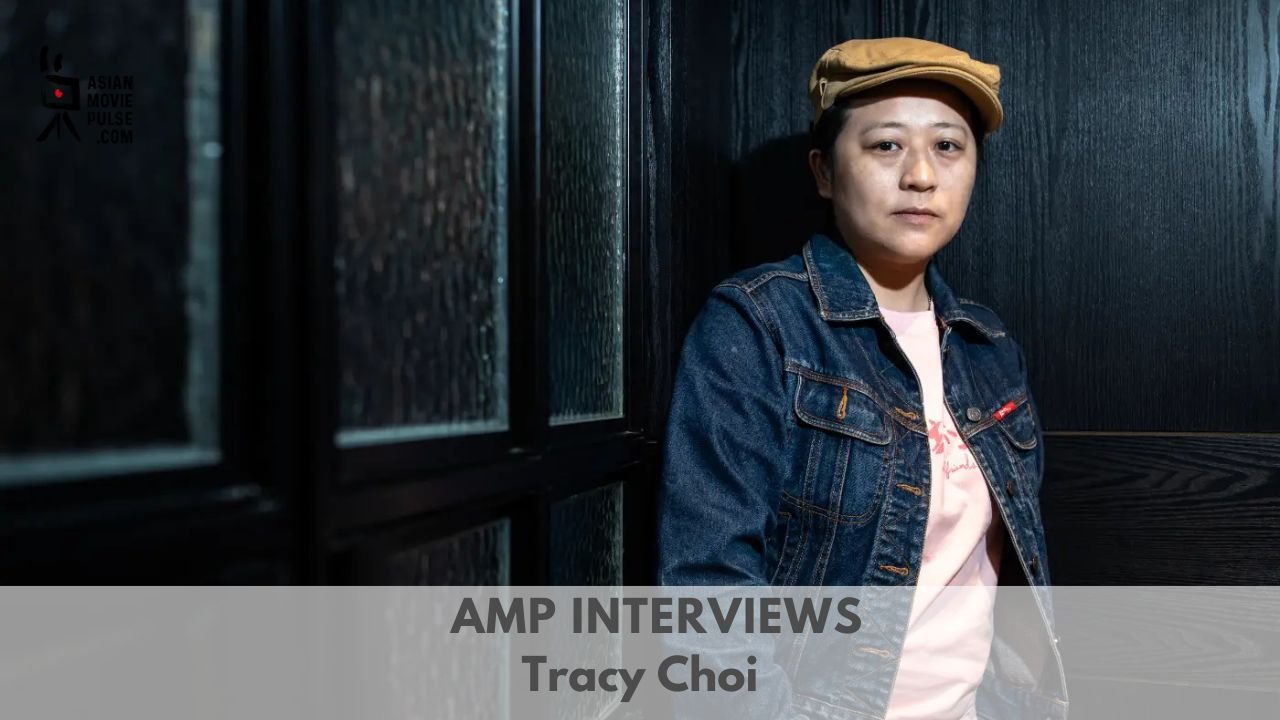
Tracy Choi’s “Girlfriends” unfolds across Macau, Taiwan, and Hong Kong, following the life of a queer woman through different stages of her emotional, personal, and professional development. The Macau director spoke about the decision to structure the story in reverse chronology, the casting of three actresses as the same protagonist, the importance of the three cities in the narrative, and the challenges of creating cinema in Macau.
Girlfriends is screening at Queer East Film Festival
According to Choi, “Girlfriends” was not initially conceived in its final structure. The original script used a more crosscutting approach, but once production was completed and editing began, she and her team realized that moving from the present into the past allowed the audience to understand the protagonist more clearly. In this way, the structure gradually reveals what the character is facing in the present, while also showing how the past shaped her into the person she has become.
The writing process itself began during the pandemic, when Choi started developing a story about a girl growing up in Macau. Later, a Hong Kong screenwriter joined the project and helped make the narrative more accessible for audiences. Production began in September 2024, following around one month of preparation, while the shoot lasted approximately one month and was completed in 19 shooting days.
One of the most interesting aspects of “Girlfriends” is the fact that the central character is portrayed by three different actresses. However, Choi explained that she never wanted them to look very similar. For her, this choice reflects the way people change as they grow older, especially from high school to college and then into adult life, to the point where even those around them may no longer recognize them. At the same time, she wanted the character to represent different kinds of girls, with different appearances, energies, and ways of existing in the world.
Check the Review of the Film
Still, Choi also created links between the three performances. Since the youngest part of the story was shot first, the actress playing the middle period visited the set in order to observe the process and develop a sense of memory from the character’s past. Similarly, the actress playing the oldest version was shown footage of the youngest incarnation, so she could also carry traces of that earlier self into her performance.
The casting also had a more personal dimension. Choi mentioned that the actresses playing the oldest couple were already close friends of hers, and had known each other for almost ten years. Since their characters are meant to have been together for eight to ten years, this existing familiarity helped make their chemistry feel natural. Some of their interactions were not even in the script, but came from their real friendship, something Choi felt added authenticity to the scenes.
The setting of “Girlfriends” is equally central to the story. Choi described Macau, Taiwan, and Hong Kong almost as additional characters. Macau, where the protagonist grows up, is presented as a place of restriction, reflecting a society that is often concerned with how others perceive it. Taiwan, on the other hand, gives the character a sense of freedom, although this freedom also comes with confusion and uncertainty. Hong Kong is shown as more practical and realistic, a place where people work hard to survive, which connects directly to the protagonist’s adult life and her attempts to support both her creative ambitions and her relationship.
The housing issue also plays an important part in the narrative, particularly through Bei Bei’s decision to buy a house in Macau. Choi noted that although housing in Macau may be slightly cheaper than in Hong Kong, it is still not affordable for many young people, including office workers, artists, or teachers. As a result, the question of home ownership becomes not only a practical concern, but also a reflection of pressure, stability, and the different expectations placed on the characters.
Speaking about queer identity, Choi pointed out that the strongest contrast is not between Hong Kong and Macau, but between Taiwan and the other two cities. Even though the Taiwan section of the story is set before same-sex marriage became legal there, she emphasized that Taiwan has developed a stronger public conversation around queer and gender issues. By contrast, she feels that Hong Kong and Macau do not discuss these subjects seriously enough. Because of this silence, small but revealing moments continue to happen, such as a scene in which one character refers to a lesbian partner as a “boyfriend”. For Choi, such details expose how queer relationships are often forced into heterosexual terms simply because society has not learned to talk about them properly.
This approach also extends to the more intimate moments in the Taiwan section, where the protagonist is trying to understand herself, both in terms of sexuality and identity. Choi worked with an intimacy coach for the first time during the shoot, something she described as a very positive experience. Since the Taiwan scenes had to be shot in only six days, the preparation helped the actresses, the crew, and the director herself. The choreography was discussed and planned in advance, allowing Choi to focus more on emotion and facial expressions once the cameras were rolling.
Visually, Choi wanted “Girlfriends” to enter more deeply into the characters’ feelings. Working again with Simmy Cheong, the director of photography from her first feature, “Sisterhood”, with whom she has collaborated for more than ten years, she used handheld camerawork and different color tones to distinguish the three time periods. In the youngest section, the framing often places the protagonist inside something or does not show her directly, suggesting a more uncertain and enclosed emotional state.
Choi also spoke about the current state of cinema in Macau, noting that there is not really a fully formed industry. However, she sees the development of government funding over the last decade as a positive sign, since it has allowed young directors to make their first or second features. Nevertheless, Macau remains a very small market, with a limited audience base, which makes distribution difficult. As a result, filmmakers often need to collaborate with Hong Kong, Taiwan, or mainland China in order to secure wider circulation and theatrical release.
Looking ahead, Choi revealed that she already has another project in post production. The new work also focuses on women, this time through the relationship between a college professor and a college girl, who help each other escape complicated circumstances, start something new together, and grow through the process.



