
Samik Roy Choudhury’s “Maya Satya Bhram” is one of those movies that seems determined to include as much as possible in its narrative, moving from crime thriller to mystical drama, from social critique to philosophical meditation, and from police procedural to a comment on Godmen and mass belief in contemporary India. The Bengali production was completed in 2025 and was presented at the Bishkek International Film Festival, where Choudhury also spoke about the ideas behind the project. According to the director, the story came after the unexpected success of his first release in 2024, which performed well in theatres after completing its festival run.
The concept was born during a trip to the mountains, where Choudhury started working on the central philosophical idea of the story. For him, people should not try to interfere with the past or obsess over knowing the future, since happiness and contentment can only truly exist in the present. A past encounter with a shaman, which he still could not fully explain or believe, gave him the mystical figure through which he could express this thought. He wrote the story in the mountains in seven days, returned to the plains, pitched the idea to producers and financiers, and then developed the screenplay. “Maya Satya Bhram” is planned for release in India at the end of August, pending censor approval.
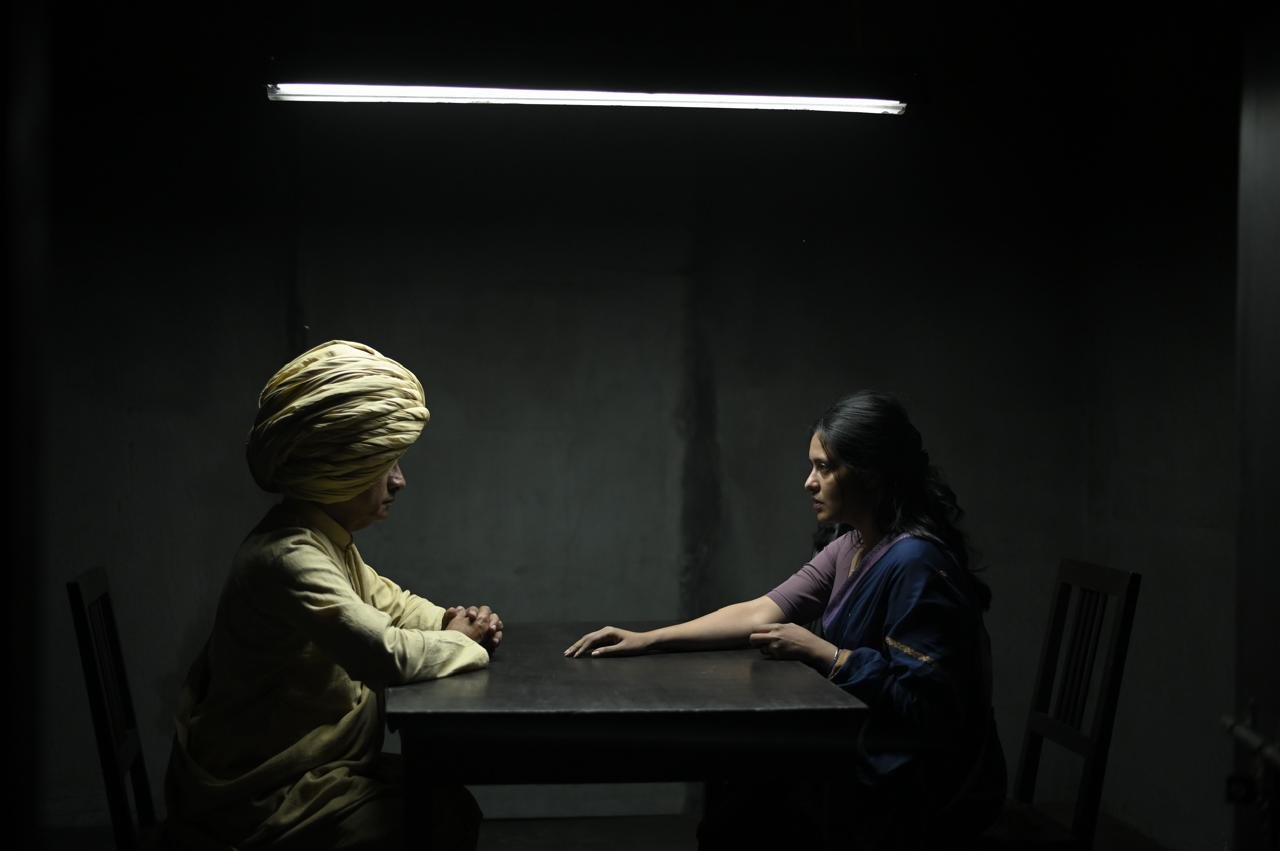
The story begins with two disappearances that shake Kolkata’s Prafulla Nagar police station. Totoro, the young son of an inspector anmed Sanjay, has gone missing, while Sara Nielsen, a Swedish researcher studying shamans, has also vanished. Sara disappeared after interviewing the enigmatic Trilokadarshi Baba, a figure who soon stands at the center of both the mystery and the movie’s philosophical concerns. As investigator Sanjay Konwar follows her recordings, a chilling truth slowly begins to emerge, one that blurs the lines between faith, deception, trauma, and something much more terrifying
Part of the narrative is also connected to a real crime case from Jharkhand, involving a child molester whose crimes were discovered by the police. Choudhury has mentioned that, although smaller media outlets covered the incident, major Indian media did not give it the visibility he felt it deserved. Consequently, incorporating this element into the story becomes a way to raise awareness, particularly about the need for parents and society to remain alert to such dangers.
This ambition, however, is both the main strength and the main issue here. “Maya Satya Bhram” includes too many arcs, characters, and episodes, to the point that it becomes almost dizzying on occasion. Some restraint would definitely benefit the whole, particularly since a number of scenes, including the sci-fi one, could have been avoided altogether. At the same time, the quality of storytelling is definitely there. The non-linear structure, which moves through different points in time and perception, gives the narrative a distinct identity, while also allowing the story to function as a puzzle of testimonies, recordings, memories, and beliefs.
The most intriguing element is probably the figure of Babaji. Choudhury avoids presenting him as simply good or bad, instead allowing him to exist as a philosophical question, but also as an irony regarding the way Indian society treats Godmen, essentially without any kind of scrutiny. This observation is one of the sharper comments in the movie, and one that gives its mystical element a sociopolitical dimension.
The acting can also be excessive on occasion, although in general it works within the heightened tone of the narrative. Paran Banerjee, who plays Babaji, makes a strong impression in a role that depends mostly on expression rather than dialogue. Soham Majumdar, as the police officer, anchors the investigation side of the story, while Priyanka Sarkar brings emotional gravity to the role of the mother. Alexandra Taylor, as Sara Nielsen, also fits the part of the foreign researcher whose curiosity leads her toward increasingly uncertain territory.
Visually, “Maya Satya Bhram” is quite strong. The coloring is excellent, with different palettes used for the past and the present, an approach that helps the viewer navigate the fragmented structure. Prosenjit Koley’s cinematography also works quite well, particularly in sequences such as the hidden room in the house and the interrogation scenes. Wider frames give some moments room to breathe, while tighter shots are implemented during the investigation and the more tense parts of the story.
Sanglap Bhowmik editing is equally important. The non-linear structure had already been written into the screenplay, and the editing allows the material to move with a certain freedom instead of simply following the mechanics of the plot. The relatively fast pace suits the style of the movie, particularly considering how many narrative threads are involved. Nevertheless, because there are so many scenes, characters, and tonal shifts, pacing issues do arise, and the movie occasionally feels overstuffed.
“Maya Satya Bhram” is not a fully controlled work, and its ambition sometimes turns into excess. Some arcs could have been trimmed, some ideas could have been suggested instead of explained, and a few additions feel unnecessary. At the same time, Samik Roy Choudhury has made a genuinely interesting movie, highlighting his storytelling prowess, one that combines crime, mysticism, philosophy, and social observation through a personal cinematic language. Even when it becomes crowded, it remains intriguing, using the figure of Babaji and the chaos around him to ask what people choose to believe and what they refuse to question



