
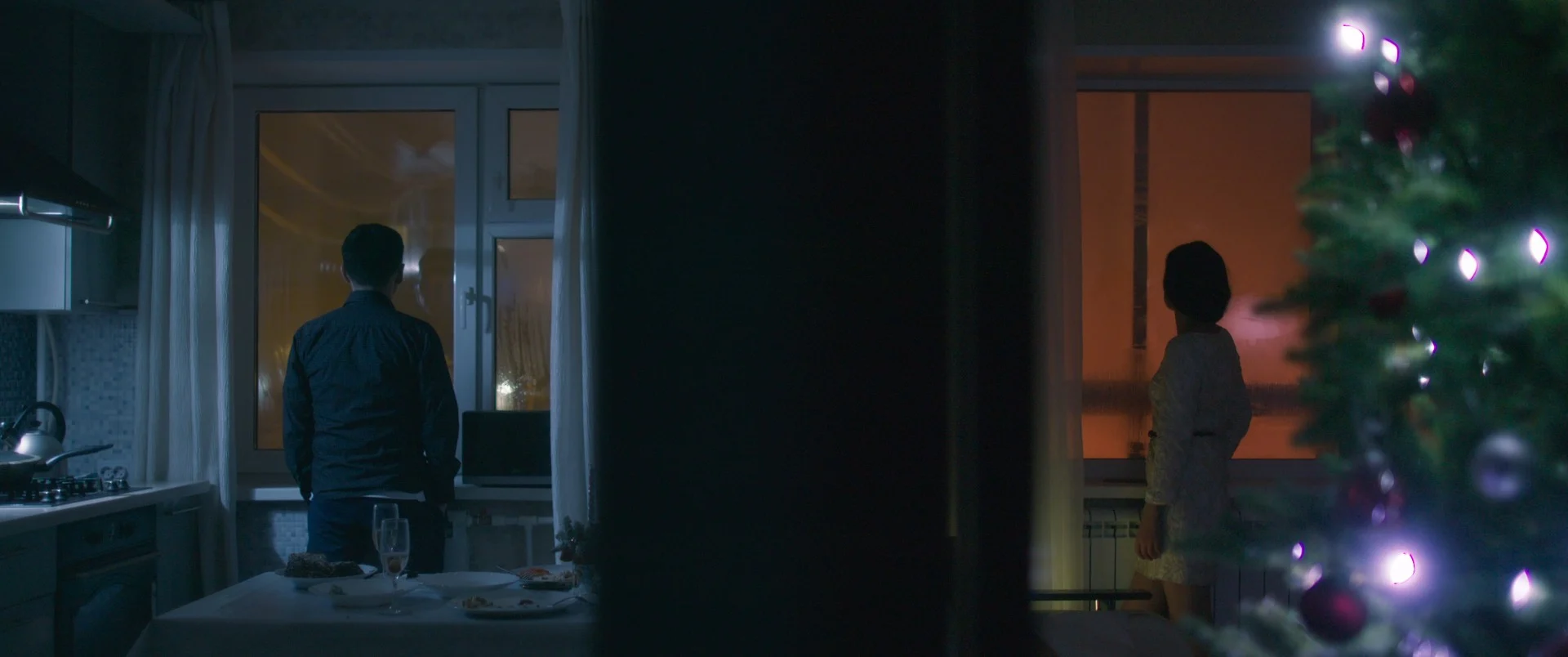
“Our Winter”, originally titled “Биһиги кыһыммыт” in Sakha, is a 2022 drama directed and edited by Stepan Burnashev. Burnashev wrote the screenplay together with Svetlana Taaiko and also produced the movie through Saidam Baryl. The 115 minute production stars Irina Mikhailova as Lida and Ilya Yakovlev as Dima. Filming took place in Yakutsk during temperatures that fell as low as minus 56 degrees Celsius.
“Our Winter” was released in Russian cinemas on November 24, 2022, through Kinologistika. It attracted 14,718 viewers and earned 4,747,397 rubles at the Russian box office. The cinematography received the Best Cinematography award at the 2022 Amur Autumn Festival of Theatre and Cinema. Burnashev and Taaiko later won Best Screenplay at the 2023 Chypchaal National Film Awards in the Sakha Republic.
Buy This Title
by clicking on the image below
Lida and Dima have been married for ten years. From the beginning, they have followed a childfree lifestyle and built their marriage around the idea of living for themselves rather than creating a traditional family. Over the years, however, minor disagreements, unspoken frustrations and conflicting ambitions have gradually accumulated. Both begin to feel that they chose the wrong partner and that their marriage has prevented them from realizing their individual potential.
The couple eventually decides to divorce, believing that separation is the only reasonable conclusion to a marriage that has lost its purpose. The legal process and division of their property proceed without major conflict, while both look forward to pursuing abandoned dreams and beginning new lives. Once they are apart, however, Lida and Dima discover that the freedom they imagined does not resolve their dissatisfaction. Their separation forces them to reconsider whether their marriage was truly the source of their unhappiness and to confront the personal problems they had previously attributed to one another.
Stepan Burnashev directs a movie about the collapse of a marriage, highlighting how love can turn into spite and, eventually, create a chasm between two people. Everyday life, professional difficulties and the expectations of society gradually wear both of them down. There is no blame placed on either side, since the feelings they once had for each other were genuine. However, due to the aforementioned issues, those emotions are eventually pushed into the background, with both husband and wife focusing primarily on the problems they face.
Tension remains throughout, and a number of fights are presented, but Burnashev avoids making the situation excessively dramatic. Instead, the couple eventually appears more tired than angry. The logistics of the separation, including selling the house and dividing everything they acquired equally, such as the car, create some additional friction. Nevertheless, the approach is considerably more realistic and restrained than what we have seen in many similar features, which frequently exaggerate the concept for dramatic effect.
It is also interesting that both characters eventually experience professional success. Dima is finally able to shoot a movie, a concept that makes the story appear at least partially autobiographical for the director, while Lida receives a long awaited promotion. However, neither of them feels completely fulfilled. The scenes in Lida’s village and the final sequence eloquently highlight this point. At the same time, they send a positive message by showing that divorced people can retain a civil relationship and that divorce can result from disagreements rather than an absence of feelings. This comment emerges as both realistic and intelligent, representing another element rarely encountered in movies dealing with the subject.
The way Burnashev parallels the relationship between the two with the extreme cold of the city they inhabit works particularly well for the story. At the same time, it allows cinematographer Danila Goryunkov to present a number of images of frozen beauty. The framing is also quite strong, while the juxtaposition of interior and exterior scenes prevents the production from becoming a dialogue-heavy chamber drama, even though that element is present in certain parts. Furthermore, the scenes in the various clubs and bars stand out. Although the story progresses relatively quickly, the editing establishes a measured pace, with some moments of lag appearing here and there.
Irina Mikhailova as Lida and Ilya Yakovlev as Dima share wonderful chemistry throughout, convincingly portraying a couple during both the difficult and more affectionate moments of their relationship. A few less convincing performances from the supporting cast appear here and there, but, as a whole, the acting remains on a high level.
“Our Winter” is an excellent movie that presents the end of a relationship in a manner that is equally realistic, dramatic and entertaining.



