
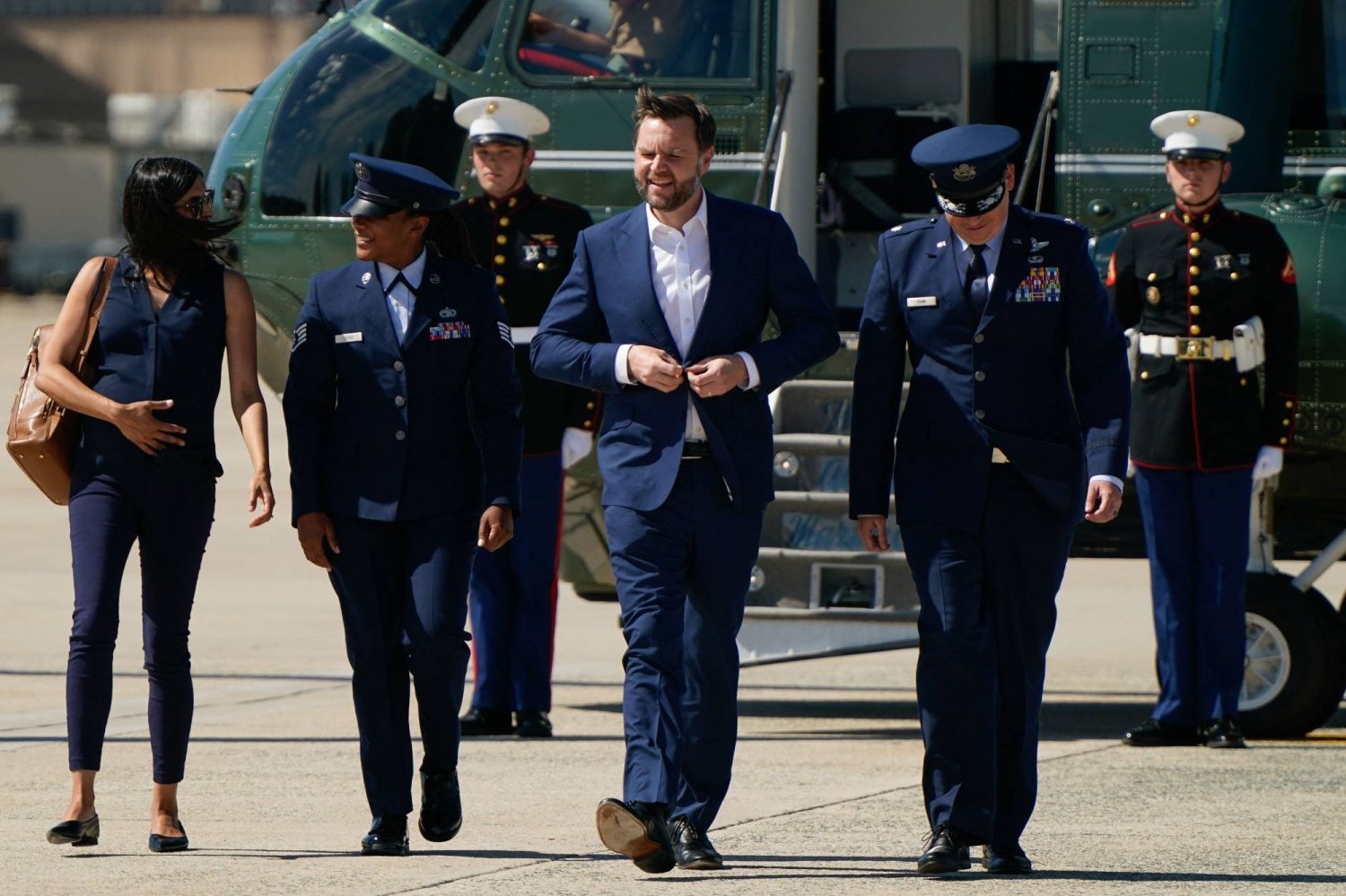
ZURICH/DUBAI/WASHINGTON – U.S. Vice President JD Vance arrived in Switzerland on Sunday for peace talks with Iran as both nations seek a durable end to their war while disagreeing over Iran’s claims that it had closed the vital Strait of Hormuz.
The U.S. and Iran had agreed to a 60-day ceasefire for the negotiations, but Tehran’s Islamic Revolutionary Guard Corps on Saturday declared the Strait of Hormuz shut in response to Israeli strikes in Lebanon, although the U.S. military said commercial vessels kept operating.
Those developments could complicate the talks in which both sides want to advance an interim deal brokered by Pakistan and signed on Wednesday by Presidents Donald Trump and Masoud Pezeshkian to end an almost 4-month-long war.
Vance and second lady Usha Vance arrived at Emmen Air Base in Switzerland at 5:59 a.m., a vice presidential spokesperson said.
“I think we’re going to hopefully make progress on the nuclear issue, make progress on the Lebanon ceasefire issue,” with a “couple days of talks” likely, Vance told reporters at Joint Base Andrews in Maryland before departing.
Iran’s Revolutionary Guard, accusing Israel of “crimes” in Lebanon that violated U.S. commitments to the ceasefire, warned ships would be at risk if they approached the strait, which carried a fifth of global oil supplies before the U.S. and Israel launched attacks on Feb. 28.
Despite the Lebanon truce, Israeli forces and the Iran-backed militant group Hezbollah attacked each other on Saturday.
U.S. Central Command said 55 merchant ships transited the strait on Saturday, carrying more than 17 million barrels of oil bound for global markets, and vowed that U.S. forces would ensure commercial traffic continued.
Trump said there would be no toll for passage through the strait during the 60-day ceasefire or after, unless the U.S. imposed one should peace talks fail.
In a social media post, he cited the possibility of a toll levied by the United States “for services rendered as the Guardian Angel to the countries of the Middle East” if a peace deal is not completed.
Mohammad Mokhber, an adviser to Iran’s supreme leader, Ayatollah Mojtaba Khamenei, accused the U.S. of failing to implement the first of the Iran deal’s 14 points, which include a ceasefire “on all fronts,” including Lebanon.
As long as the agreement was only on paper, the flow of Middle East energy would stay halted, he added.
On the other hand, Iranian Oil Minister Mohsen Paknejad said that if Western stakeholders adhere to the spirit of the pact, hundreds of investment opportunities and contract formats stand ready, according to the ministry’s news outlet, Shana.
The Iranian delegation to the talks in the Swiss mountaintop resort of Buergenstock is led by chief negotiator…



