
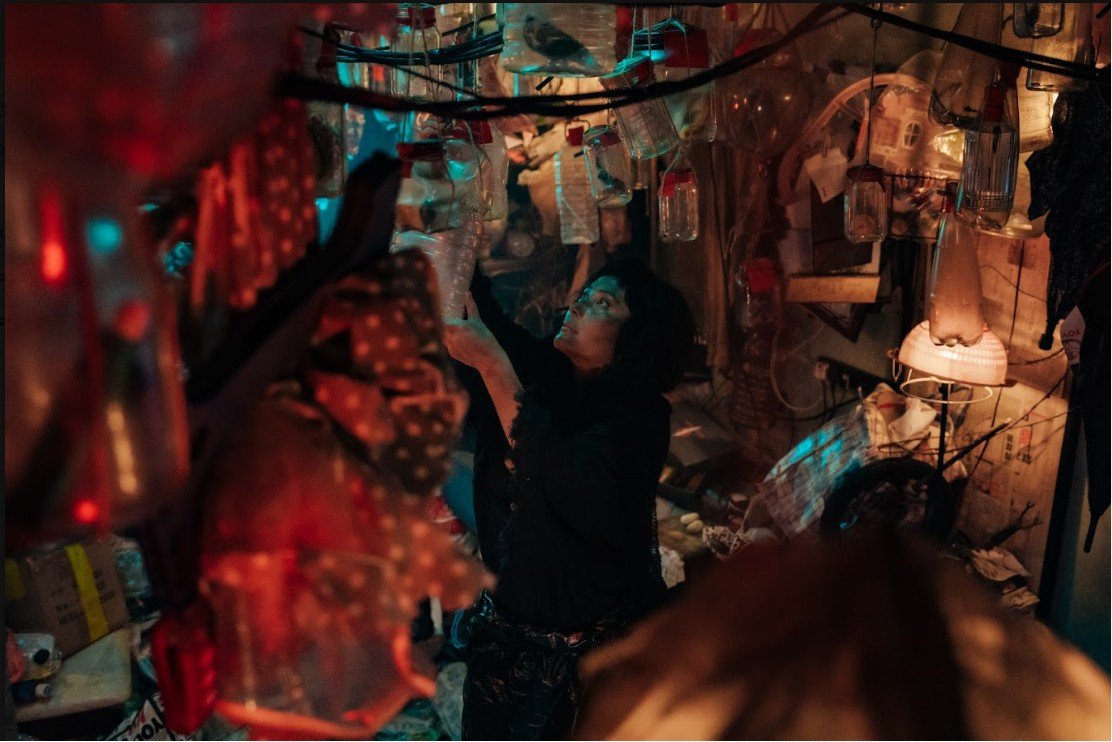
“The Mage” is a 2026 Hong Kong supernatural horror and crime production produced by Conroy Chan through 852 Films. Directed by twin filmmakers Danny Pang and Oxide Pang, with Danny Pang also credited as the writer, the 97 minute feature stars Josie Ho, Carlos Chan, German Cheung, Kathy Tong Yee, Sabrina Ng and Iman Taheri. The production combines ghostly mythology, a murder investigation, action, suspense and special effects, marking another collaboration between Josie Ho and the Pang brothers within Hong Kong genre cinema.
“The Mage” received its world premiere at the 30th Bucheon International Fantastic Film Festival in South Korea, where it screened alongside a masterclass featuring the directors, producer and cast members Josie Ho and Iman Taheri. Edko Films has acquired the theatrical distribution rights for Hong Kong and Macau, with a local release planned for the third or fourth quarter of 2026, while 852 Films retains the international rights. “The Mage” is currently screening at the Bucheon International Fantastic Film Festival
A series of apparently accidental deaths begins occurring across Hong Kong. Police officer Wong Ming notices that the same woman appears near several of the crime scenes, collecting discarded objects from the surrounding area. She is Lan Pui Ching, a scavenger and former spirit medium who possesses the ability to locate souls trapped inside abandoned items and guide them towards reincarnation.
Lan has lived with guilt since an incident thirteen years earlier, when her actions contributed to the death of a young girl and left her haunted by visions of the deceased. As Wong investigates the recent killings, Lan realizes that the deaths are connected to a mysterious cult ritual rather than a series of accidents. Their separate investigations gradually converge, leading them to discover that they have both been selected as the ritual’s next victims. Eventually, it is revealed that Wong Ming also harbors trauma of his own
The Pang brothers direct a feature that wears both its traits and its issues on its sleeves, since everything seems to be exaggerated here, an approach that is hit or miss. For starters, and in a style frequently encountered in Hong Kong productions of the past, the story does not make that much sense. Instead, the narrative revolves around key scenes, particularly the appearance of impressive and usually rather grotesque imagery. As such, the characterization is weird and illogical, the way the twists are revealed is abrupt, and the final arc is rushed. The issues with the characters also affect the acting, with the majority delivering one liner after one liner, while their attitudes remain inexplicable most of the time.
Josie Ho as Lan seems to suffer particularly from this issue, although her charisma and the way she presents her character’s erratic behavior are actually quite appealing. Carlos Chan as Officer Wong is more down to earth in his delivery, although he also has his moments of excessiveness. The antithesis between the two, also in terms of appearance, works particularly well regarding their chemistry, despite Chan being somewhat too clean cut for the particular role. Even more importantly, it creates tension between a medium who can communicate with spirits and a detective who trusts only logic and evidence, a dynamic that carries the movie for the majority of its duration. Iman Taheri as Wong’s boss, on the other hand, is not good at all.
Furthermore, the visuals are rather impressive. Cinematographers Hung Mo To and S. K. Yip opted for a desaturated palette, which makes the splashes of red, the violence, including the gruesomely murdered victims, and the action scenes stand out even more, with the design in that regard being particularly memorable. The rain and the protagonist’s fear of water are also implemented effectively through both the excellent sound design and the visuals, while the garbage surrounding Lan adds to both the atmosphere and her characterization.
Jinrong Weng’s editing, particularly through the suddenness of some cuts, adds to the horrific aspect of the movie, while the fast tempo suits the aesthetics of the story and allows it to unfold without lagging throughout the 97 minute running time. The inspiration from “Limbo” is quite evident in the audiovisual approach and, to a degree, the narrative, although “The Mage” definitely stands on its own.
As was frequently the case with CAT III and other Hong Kong genre productions, one has to throw logic out the window to enjoy “The Mage”. For those who do, however, the movie is as entertaining as they come and an excellent audiovisual spectacle, the kind that should be watched on the big screen.



