
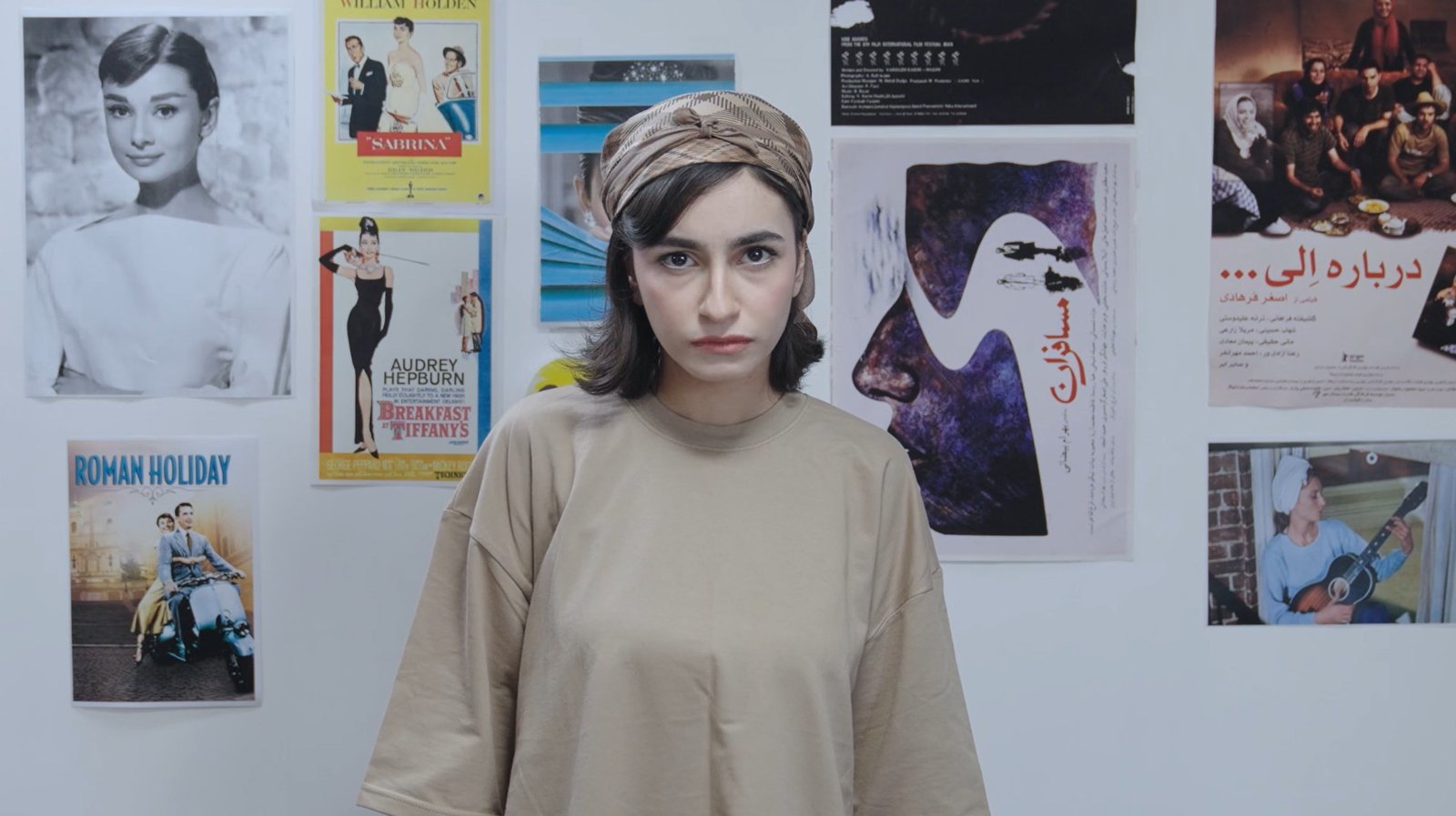
“Etude of Silence” is a 2026 Iranian short film written and directed by Belal Taheri. Produced by Parnian Kolangari and Mehrshad Rezaei for Cineport International Media, the 17-minute Persian-language production combines psychological drama and mystery.
Taheri developed “Etude of Silence” around the experiences of young women attempting to pursue creative ambitions while facing family expectations, patriarchal structures and limited professional opportunities. The production was completed in 2026 and prepared with English, French and Spanish subtitles for international distribution and festival submissions.
“Etude of Silence” review is part of the Submit Your Film Initiative
Arista dreams of becoming a respected actress, but the only roles she can secure place her at the margins of low budget productions. She is repeatedly asked to portray corpses, victims, zombies and other silent bodies whose presence serves someone else’s story. Moving from one set to another, she accepts humiliating conditions and increasingly insignificant assignments in the hope that one of them will eventually bring her recognition.
As Arista continues performing death for the camera, the separation between her professional roles and everyday life begins to collapse. Sets, memories and imagined performances overlap, while the lifeless characters she portrays gradually influence her perception of herself. Her efforts to become visible lead her towards a confrontation with isolation, self erasure and the possibility that disappearing completely may be the only way for others to notice her.
The movie begins in a fashion that seems to come straight out of a horror production, only to settle abruptly into the reality of a bit part actress who is chastised by her director, essentially just for having a voice. The way she conducts herself outside the movies in which she participates, recording reels where she mimics Audrey Hepburn, emerges as almost ironic when compared with the roles she has to play and her interactions during the actual shoots. One director tells her off, a producer openly asks her to come to his room, and members of another crew mock her before the shoot is cancelled.
This juxtaposition between what she wants to do and what she is actually doing forms the basis of the narrative, with Taheri presenting a rather harsh critique of the local industry, particularly regarding the role of women within it. The fact that the protagonist is a bit part actress makes the whole situation even more dramatic, while the mocking scene, which involves other women, intensifies the comment further.
The way she is led into depression is therefore utterly justified. At the same time, the alternation between the apparent horror scenes and the reality behind them adds a sense of hilarity, although this is completely erased by the ending, which is the most dramatic moment of all. Parnian Kolangari’s piano music also adds to the impact of the final sequence, bringing the short to a fitting close.
Amin Dolatkhah’s cinematography captures the different settings with realism, while the scenes in which the actress addresses the camera are particularly impactful, with the close ups working well. Their effectiveness owes much to Niayesh Marsiyehzadeh as Arista, who gives a very convincing performance and highlights her character’s disappointment and depression with considerable force. Farid Daghagheleh’s editing moves smoothly between the different scenes, presenting the story in a way that is both impactful and entertaining.
“Etude of Silence” is a very impactful short, well directed, shot and acted, and one that highlights a part of the Iranian industry we barely get to see.



