
Klein, S., Wadden, T. & Sugerman, H. J. AGA technical review on obesity. Gastroenterology 123, 882–932 (2002).
Kciuk, M. et al. Alzheimer’s disease as type 3 diabetes: understanding the link and implications. Int. J. Mol. Sci. 25, 11955 (2024).
Karra, P. et al. Metabolic dysfunction and obesity-related cancer: beyond obesity and metabolic syndrome. Obesity 30, 1323–1334 (2022).
Ndumele, C. E. et al. A synopsis of the evidence for the science and clinical management of cardiovascular-kidney-metabolic (CKM) syndrome: a scientific statement From the American Heart Association. Circulation 148, 1636–1664 (2023).
Schulze, M. B. & Stefan, N. Metabolically healthy obesity: from epidemiology and mechanisms to clinical implications. Nat. Rev. Endocrinol. 20, 633–646 (2024).
Smith, G. I., Mittendorfer, B. & Klein, S. Metabolically healthy obesity: facts and fantasies. J. Clin. Invest. 129, 3978–3989 (2019).
National Cholesterol Education Program Third Report of the National Cholesterol Education Program (NCEP) Expert Panel on Detection, Evaluation, and Treatment of High Blood Cholesterol in Adults (Adult Treatment Panel III) final report. Circulation 106, 3143–3421 (2002).
Grundy, S. M. et al. Diagnosis and management of the metabolic syndrome: an American Heart Association/National Heart, Lung, and Blood Institute Scientific Statement. Circulation 112, 2735–2752 (2005).
Kuk, J. L. & Ardern, C. I. Are metabolically normal but obese individuals at lower risk for all-cause mortality? Diabetes Care 32, 2297–2299 (2009).
Calori, G. et al. Prevalence, metabolic features, and prognosis of metabolically healthy obese Italian individuals: the Cremona Study. Diabetes Care 34, 210–215 (2011).
Straznicky, N. E. et al. Blunted sympathetic neural response to oral glucose in obese subjects with the insulin-resistant metabolic syndrome. Am. J. Clin. Nutr. 89, 27–36 (2009).
Brochu, M. et al. What are the physical characteristics associated with a normal metabolic profile despite a high level of obesity in postmenopausal women? J. Clin. Endocrinol. Metab. 86, 1020–1025 (2001).
Abbasi, F. et al. Discrimination between obesity and insulin resistance in the relationship with adiponectin. Diabetes 53, 585–590 (2004).
Tajik, S., Mirzababaei, A., Ghaedi, E., Kord-Varkaneh, H. & Mirzaei, K. Risk of type 2 diabetes in metabolically healthy people in different categories of body mass index: an updated network meta-analysis of prospective cohort studies. J. Cardiovasc. Thorac. Res. 11, 254–263 (2019).
Bell, J. A., Kivimaki, M. & Hamer, M. Metabolically healthy obesity and risk of incident type 2 diabetes: a meta-analysis of prospective cohort studies. Obes. Rev. 15, 504–515 (2014).
Zheng, R., Zhou, D. & Zhu, Y. The long-term prognosis of cardiovascular disease and all-cause mortality for metabolically healthy obesity: a systematic review and meta-analysis. J. Epidemiol. Commun. Health 70, 1024–1031 (2016).
Eckel, N., Meidtner, K., Kalle-Uhlmann, T., Stefan, N. & Schulze, M. B. Metabolically healthy obesity and cardiovascular events: a systematic review and meta-analysis. Eur. J. Prev. Cardiol. 23, 956–966 (2016).
Yeh, T. L. et al. The relationship between metabolically healthy obesity and the risk of cardiovascular disease: a systematic review and meta-analysis. J. Clin. Med. 8, 1228 (2019).
Fan, J., Song, Y., Chen, Y., Hui, R. & Zhang, W. Combined effect of obesity and cardio-metabolic abnormality on the risk of cardiovascular disease: a meta-analysis of prospective cohort studies. Int. J. Cardiol. 168, 4761–4768 (2013).
Fabbrini, E. et al. Metabolically normal obese people are protected from adverse effects following weight gain. J. Clin. Invest. 125, 787–795 (2015).
Farabi, S. S., Smith, G. I., Yoshino, J. & Klein, S. Metabolically healthy obesity is not a myth. JCEM Case Rep. 1, luad015 (2023).
Yu, S. S., Castillo, D. C., Courville, A. B. & Sumner, A. E. The triglyceride paradox in people of African descent. Metab. Syndr. Relat. Disord. 10, 77–82 (2012).
Rich, N. E. et al. Racial and ethnic disparities in nonalcoholic fatty liver disease prevalence, severity, and outcomes in the United States: a systematic review and meta-analysis. Clin. Gastroenterol. Hepatol. 16, 198–210 (2018).
Rosli, N., Kwon, H. J., Lim, J., Yoon, Y. A. & Jeong, J. S. Measurement comparability of insulin assays using conventional immunoassay kits. J. Clin. Lab. Anal. 36, e24521 (2022).
Rohlfing, C. et al. The current status of serum insulin measurements and the need for standardization. Clin. Chem. Lab. Med. 63, 2442–2446 (2025).
Durward, C. M., Hartman, T. J. & Nickols-Richardson, S. M. All-cause mortality risk of metabolically healthy obese individuals in NHANES III. J. Obes. 2012, 460321 (2012).
van Vliet-Ostaptchouk, J. V. et al. The prevalence of metabolic syndrome and metabolically healthy obesity in Europe: a collaborative analysis of ten large cohort studies. BMC Endocr. Disord. 14, 9 (2014).
Velho, S., Paccaud, F., Waeber, G., Vollenweider, P. & Marques-Vidal, P. Metabolically healthy obesity: different prevalences using different criteria. Eur. J. Clin. Nutr. 64, 1043–1051 (2010).
Meigs, J. B. et al. Body mass index, metabolic syndrome, and risk of type 2 diabetes or cardiovascular disease. J. Clin. Endocrinol. Metab. 91, 2906–2912 (2006).
Dhana, K. et al. Metabolically healthy obesity and the risk of cardiovascular disease in the elderly population. PLoS ONE 11, e0154273 (2016).
Arnlov, J., Ingelsson, E., Sundstrom, J. & Lind, L. Impact of body mass index and the metabolic syndrome on the risk of cardiovascular disease and death in middle-aged men. Circulation 121, 230–236 (2010).
Koster, A. et al. Body fat distribution and inflammation among obese older adults with and without metabolic syndrome. Obesity 18, 2354–2361 (2010).
Shea, J. L., Randell, E. W. & Sun, G. The prevalence of metabolically healthy obese subjects defined by BMI and dual-energy X-ray absorptiometry. Obesity 19, 624–630 (2011).
Pajunen, P. et al. Metabolically healthy and unhealthy obesity phenotypes in the general population: the FIN-D2D Survey. BMC Public Health 11, 754 (2011).
Voulgari, C. et al. Increased heart failure risk in normal-weight people with metabolic syndrome compared with metabolically healthy obese individuals. J. Am. Coll. Cardiol. 58, 1343–1350 (2011).
Bradshaw, P. T., Monda, K. L. & Stevens, J. Metabolic syndrome in healthy obese, overweight, and normal weight individuals: the Atherosclerosis Risk in Communities Study. Obesity 21, 203–209 (2013).
Ortega, F. B. et al. The intriguing metabolically healthy but obese phenotype: cardiovascular prognosis and role of fitness. Eur. Heart J. 34, 389–397 (2013).
Martinez-Larrad, M. T. et al. Profile of individuals who are metabolically healthy obese using different definition criteria. A population-based analysis in the Spanish population. PLoS ONE 9, e106641 (2014).
Hinnouho, G. M. et al. Metabolically healthy obesity and the risk of cardiovascular disease and type 2 diabetes: the Whitehall II cohort study. Eur. Heart J. 36, 551–559 (2015).
Kimokoti, R. W., Judd, S. E., Shikany, J. M. & Newby, P. K. Metabolically healthy obesity is not associated with food intake in white or Black men. J. Nutr. 145, 2551–2561 (2015).
Goday, A. et al. Prevalence and clinical characteristics of metabolically healthy obese individuals and other obese/non-obese metabolic phenotypes in a working population: results from the Icaria study. BMC Public Health 16, 248 (2016).
Lassale, C. et al. Separate and combined associations of obesity and metabolic health with coronary heart disease: a pan-European case-cohort analysis. Eur. Heart J. 39, 397–406 (2018).
Kabat, G. C. et al. Metabolic obesity phenotypes and risk of colorectal cancer in postmenopausal women. Int. J. Cancer 143, 543–551 (2018).
Mongraw-Chaffin, M. et al. Metabolically healthy obesity, transition to metabolic syndrome, and cardiovascular risk. J. Am. Coll. Cardiol. 71, 1857–1865 (2018).
Hoddy, K. K. et al. Insulin resistance persists despite a metabolically healthy obesity phenotype. Obesity 30, 39–44 (2022).
Lejawa, M., Osadnik, K., Czuba, Z., Osadnik, T. & Pawlas, N. Association of metabolically healthy and unhealthy obesity phenotype with markers related to obesity, diabetes among young, healthy adult men. Analysis of MAGNETIC study. Life 11, 1350 (2021).
Angoff, R. et al. Relations of metabolic health and obesity to brain aging in young to middle-aged adults. J. Am. Heart Assoc. 11, e022107 (2022).
Gao, J. W. et al. Different metabolic phenotypes of obesity and risk of coronary artery calcium progression and incident cardiovascular disease events: The CARDIA Study. Arterioscler. Thromb. Vasc. Biol. 42, 677–688 (2022).
Hazart, J. et al. Body mass trajectory affects the long-term occurrence of metabolic syndrome in adult patients with severe obesity. Children 10, 27 (2022).
Karajamaki, A. J., Korkiakoski, A., Hukkanen, J., Kesaniemi, Y. A. & Ukkola, O. Long-term metabolic fate and mortality in obesity without metabolic syndrome. Ann. Med. 54, 1432–1443 (2022).
Lehn-Stefan, A. et al. Impaired metabolic health and low cardiorespiratory fitness independently associate with subclinical atherosclerosis in obesity. J. Clin. Endocrinol. Metab. 107, e2417–e2424 (2022).
Lind, L. et al. Obesity is associated with coronary artery stenosis independently of metabolic risk factors: the population-based SCAPIS study. Atherosclerosis 362, 1–10 (2022).
Milewska, E. M. et al. Selected organ and endocrine complications according to BMI and the metabolic category of obesity: a single endocrine center study. Nutrients 14, 1307 (2022).
Barrea, L. et al. Adherence to the Mediterranean diet as a possible additional tool to be used for screening the metabolically unhealthy obesity (MUO) phenotype. J. Transl. Med. 21, 675 (2023).
Osadnik, K. et al. Metabolic syndrome is associated with similar long-term prognosis in those living with and without obesity: an analysis of 45 615 patients from the nationwide LIPIDOGRAM 2004-2015 studies. Eur. J. Prev. Cardiol. 30, 1195–1204 (2023).
Wang, J. S. et al. Trends in the prevalence of metabolically healthy obesity among US adults, 1999-2018. JAMA Netw. Open 6, e232145 (2023).
Guzman-Garcia, J. M. et al. Relationship between commonly defined metabolic health phenotypes and obesity with lung function in a working population: a cross-sectional study. Heart Lung 67, 62–69 (2024).
Ler, P. et al. Conversions between metabolically unhealthy and healthy obesity from midlife to late-life. Int. J. Obes. 48, 433–436 (2024).
Li, C. et al. Associations of metabolic changes and polygenic risk scores with cardiovascular outcomes and all-cause mortality across BMI categories: a prospective cohort study. Cardiovasc. Diabetol. 23, 231 (2024).
Pelekanou, C. et al. Physical activity in relation to metabolic health and obesity: the Feel4Diabetes study. Diabetes Obes. Metab. 26, 3705–3714 (2024).
Bushnik, T., Colley, R., Barnes, J. & Manuel, D. G. Metabolic health and body mass index phenotypes in adults. Health Rep. 36, 15–27 (2025).
Lim, G., Jarrell, Z. R., Go, Y. M. & Jones, D. P. Amino acid associations in healthy and unhealthy obesity. J. Nutr. 155, 2643–2652 (2025).
Samuelsson, M. G. et al. Evaluation of type 2 diabetes risk in individuals with or without metabolically healthy obesity. Biology 14, 608 (2025).
Dolan, G., Millar, S. R., Perry, I. J. & Phillips, C. M. Metabolic health phenotypes among middle- to older-aged adults living with and without obesity: relationships with hepatic health indicators. Hepatol. Res. 56, 302–313 (2026).
Ogorodnikova, A. D. et al. Incident cardiovascular disease events in metabolically benign obese individuals. Obesity 20, 651–659 (2012).
Kabat, G. C. et al. Metabolic obesity phenotypes and risk of breast cancer in postmenopausal women. Cancer Epidemiol. Biomarkers Prev. 26, 1730–1735 (2017).
Slagter, S. N. et al. Dietary patterns and physical activity in the metabolically (un)healthy obese: the Dutch Lifelines cohort study. Nutr J. 17, 18 (2018).
Al-Khalidi, B., Kimball, S. M., Kuk, J. L. & Ardern, C. I. Metabolically healthy obesity, vitamin D, and all-cause and cardiometabolic mortality risk in NHANES III. Clin. Nutr. 38, 820–828 (2019).
Frey, S. et al. Prevalence of NASH/NAFLD in people with obesity who are currently classified as metabolically healthy. Surg. Obes. Relat. Dis. 16, 2050–2057 (2020).
Kunzova, S. et al. Determinants of metabolic health across body mass index categories in central Europe: a comparison between Swiss and Czech populations. Front. Public Health 8, 108 (2020).
Kouvari, M. et al. The presence of NAFLD influences the transition of metabolically healthy to metabolically unhealthy obesity and the ten-year cardiovascular disease risk: a population-based cohort study. Metabolism 128, 154893 (2022).
Leone, A., De Amicis, R., Battezzati, A. & Bertoli, S. Adherence to the Mediterranean diet and risk of metabolically unhealthy obesity in women: a cross-sectional study. Front. Nutr. 9, 858206 (2022).
Kouvari, M. et al. Metabolically healthy overweight and obesity, transition to metabolically unhealthy status and cognitive function: results from the Framingham Offspring Study. Nutrients 15, 1289 (2023).
Vesikansa, A. et al. Obesity and metabolic state are associated with increased healthcare resource and medication use and costs: a Finnish population-based study. Eur. J. Health Econ. 24, 769–781 (2023).
Soriguer, F. et al. Metabolically healthy but obese, a matter of time? Findings from the prospective Pizarra study. J. Clin. Endocrinol. Metab. 98, 2318–2325 (2013).
Green, A. K. et al. Sugar-sweetened beverages and prevalence of the metabolically abnormal phenotype in the Framingham Heart Study. Obesity 22, E157–E163 (2014).
Chen, W. et al. Association between metabolically healthy obesity and kidney stones: results from the 2011-2018 National Health and Nutrition Examination Survey. Front. Public Health 11, 1103393 (2023).
Bell, J. A. et al. The natural course of healthy obesity over 20 years. J. Am. Coll. Cardiol. 65, 101–102 (2015).
Appleton, S. L. et al. Diabetes and cardiovascular disease outcomes in the metabolically healthy obese phenotype: a cohort study. Diabetes Care 36, 2388–2394 (2013).
Roos, V. et al. Metabolic syndrome development during aging with special reference to obesity without the metabolic syndrome. Metab. Syndr. Relat. Disord. 15, 36–43 (2017).
Hashimoto, Y. et al. Fatty liver as a risk factor for progression from metabolically healthy to metabolically abnormal in non-overweight individuals. Endocrine 57, 89–97 (2017).
Bell, J. A. et al. Incidence of metabolic risk factors among healthy obese adults: 20-year follow-up. J. Am. Coll. Cardiol. 66, 871–873 (2015).
Espinosa De Ycaza, A. E., Donegan, D. & Jensen, M. D. Long-term metabolic risk for the metabolically healthy overweight/obese phenotype. Int. J. Obes. 42, 302–309 (2018).
Navarro-Gonzalez, D., Sanchez-Inigo, L., Fernandez-Montero, A., Pastrana-Delgado, J. & Alfredo Martinez, J. Are all metabolically healthy individuals with obesity at the same risk of diabetes onset?. Obesity 24, 2615–2623 (2016).
Song, Z. et al. Metabolically healthy obesity, transition to unhealthy phenotypes, and type 2 diabetes in 0.5 million Chinese adults: the China Kadoorie Biobank. Eur. J. Endocrinol. 186, 233–244 (2022).
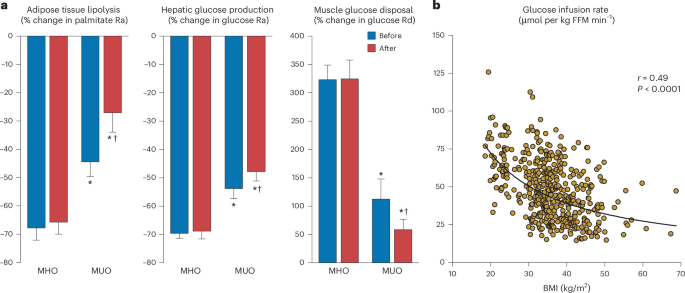
Petersen, M. C. et al. Cardiometabolic characteristics of people with metabolically healthy and unhealthy obesity. Cell Metab. 36, 745–761 (2024).
Stefan, N. et al. Identification and characterization of metabolically benign obesity in humans. Arch. Intern. Med. 168, 1609–1616 (2008).
Kloting, N. et al. Insulin-sensitive obesity. Am. J. Physiol. Endocrinol. Metab. 299, E506–E515 (2010).
Karelis, A. D. et al. The metabolically healthy but obese individual presents a favorable inflammation profile. J. Clin. Endocrinol. Metab. 90, 4145–4150 (2005).
Nielsen, S., Guo, Z., Johnson, C. M., Hensrud, D. D. & Jensen, M. D. Splanchnic lipolysis in human obesity. J. Clin. Invest. 113, 1582–1588 (2004).
Fuchs, A. et al. Associations among adipose tissue immunology, inflammation, exosomes and insulin sensitivity in people with obesity and nonalcoholic fatty liver disease. Gastroenterology 161, 968–981 (2021).
Fabbrini, E. et al. Surgical removal of omental fat does not improve insulin sensitivity and cardiovascular risk factors in obese adults. Gastroenterology 139, 448–455 (2010).
Virtue, S. & Vidal-Puig, A. Adipose tissue expandability, lipotoxicity and the metabolic syndrome-an allostatic perspective. Biochim. Biophys. Acta 1801, 338–349 (2010).
Sun, K., Li, X. & Scherer, P. E. Extracellular matrix (ECM) and fibrosis in adipose tissue: overview and perspectives. Compr. Physiol. 13, 4387–4407 (2023).
Kusminski, C. M. & Scherer, P. E. Mitochondrial dysfunction in white adipose tissue. Trends Endocrinol. Metab. 23, 435–443 (2012).
Mann, J. P. & Savage, D. B. What lipodystrophies teach us about the metabolic syndrome. J. Clin. Invest. 129, 4009–4021 (2019).
Samuel, V. T., Petersen, K. F. & Shulman, G. I. Lipid-induced insulin resistance: unravelling the mechanism. Lancet 375, 2267–2277 (2010).
McLaughlin, T. et al. Enhanced proportion of small adipose cells in insulin-resistant vs insulin-sensitive obese individuals implicates impaired adipogenesis. Diabetologia 50, 1707–1715 (2007).
Liss, K. H. H. et al. Metabolic importance of adipose tissue monoacylglycerol acyltransferase 1 in mice and humans. J. Lipid Res. 59, 1630–1639 (2018).
Herman, M. A. et al. A novel ChREBP isoform in adipose tissue regulates systemic glucose metabolism. Nature 484, 333–338 (2012).
Park, H. T. et al. The relationship between fat depot-specific preadipocyte differentiation and metabolic syndrome in obese women. Clin. Endocrinol. 76, 59–66 (2012).
O’Connell, J. et al. The relationship of omental and subcutaneous adipocyte size to metabolic disease in severe obesity. PLoS ONE 5, e9997 (2010).
Cifarelli, V. et al. Decreased adipose tissue oxygenation associates with insulin resistance in individuals with obesity. J. Clin. Invest. 130, 6688–6699 (2020).
Beals, J. W. et al. Increased adipose tissue fibrogenesis, not impaired expandability, is associated with nonalcoholic fatty liver disease. Hepatology 74, 1287–1299 (2021).
White, U. A., Fitch, M. D., Beyl, R. A., Hellerstein, M. K. & Ravussin, E. Association of in vivo adipose tissue cellular kinetics with markers of metabolic health in humans. J. Clin. Endocrinol. Metab. 102, 2171–2178 (2017).
Wentworth, J. M. et al. Pro-inflammatory CD11c+CD206+ adipose tissue macrophages are associated with insulin resistance in human obesity. Diabetes 59, 1648–1656 (2010).
Pahwa, R., Singh, A., Adams-Huet, B., Devaraj, S. & Jialal, I. Increased inflammasome activity in subcutaneous adipose tissue of patients with metabolic syndrome. Diabetes Metab. Res. Rev. 37, e3383 (2021).
Santoro, A. & Kahn, B. B. Adipocyte regulation of insulin sensitivity and the risk of type 2 diabetes. N. Engl. J. Med. 388, 2071–2085 (2023).
Smith, G. I. & Klein, S. Plasma endotrophin levels correlate with insulin resistance in people with obesity. J. Clin. Invest. 135, e190577 (2025).
Yore, M. M. et al. Discovery of a class of endogenous mammalian lipids with anti-diabetic and anti-inflammatory effects. Cell 159, 318–332 (2014).
Boden, G., Chen, X., Ruiz, J., White, J. V. & Rossetti, L. Mechanisms of fatty acid-induced inhibition of glucose uptake. J. Clin. Invest. 93, 2438–2446 (1994).
Kruszynska, Y. T., Olefsky, J. M. & Frias, J. P. Effect of obesity on susceptibility to fatty acid-induced peripheral tissue insulin resistance. Metabolism 52, 233–238 (2003).
Lim, E. L., Hollingsworth, K. G., Smith, F. E., Thelwall, P. E. & Taylor, R. Inhibition of lipolysis in type 2 diabetes normalizes glucose disposal without change in muscle glycogen synthesis rates. Clin. Sci. 121, 169–177 (2011).
Bajaj, M. et al. Effect of a sustained reduction in plasma free fatty acid concentration on intramuscular long-chain fatty Acyl-CoAs and insulin action in type 2 diabetic patients. Diabetes 54, 3148–3153 (2005).
Karpe, F., Dickmann, J. R. & Frayn, K. N. Fatty acids, obesity, and insulin resistance: time for a reevaluation. Diabetes 60, 2441–2449 (2011).
Bonen, A. et al. Triacylglycerol accumulation in human obesity and type 2 diabetes is associated with increased rates of skeletal muscle fatty acid transport and increased sarcolemmal FAT/CD36. FASEB J. 18, 1144–1146 (2004).
Fabbrini, E. et al. Intrahepatic fat, not visceral fat, is linked with metabolic complications of obesity. Proc. Natl Acad. Sci. USA 106, 15430–15435 (2009).
Greco, D. et al. Gene expression in human NAFLD. Am. J. Physiol. Gastrointest. Liver Physiol. 294, G1281–G1287 (2008).
Samovski, D. et al. Effect of marked weight loss on adipose tissue biology in people with obesity and type 2 diabetes. Diabetes Care 48, 1342–1351 (2025).
Ma, L. J. et al. Prevention of obesity and insulin resistance in mice lacking plasminogen activator inhibitor 1. Diabetes 53, 336–346 (2004).
Saha, P. K. et al. The microRNA miR-30a blocks adipose tissue fibrosis accumulation in obesity. J. Clin. Invest. 135, e175566 (2025).
Lijnen, H. R., Alessi, M. C., Van Hoef, B., Collen, D. & Juhan-Vague, I. On the role of plasminogen activator inhibitor-1 in adipose tissue development and insulin resistance in mice. J. Thromb. Haemost. 3, 1174–1179 (2005).
Sun, K. et al. Endotrophin triggers adipose tissue fibrosis and metabolic dysfunction. Nat. Commun. 5, 3485 (2014).
Reinisch, I. et al. Unveiling adipose populations linked to metabolic health in obesity. Cell Metab. 37, 640–655 (2025).
Ahl, S. et al. Adiponectin levels differentiate metabolically healthy vs unhealthy among obese and nonobese white individuals. J. Clin. Endocrinol. Metab. 100, 4172–4180 (2015).
Straub, L. G. & Scherer, P. E. Metabolic messengers: adiponectin. Nat. Metab. 1, 334–339 (2019).
Koh, E. H. et al. Essential role of mitochondrial function in adiponectin synthesis in adipocytes. Diabetes 56, 2973–2981 (2007).
Bruun, J. M. et al. Regulation of adiponectin by adipose tissue-derived cytokines: in vivo and in vitro investigations in humans. Am. J. Physiol. Endocrinol. Metab. 285, E527–E533 (2003).
Thomou, T. et al. Adipose-derived circulating miRNAs regulate gene expression in other tissues. Nature 542, 450–455 (2017).
Crewe, C. et al. Extracellular vesicle-based interorgan transport of mitochondria from energetically stressed adipocytes. Cell Metab. 33, 1853–1868 (2021).
Ying, W. et al. Adipose tissue macrophage-derived exosomal miRNAs can modulate in vivo and In vitro insulin sensitivity. Cell 171, 372–384 (2017).
Koh, H. E. et al. Subcutaneous adipose tissue metabolic function and insulin sensitivity in people with obesity. Diabetes 70, 2225–2236 (2021).
Perreault, L. et al. Intracellular localization of diacylglycerols and sphingolipids influences insulin sensitivity and mitochondrial function in human skeletal muscle. JCI Insight 3, e96805 (2018).
Mineo, C. & Shaul, P. W. Regulation of insulin transcytosis across endothelium in metabolic health and disease. Arterioscler. Thromb. Vasc. Biol. 46, e321545 (2026).
Sjostrand, M. et al. Delayed transcapillary transport of insulin to muscle interstitial fluid in obese subjects. Diabetes 51, 2742–2748 (2002).
Petersen, M. C. & Shulman, G. I. Mechanisms of insulin action and insulin resistance. Physiol. Rev. 98, 2133–2223 (2018).
Lewis, G. F., Carpentier, A. C., Pereira, S., Hahn, M. & Giacca, A. Direct and indirect control of hepatic glucose production by insulin. Cell Metab. 33, 709–720 (2021).
Conte, C. et al. Multiorgan insulin sensitivity in lean and obese subjects. Diabetes Care 35, 1316–1321 (2012).
Basu, R. et al. Effects of age and sex on postprandial glucose metabolism: differences in glucose turnover, insulin secretion, insulin action, and hepatic insulin extraction. Diabetes 55, 2001–2014 (2006).
Mittendorfer, B. et al. Impaired plasma glucose clearance is a key determinant of fasting hyperglycemia in people with obesity. Obesity 32, 540–546 (2024).
Petersen, M. C. et al. Insulin receptor Thr1160 phosphorylation mediates lipid-induced hepatic insulin resistance. J. Clin. Invest. 126, 4361–4371 (2016).
Magkos, F. et al. Intrahepatic diacylglycerol content is associated with hepatic insulin resistance in obese subjects. Gastroenterology 142, 1444–1446 (2012).
Fabbrini, E. et al. Alterations in adipose tissue and hepatic lipid kinetics in obese men and women with nonalcoholic fatty liver disease. Gastroenterology 134, 424–431 (2008).
Sunny, N. E., Parks, E. J., Browning, J. D. & Burgess, S. C. Excessive hepatic mitochondrial TCA cycle and gluconeogenesis in humans with nonalcoholic fatty liver disease. Cell Metab. 14, 804–810 (2011).
Petersen, K. F., Dufour, S., Mehal, W. Z. & Shulman, G. I. Glucagon promotes increased hepatic mitochondrial oxidation and pyruvate carboxylase flux in humans with fatty liver disease. Cell Metab. 36, 2359–2366 (2024).
Petersen, K. F., Befroy, D. E., Dufour, S., Rothman, D. L. & Shulman, G. I. Assessment of hepatic mitochondrial oxidation and pyruvate cycling in NAFLD by 13C magnetic resonance spectroscopy. Cell Metab. 24, 167–171 (2016).
Donnelly, K. L. et al. Sources of fatty acids stored in liver and secreted via lipoproteins in patients with nonalcoholic fatty liver disease. J. Clin. Invest. 115, 1343–1351 (2005).
Kim, C. W. et al. Acetyl CoA carboxylase inhibition reduces hepatic steatosis but elevates plasma triglycerides in mice and humans: a bedside to bench investigation. Cell Metab. 26, 394–406 (2017).
Smith, G. I. et al. Insulin resistance drives hepatic de novo lipogenesis in nonalcoholic fatty liver disease. J. Clin. Invest. 130, 1453–1460 (2020).
Cao, C. et al. Critical evaluation of indices used to assess beta-cell function. Diabetes 73, 391–400 (2024).
Mittendorfer, B., Patterson, B. W., Smith, G. I., Yoshino, M. & Klein, S. Beta cell function and plasma insulin clearance in people with obesity and different glycemic status. J. Clin. Invest. 132, e154068 (2022).
Saisho, Y. et al. beta-cell mass and turnover in humans: effects of obesity and aging. Diabetes Care 36, 111–117 (2013).
Butler, A. E. et al. Beta-cell deficit and increased beta-cell apoptosis in humans with type 2 diabetes. Diabetes 52, 102–110 (2003).
Nichols, C. G., York, N. W. & Remedi, M. S. Preferential Gq signaling in diabetes: an electrical switch in incretin action and in diabetes progression?. J. Clin. Invest. 130, 6235–6237 (2020).
Linnemann, A. K., Baan, M. & Davis, D. B. Pancreatic β-cell proliferation in obesity. Adv. Nutr. 5, 278–288 (2014).
Meier, J. J. et al. Pancreatic diabetes manifests when beta cell area declines by approximately 65% in humans. Diabetologia 55, 1346–1354 (2012).
Prentki, M., Peyot, M. L., Masiello, P. & Madiraju, S. R. M. Nutrient-induced metabolic stress, adaptation, detoxification, and toxicity in the pancreatic beta-cell. Diabetes 69, 279–290 (2020).
Smith, G. I. et al. Influence of adiposity, insulin resistance, and intrahepatic triglyceride content on insulin kinetics. J. Clin. Invest. 130, 3305–3314 (2020).
Chen, D. L. et al. Phenotypic characterization of insulin-resistant and insulin-sensitive obesity. J. Clin. Endocrinol. Metab. 100, 4082–4091 (2015).
Kim, H. N. & Song, S. W. Associations between macronutrient intakes and obesity/metabolic risk phenotypes: findings of the Korean National Health and Nutrition Examination Survey. Nutrients 11, 628 (2019).
Bell, L. K., Edwards, S. & Grieger, J. A. The relationship between dietary patterns and metabolic health in a representative sample of adult Australians. Nutrients 7, 6491–6505 (2015).
Konieczna, J. et al. Longitudinal changes in Mediterranean diet and transition between different obesity phenotypes. Clin. Nutr. 39, 966–975 (2020).
Messier, V. et al. Metabolically healthy but obese individuals: relationship with hepatic enzymes. Metabolism 59, 20–24 (2010).
Farabi, S. S., Smith, G. I., Schweitzer, G. G., Stein, R. I. & Klein, S. Do lifestyle factors and quality of life differ in people with metabolically healthy and unhealthy obesity?. Int. J. Obes. 46, 1778–1785 (2022).
Camhi, S. M., Waring, M. E., Sisson, S. B., Hayman, L. L. & Must, A. Physical activity and screen time in metabolically healthy obese phenotypes in adolescents and adults. J. Obes. 2013, 984613 (2013).
de Rooij, B. H. et al. Physical activity and sedentary behavior in metabolically healthy versus unhealthy obese and non-obese individuals – The Maastricht Study. PLoS ONE 11, e0154358 (2016).
Bowden Davies, K. A. et al. Physical activity and sedentary time: association with metabolic health and liver fat. Med. Sci. Sports Exerc. 51, 1169–1177 (2019).
Wildman, R. P. et al. The obese without cardiometabolic risk factor clustering and the normal weight with cardiometabolic risk factor clustering: prevalence and correlates of 2 phenotypes among the US population (NHANES 1999-2004). Arch. Intern. Med. 168, 1617–1624 (2008).
Shan, Z. et al. Sleep duration and risk of type 2 diabetes: a meta-analysis of prospective studies. Diabetes Care 38, 529–537 (2015).
Eckel, R. H. et al. Morning circadian misalignment during short sleep duration impacts insulin sensitivity. Curr. Biol. 25, 3004–3010 (2015).
Buxton, O. M. et al. Sleep restriction for 1 week reduces insulin sensitivity in healthy men. Diabetes 59, 2126–2133 (2010).
Kanagasabai, T., Dhanoa, R., Kuk, J. L. & Ardern, C. I. Association between sleep habits and metabolically healthy obesity in adults: a cross-sectional study. J. Obes. 2017, 5272984 (2017).
Beals, J. W. et al. Sleep extension improves sleep health but not insulin sensitivity in people with overweight/obesity who maintain habitual short sleep schedules. Diabetes Care 49, 740–745 (2026).
Mittendorfer, B. et al. Heterogeneity in the effect of marked weight loss on metabolic function in women with obesity. JCI Insight 8, e169541 (2023).
Magkos, F. et al. Effects of moderate and subsequent progressive weight loss on metabolic function and adipose tissue biology in humans with obesity. Cell Metab. 23, 591–601 (2016).
Lean, M. E. et al. Primary care-led weight management for remission of type 2 diabetes (DiRECT): an open-label, cluster-randomised trial. Lancet 391, 541–551 (2018).
Barthold, D. et al. Minimum threshold of bariatric surgical weight loss for initial diabetes remission. Diabetes Care 45, 92–99 (2022).
Klein, S. et al. Absence of an effect of liposuction on insulin action and risk factors for coronary heart disease. N. Engl. J. Med. 350, 2549–2557 (2004).
Wilding, J. P. H. et al. Once-weekly semaglutide in adults with overweight or obesity. N. Engl. J. Med. 384, 989–1002 (2021).
Sylivris, A., Mesinovic, J., Scott, D. & Jansons, P. Body composition changes at 12 months following different surgical weight loss interventions in adults with obesity: a systematic review and meta-analysis of randomized control trials. Obes. Rev. 23, e13442 (2022).
Jastreboff, A. M. et al. Tirzepatide once weekly for the treatment of obesity. N. Engl. J. Med. 387, 205–216 (2022).
Alissou, M. et al. Impact of Semaglutide on fat mass, lean mass and muscle function in patients with obesity: the SEMALEAN study. Diabetes Obes. Metab. 28, 112–121 (2026).
Look, M. et al. Body composition changes during weight reduction with tirzepatide in the SURMOUNT-1 study of adults with obesity or overweight. Diabetes Obes. Metab. 27, 2720–2729 (2025).
Heymsfield, S. B. et al. Proportion of caloric restriction-induced weight loss as skeletal muscle. Obesity 32, 32–40 (2024).
Hall, K. D. Body fat and fat-free mass inter-relationships: Forbes’s theory revisited. Br. J. Nutr. 97, 1059–1063 (2007).
Bartholomew, C. L., Martins, C. & Gower, B. Association between insulin sensitivity and lean mass loss during weight loss. Obesity 32, 1156–1162 (2024).
Wong, J. M. W. et al. Stimulated insulin secretion predicts changes in body composition following weight loss in adults with high BMI. J. Nutr. 152, 655–662 (2022).
Janssen, I., Heymsfield, S. B., Wang, Z. M. & Ross, R. Skeletal muscle mass and distribution in 468 men and women aged 18–88 yr. J. Appl. Physiol. 89, 81–88 (2000).
Hall, K. D. Physiology of the weight-loss plateau in response to diet restriction, GLP-1 receptor agonism, and bariatric surgery. Obesity 32, 1163–1168 (2024).
Nuijten, M. A. H. et al. Rate and determinants of excessive fat-free mass loss after bariatric surgery. Obes. Surg. 30, 3119–3126 (2020).
Alba, D. L. et al. Changes in Lean mass, absolute and relative muscle strength, and physical performance after gastric bypass surgery. J. Clin. Endocrinol. Metab. 104, 711–720 (2019).
Crispim Carvalho, N. N. et al. Effects of preoperative sarcopenia-related parameters on the musculoskeletal and metabolic outcomes after bariatric surgery: a one-year longitudinal study in females. Sci. Rep. 13, 13373 (2023).
Villareal, D. T. et al. Weight loss, exercise, or both and physical function in obese older adults. N. Engl. J. Med. 364, 1218–1229 (2011).
Aronne, L. J. et al. Continued treatment with tirzepatide for maintenance of weight reduction in adults with obesity: the SURMOUNT-4 randomized clinical trial. JAMA 331, 38–48 (2024).
Wilding, J. P. H. et al. Weight regain and cardiometabolic effects after withdrawal of semaglutide: the STEP 1 trial extension. Diabetes Obes. Metab. 24, 1553–1564 (2022).
Dulloo, A. G., Jacquet, J., Montani, J. P. & Schutz, Y. How dieting makes the lean fatter: from a perspective of body composition autoregulation through adipostats and proteinstats awaiting discovery. Obes. Rev. 16, 25–35 (2015).
Dulloo, A. G. Physiology of weight regain: lessons from the classic Minnesota Starvation Experiment on human body composition regulation. Obes. Rev. 22, e13189 (2021).
Fothergill, E. et al. Persistent metabolic adaptation 6 years after ‘The Biggest Loser’ competition. Obesity 24, 1612–1619 (2016).
Bosy-Westphal, A. & Muller, M. J. Measuring the impact of weight cycling on body composition: a methodological challenge. Curr. Opin. Clin. Nutr. Metab. Care 17, 396–400 (2014).
Sanaya, N., Janusaite, M., Dalamaga, M. & Magkos, F. The physiological effects of weight-cycling: a review of current evidence. Curr. Obes. Rep. 13, 35–50 (2024).
Wadden, T. A., Foster, G. D., Stunkard, A. J. & Conill, A. M. Effects of weight cycling on the resting energy expenditure and body composition of obese women. Int. J. Eat Disord. 19, 5–12 (1996).
Hensrud, D. D., Weinsier, R. L., Darnell, B. E. & Hunter, G. R. A prospective study of weight maintenance in obese subjects reduced to normal body weight without weight-loss training. Am. J. Clin. Nutr. 60, 688–694 (1994).
Leibel, R. L., Rosenbaum, M. & Hirsch, J. Changes in energy expenditure resulting from altered body weight. N. Engl. J. Med. 332, 621–628 (1995).
Busetto, L. et al. A new framework for the diagnosis, staging and management of obesity in adults. Nat. Med. 30, 2395–2399 (2024).
Nadolsky, K. et al. American Association of Clinical Endocrinology Consensus Statement: Algorithm for the Evaluation and Treatment of Adults with Obesity/Adiposity-Based Chronic Disease – 2025 Update. Endocr. Pract. 31, 1351–1394 (2025).
American Diabetes Association Professional Practice Committee for Diabetes. Obesity and Weight Management for the Prevention and Treatment of Diabetes: Standards of Care in Diabetes–2026. Diabetes Care 49, S166–S182 (2026).
American Diabetes Association Professional Practice Committee for Obesity Screening, diagnosis, evaluation, and staging of obesity in adults: standards of care in overweight and obesity-2026. BMJ Open Diabetes Res. Care 13, e006247 (2026).
Rubino, F. et al. Definition and diagnostic criteria of clinical obesity. Lancet Diabetes Endocrinol. 13, 221–262 (2025).
Handelsman, Y. et al. DCRM 2.0: Multispecialty practice recommendations for the management of diabetes, cardiorenal, and metabolic diseases. Metabolism 159, 155931 (2024).
Beals, J. W. et al. Dietary weight loss-induced improvements in metabolic function are enhanced by exercise in people with obesity and prediabetes. Nat. Metab. 5, 1221–1235 (2023).
Sardeli, A. V., Komatsu, T. R., Mori, M. A., Gaspari, A. F. & Chacon-Mikahil, M. P. T. Resistance training prevents muscle loss induced by caloric restriction in obese elderly individuals: a systematic review and meta-analysis. Nutrients 10, 423 (2018).
Villareal, D. T. et al. Aerobic or resistance exercise, or both, in dieting obese older adults. N. Engl. J. Med. 376, 1943–1955 (2017).
Hunter, G. R. et al. Resistance training conserves fat-free mass and resting energy expenditure following weight loss. Obesity 16, 1045–1051 (2008).
Delannoy-Bruno, O. et al. Evaluating microbiome-directed fibre snacks in gnotobiotic mice and humans. Nature 595, 91–95 (2021).
Karelis, A. D., Brochu, M. & Rabasa-Lhoret, R. Can we identify metabolically healthy but obese individuals (MHO)?. Diabetes Metab. 30, 569–572 (2004).
Zimmet, P., Magliano, D., Matsuzawa, Y., Alberti, G. & Shaw, J. The metabolic syndrome: a global public health problem and a new definition. J. Atheroscler. Thromb. 12, 295–300 (2005).
Zembic, A., Eckel, N., Stefan, N., Baudry, J. & Schulze, M. B. An empirically derived definition of metabolically healthy obesity based on risk of cardiovascular and total mortality. JAMA Netw. Open 4, e218505 (2021).
Rey-Lopez, J. P., de Rezende, L. F., Pastor-Valero, M. & Tess, B. H. The prevalence of metabolically healthy obesity: a systematic review and critical evaluation of the definitions used. Obes. Rev. 15, 781–790 (2014).
Bradley, D. et al. Gastric bypass and banding equally improve insulin sensitivity and beta cell function. J. Clin. Invest. 122, 4667–4674 (2012).
Smith, G. I. et al. Protein ingestion induces muscle insulin resistance independent of leucine-mediated mTOR activation. Diabetes 64, 1555–1563 (2015).
Yoshino, J. et al. Resveratrol supplementation does not improve metabolic function in nonobese women with normal glucose tolerance. Cell Metab. 16, 658–664 (2012).
Nichols, G. A., Hillier, T. A. & Brown, J. B. Normal fasting plasma glucose and risk of type 2 diabetes diagnosis. Am. J. Med. 121, 519–524 (2008).
Butalia, S. et al. Association between hemoglobin A1c and development of cardiovascular disease in Canadian men and women without diabetes at baseline: a population-based study of 608,474 adults. J. Am. Heart Assoc. 13, e031095 (2024).
Edelman, D., Olsen, M. K., Dudley, T. K., Harris, A. C. & Oddone, E. Z. Utility of hemoglobin A1c in predicting diabetes risk. J. Gen. Intern. Med. 19, 1175–1180 (2004).
Austin, M. A., King, M. C., Vranizan, K. M. & Krauss, R. M. Atherogenic lipoprotein phenotype. A proposed genetic marker for coronary heart disease risk. Circulation 82, 495–506 (1990).
Li, C., Ford, E. S., Meng, Y. X., Mokdad, A. H. & Reaven, G. M. Does the association of the triglyceride to high-density lipoprotein cholesterol ratio with fasting serum insulin differ by race/ethnicity?. Cardiovasc. Diabetol. 7, 4 (2008).
Che, B. et al. Triglyceride-glucose index and triglyceride to high-density lipoprotein cholesterol ratio as potential cardiovascular disease risk factors: an analysis of UK biobank data. Cardiovasc. Diabetol. 22, 34 (2023).



