
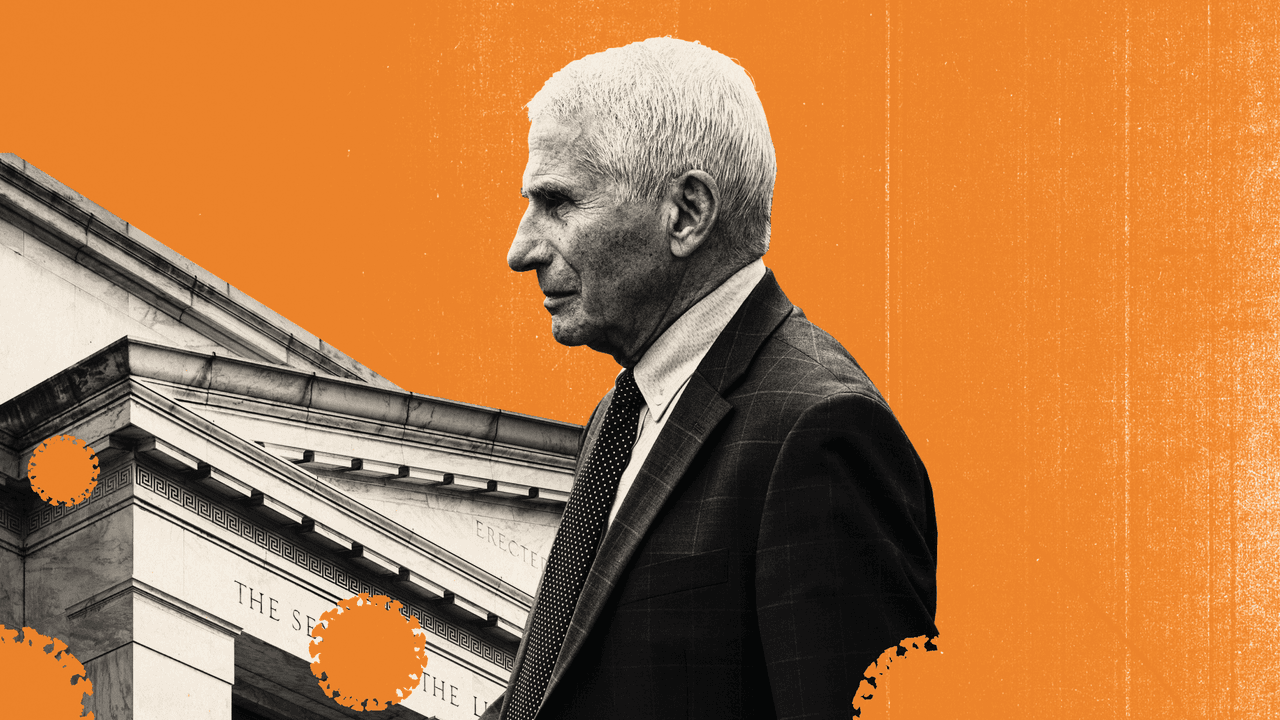
Fauci, in his opening statement, noted that he had testified before or briefed Congress “well over two hundred times” in his long career, including on COVID-19 and its origins. When he was confronted by Paul at a 2021 hearing, Fauci gave as good as he got. He may feel that he doesn’t have much left to say—asked and answered. But he had a unique role in a traumatic mass experience that is still being felt and assessed. Paul isn’t the only one who’d like to hear more.
From the beginning, after all, Fauci was an influential voice in the government response to the pandemic, and in some ways served as its anchor. There are many aspects of the early days that seem surreal now: the mobile morgues in New York City, the daily banging of pots and pans, and the juncture in which Donald Trump treated Fauci as his brainy sidekick. That relationship inevitably turned bad, as the President became impatient with the pandemic and demanded politicized boosterism from Fauci.
If the diary entries are any indication, Fauci, in the midst of the pandemic, also savored his own press coverage and lionization. There are too many mentions of Julia Roberts and of Fauci bobblehead dolls. In the hearing, Senator Josh Hawley, Republican of Missouri, accused Fauci of being on a narcissistic “power trip” (which is the kind of journey that Hawley himself seems to relish). In Fauci’s defense, idolatry is a group effort. Thousands of Americans were buying those bobbleheads, and someone had to publish the flattering articles he read with pleasure. Particularly after his split with Trump, Fauci became something of a politicized totem, for better and worse.
Despite the near-miracle of the vaccine, which became available in December, 2020, there was much about the pandemic response that was far from perfect, in both blue and red states. Why, for example, wasn’t there an all-government effort to get schools reopened sooner and more consistently? There were reasonable concerns about infection and the impact on teachers and on vulnerable family members. Still, the costs of those closures have become more clear with each passing year.
In the hearing, Senator Gary Peters, Democrat of Michigan, observed that “it’s tempting to turn one person into the scapegoat” in a crisis for which “hundreds of officials” across two Administrations were responsible. Paul and his Republican colleagues did not resist that temptation. Paul ejected one of Fauci’s lawyers. Senator Bernie Moreno, of Ohio, told a story about a woman who he said had been arrested for watching a middle-school football game, from mostly empty bleachers, without a mask, and punctuated it by snapping at Fauci, “Who the fuck do you think you were for doing that?”
Watching Fauci as he sat listening was a reminder of how little anyone really knew back in 2020. Most of the world was fumbling and scared, and Fauci seemed to have some idea of what to do. But, even acting on the best evidence available, and with the best of intentions, there were times when he, too, must have been guessing. Realizing that truth would be a route toward not only better preparedness going forward but also a more general granting of grace. If Fauci has regrets about the pandemic, he wouldn’t be alone. ♦



