
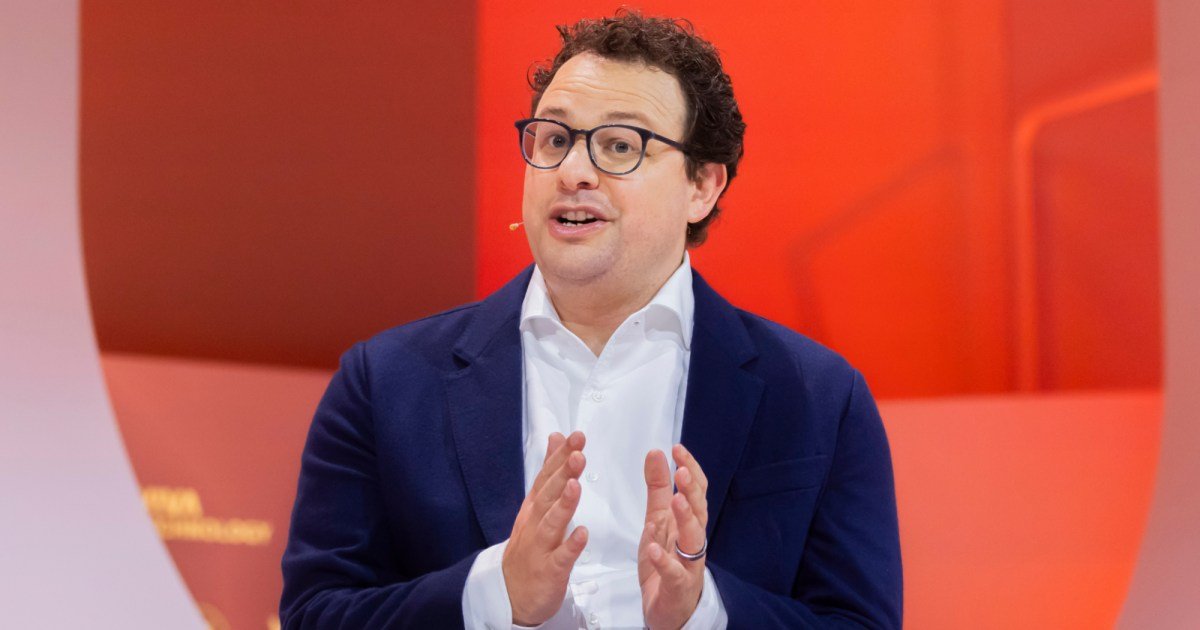
Dario Amodei, co-founder and CEO of Anthropic, speaks at the Viva Technology conference in Paris, France, May 22, 2024.Vincent Isore/IP3/Zuma
The AI giant Anthropic disclosed its initial public offering filing with the SEC on Monday in what is expected to become one of the largest stock debuts in history.
The offering is set to take place around the middle of November. While the public documents do not disclose the exact valuation of the startup or the price or number of shares, investors estimate somewhere around $1.5 to $2 trillion, close to Elon Musk’s SpaceX IPO valuation this past summer at $2.1 trillion.
The massive valuation comes after the startup announced net losses of more than $80 billion in the first half of 2026 on $16.3 billion in revenue, according to Anthropic’s filing. The startup is $6.2 billion in debt, mostly to Amazon, and will also owe compute power providers more than $475 billion—including about $115 billion to Google through 2033, $110 billion to Amazon over the next 10 years, and up to $120.5 billion to SpaceX for access to Nvidia GPUs through 2029.
Anthropic’s filing also appears to partly walk back—or at least massage—the co-founders’ pledge to commit 80 percent of their personal equity holdings in the AI startup to philanthropic causes, a commitment made when the startup was founded. Those acts of philanthropy, the filing suggests, are “voluntary, revocable expressions” that “do not constitute binding obligations.”
“The timing, amount, recipients, structure, and manner of any donations in furtherance of this pledge are uncertain and will depend on a variety of factors, including each co-founder’s individual circumstances, tax and estate planning considerations, applicable transfer restrictions, market conditions, and philanthropic priorities at the relevant time,” the filing reads in part.
The disclosure also alludes to political pushback against AI infrastructure in the context of the firm’s ability to “build, operate, and maintain the infrastructure required to deploy frontier models cost-effectively and at scale”—it specifically notes “moratoriums on new data center construction”—and “navigate an evolving, uncertain, and at times divergent global regulatory landscape.”
And even if Anthropic is able to overcome the political and regulatory pressure it increasingly faces, the filing also discusses the “catastrophic or existential risks to humanity” if AI development lacks “appropriate safeguards”—which Anthropic points out will leave it with a hard time getting adequate insurance. Given the “scale of harm that could result from a catastrophic AI-related incident,” the company writes, “no single insurer, and potentially the insurance industry in the aggregate, may have sufficient capacity or expertise to underwrite insurance commensurate with such exposure.”
In short: We’re losing tens of billions. We need hundreds of billions more. We might destroy everything. Can anyone cover the costs?



