
Cofnas had his own answer—“in a meritocracy, Harvard faculty would be recruited from the best of the best students, which means the number of black professors would approach 0%,” he wrote in that 2024 blog post. And, after a tip from a faculty member at Cambridge, he claimed, he had his hook. The allegation was that Arday was a “plagiarist and fabulist”; and, as would later become publicized, Arday’s scholarship had in the past received scrutiny for accusations of plagiarism. In late July, the “race-realist” went long on Substack, alleging, with the assistance of a plagiarism detector, instances of plagiarism throughout Arday’s work.
The post spun coverage of Arday, weeks before the release of his memoir, into another direction. Some classmates, as published accounts revealed, recalled him speaking as a child. Birkbeck, University of London, where Arday said he had completed a master’s, reported that they were not able to find record of his attendance. Many of his other claims also came under scrutiny.
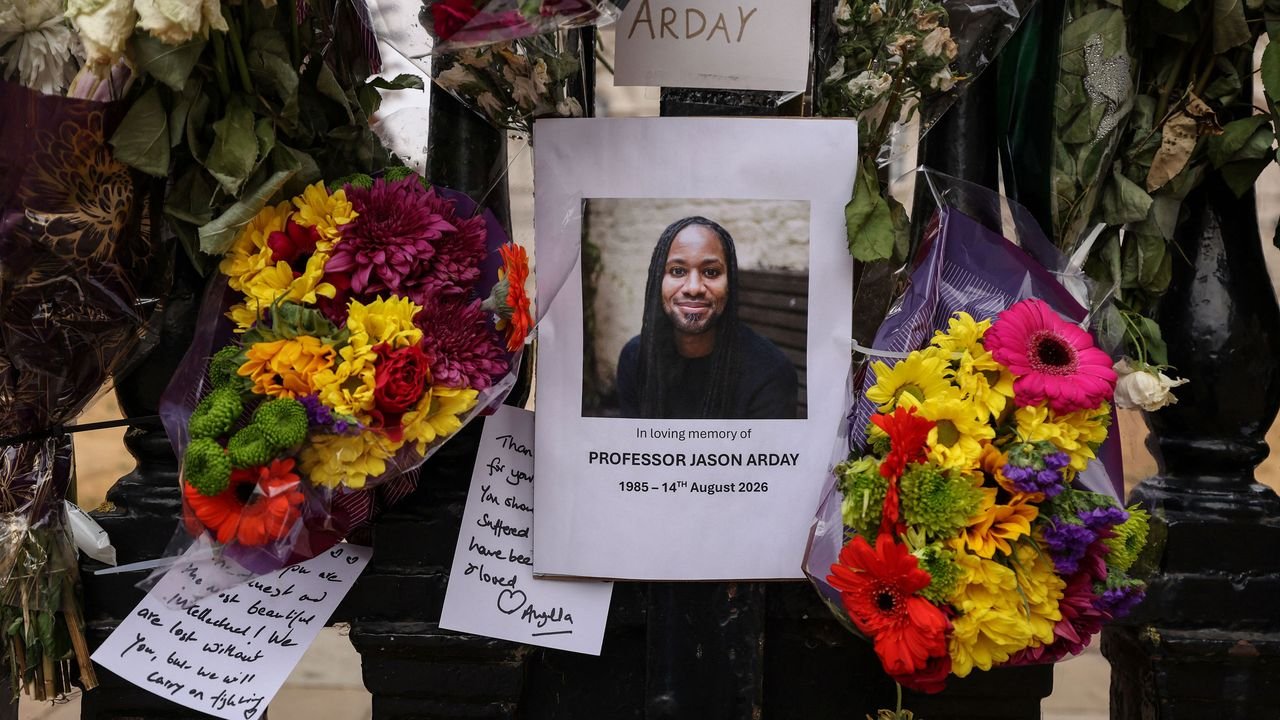
Other prominent figures have been received with levity when their stories have unravelled in public. But Arday was not greeted as a risible scammer endemic to the times. Suspicions surrounding this person demanded an exorcism. Arday defended his biography and his work. On August 5th, as media reports and online spectators tore into what was starting to look like a specious pile of achievements, Cambridge announced that it had opened an investigation after new information had emerged about Arday’s “academic qualifications and honorary appointments,” and noted complaints of “academic misconduct.” Arday resigned that day. Last Friday, he was found dead in South London. He was forty-one.
News of his death, and its circumstances, has been cloaked in journalistic language that implies suicide, emulating the opacity of suicide itself. When all we know is that a life has ended, conjecture rushes into the gap. It is hard not to factor into Arday’s death the preceding media blitz—a disproportionate fixation that set off a social-media furor likely accompanied by harassing messages to Arday and anyone within his orbit, and that has been appropriately described, by some, as gleeful. One British journalist called the story “delicious”—her remarks were reposted by J. K. Rowling.
Other, less cartoonish responses have lingered on Cambridge’s comparable glee in brandishing Arday in the first place. Staid as they may appear, prestigious institutions love king-making and star-fucking—and precocious minorities are far from the first to inflate at the touch of the sceptre. Was this not a lapsed duty of care from Cambridge, or any of the places Arday passed through without much apparent scrutiny of his personal and professional labors? A lust for diversity set Arday up for failure, is one line of thinking. And yet the relish in the unmasking, flung out across our debased online watering holes for anyone to see, has belied any professed piety when it comes to the topic of honesty and academic standards.
Ours is not a society that loathes charlatans; look who’s running things. Academia—like business, electoral politics, and the tech sector—has loads of fabulists and tons of bunk. (And, despite so much single-minded scrutiny of the humanities, the sciences, social and otherwise, are struggling in this regard. A recent audit published in The Lancet found that the number of fabricated references in biomedical papers has increased dramatically in the past few years.) Academic-integrity cases that do reach public attention tend to be strategically muddied, their claimants taking advantage of a general audience’s general ignorance about citation practices; so-called plagiarism detectors, for example, can often incorrectly flag the summary necessary for restating prior scholarship as intellectual theft.
The hues of persons whose cases attract rabid notice are also conspicuous; as the journalist Mona Chalabi pointed out on Instagram, Arday’s name, along with that of another prominent Black academic who resigned after charges of plagiarism, Claudine Gay, has reverberated throughout the press with an intensity unlike those of white figures who have recently been accused of plagiarism, such as the Cambridge associate professor William O’Reilly and Rachel Reeves, a former Chancellor of the Exchequer. (Harvard stated that Gay did not violate its standards for research misconduct, and Reeves’ team denied claims of plagiarism.) Or, for that matter, those of Simon Goldhill and Herbert Huppert, two disgraced professors at Cambridge who recently underwent internal investigations that upheld allegations of sexual harassment. (Goldhill was allowed to quietly resign.)



