
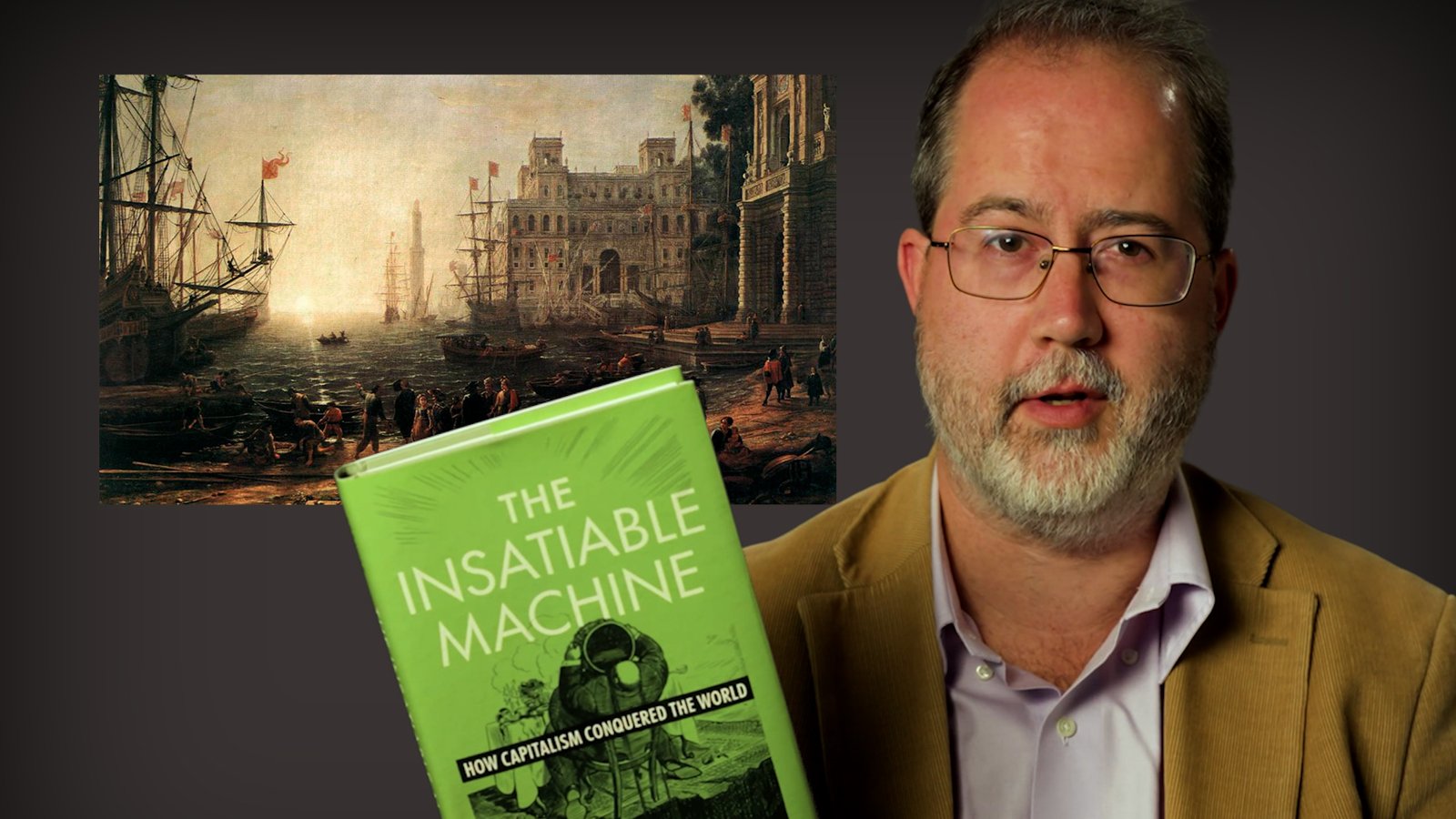
“Capitalism was under construction from about 1500 to about 1800,” says Professor Trevor Jackon. “It’s easier to imagine the end of the world than to imagine the end of capitalism.”
Jackson’s recent book, The Insatiable Machine: How Capitalism Conquered the World, details this complex history. In it, the UC Berkeley economic historian underscores that capitalism’s rise was not an inevitable or even intentional outcome, and that radical change is more “thinkable and possible than we realize.”
In this 101 in 101 video, our series where a Berkeley expert explains an aspect of their work in 101 seconds, Jackson gives us a snapshot of the pivotal moments that shaped the evolution of capitalism — moments that are often rife with precipitous inequality, bloodshed and environmental destruction.
The historian discusses how New World exploration led to a “Price Revolution” and the global use of silver currency and concludes his narrative in 1933, when capitalism prevailed in spite of the suffering brought by the Great Depression and a seemingly viable alternative presented by the USSR.
Jackson is quick to highlight the enormous improvements in quality of life that capitalism unlocked, such as longer lifespans and widespread electricity and plumbing, but he emphasizes the unsustainable nature of endless economic growth with no heed to what economists call “externalities.”
“So far,” Jackson says, “markets appear to be completely inadequate to solving the social problems that markets themselves produce: climate change, inequality, instability, political radicalism.”
Watch the video above for a primer on Jackson’s work, and for a longer conversation, read this interview with UC Berkeley News’ Lila Thulin.
Watch more 101 in 101 videos featuring UC Berkeley faculty and experts here.



