
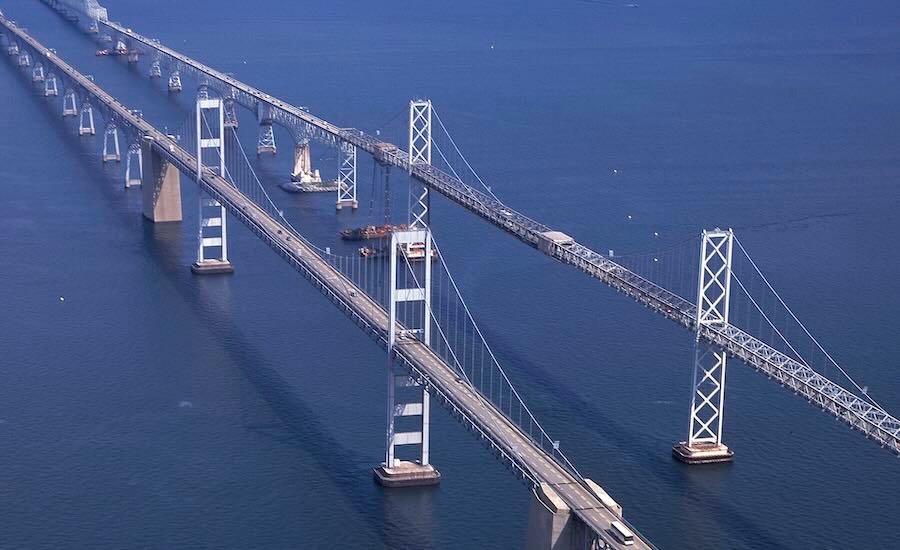
Maryland has received final environmental approval for a new bridge across the Chesapeake Bay, clearing the way for the state to move forward on a project it hopes can begin construction by 2032.
The Final Environmental Impact Statement (FEIS) and Record of Decision issued last month by the Federal Highway Administration calls for two new four-lane bridge spans with full shoulders to be built between and adjacent to the narrower existing 4.3-mile-long dual-span suspension bridges. Constructed in 1952 and 1973, the existing structures will be demolished once the new crossing is complete. Existing six-lane sections of U.S Routes 50/301 on both sides of the new bridge will be widened to eight lanes as well to provide smooth transitions for motorists.
The new structures’ center spans will provide vertical navigational clearance of 230 ft, matching the new Key Bridge in Baltimore harbor and allowing larger vessels to access that city’s maritime port. Updated pier protection measures, currently being retrofitted to the existing bridges, will also be part of the new crossing’s design.
As with its predecessor crossing, the new bridge will be operated by the Maryland Transportation Authority (MDTA), which oversees the state’s tolled infrastructure. The agency has not announced a funding plan for the new bridge, which the FEIS estimates could cost between $14.8 billion and $16.1 billion. Implementing an optional bicycle and pedestrian shared-use path would add approximately $1.3 billion to the cost, according to the document. MDTA has made a financial commitment to improve local transit services in the area, proposing a one-time investment of $40 million.
MDTA also has not announced a procurement strategy for delivering the new bridge, aside from announcing the start of procurement for final design services, which are scheduled to begin in 2028. The agency’s original strategy to utilize progressive design-build delivery for the entire Key Bridge replacement project had to be reworked amid concerns about rising costs and other issues.
Officially named the Gov. William Preston Lane Jr. Memorial Bridge, the twin structures provide the primary highway connection with Maryland’s largely rural Eastern Shore, as well as several popular Atlantic Ocean beaches that attract visitors from across the state and metropolitan Washington, D.C. According to the FEIS, the existing structures’ capacity has been increasingly stressed by annual traffic volumes that have regularly exceeded 25 million vehicles over the past quarter-century. The summer beach season is particularly problematic, with access queues of a mile or longer frequently persisting for up to eight hours.
“Regional and statewide population growth estimates and future travel demand patterns indicate that Bay Bridge traffic volumes will continue to increase through 2045 and beyond,” the FEIS notes.
Source: www.enr.com



