
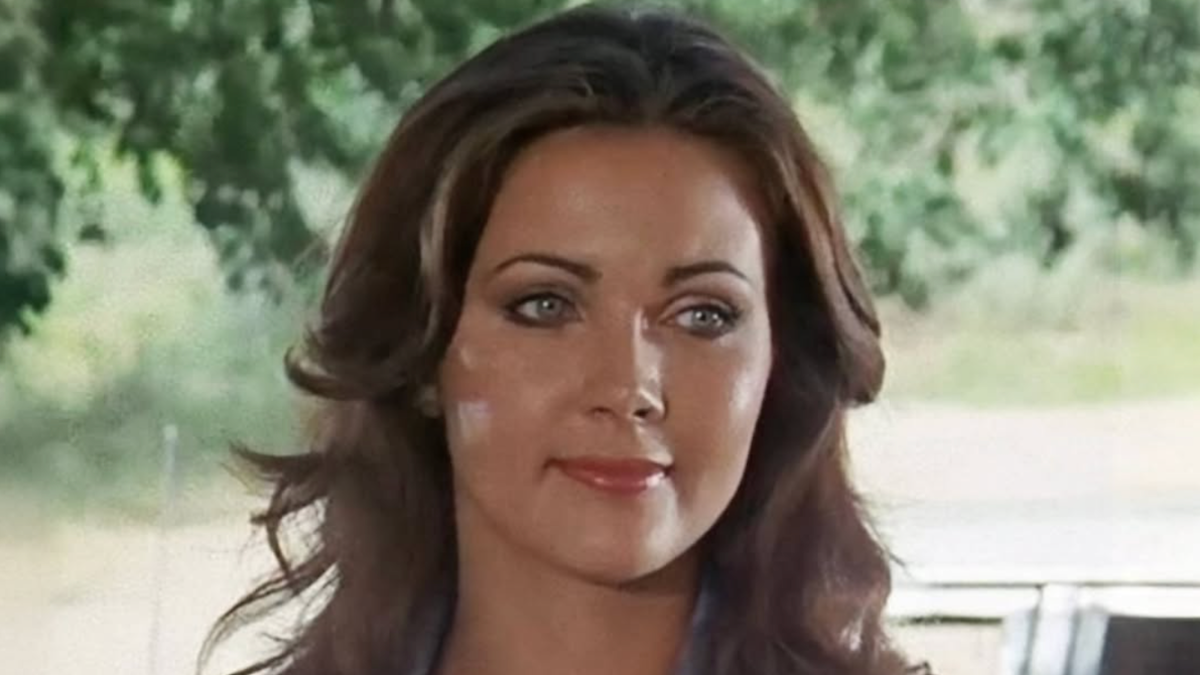
How many of the following 1970s movies can you recognize from a single image?
We’ll show you the year each film was released, a single image, and some hints. The answer is on the next slide.
Remember how many you guessed correctly and we’ll tell you at the end how you scored. Ready? Let’s go.
1971
This is an easy one — but this adaptation of a 1962 novel is a tough watch even today.
It examines the question of nature vs. nurture with a kind of maniacal savagery — and briliance.
Can you identify it from the single image above?
1971 — A Clockwork Orange

Stanley Kubrick’s A Clockwork Orange is full of stunning visuals, but we can’t show you most of them here.
The film, like its antihero Alex (Malcolm McDowell, above), dances back and forth between sensitivity and the aforementioned savagery, leaving audiences unsure of how to feel.
It’s an intoxicating watch, but may leave you feeling hungover and even guilty.
1971

This film, set in 1634 France, was widely banned upon release, but is currently enjoying a very successful re-release.
It featured some pretty upsetting exorcisms, a year before another film on this list.
Ready? It’s…
1971 — The Devils

Directed by Ken Russell, and starring Oliver Reed as Father Urbain Grandier and Vanessa Redgrave as Sister Jeanne des Anges, a nun who is obsessed with him.
As often happens, censors frowned up the combination of religion, sexuality and violence.
But modern audiences seem to love the film. As The Wall Street Journal noted in a recent headline, “A 55-Year-Old Film That Offended Everyone Is Back—and This Time It’s a Hit.”
You may be wondering: Are all of these movies going to be from 1971? No, but there was undeniably something in the air in 1971 — the Vietnam War? The end of the promise of the ’60s? Something else? — that made 1971 a particularly big year for provocation at the movies.
1971

The star of this film, above, was a very divisive figure at the time of the film’s release, and the film gave audiences plenty to debate, as well.
Directed by Alan J. Pakula, it continued the new frankness in mainstream cinema ushered in by 1960s films like Midnight Cowboy.
It remains influential today, even on mainstream films like The Batman.
Got your guess ready? It’s…
1971 — Klute

What was most shocking about Jane Fonda’s character, Bree, wasn’t her job, but the nonchalance with which she carried it out.
Of course, Bree couldn’t just go about making a living without someone threatening to kill her. Which led to the introduction of Donald Sutherland’s character, the titular John Klute.
He may have his name on the title, but Fonda got the Oscar — her first Best Actress win.
1971

There weren’t too many black and white movies released in 1971, so that’s your first big clue.
This throwback is set in a small 1950s town in the early 1950s. Its a coming-of-age movie that deals with complicated themes in typically frank 1971 style.
It was the breakout role for the young actress seen above.
1971 — The Last Picture Show

The actress, of course, is Cybil Shepherd, and the film was also the breakthrough for film-critic-turned-director Peter Bogdanovich, whose incredible early ’70s run also included 1972’s What’s Up, Doc? and 1973’s Paper Moon.
The Last Picture Show was based on Larry McMurtry’s semi-autobiographical 1966 novel, and also helped launch the careers of Randy Quaid, among others.
It also earned the first Oscar nomination for Jeff Bridges, previously best known for starring alongside his famous dad, Lloyd Bridges, on shows like Sea Hunt.
1971

The second Donald Sutherland movie on this list finds the actor (above) looking very different than he did in Klute.
This very dark, disturbing film is an adaptation of a 1939 novel by the film’s screenwriter and author.
Feel free to tap out your answer in Morse Code.
Ready? It’s…
1971 — Johnny Got His Gun

Dalton Trumbo’s antiwar film is the story of a young soldier who loses his sight, hearing, speech and use of his limbs in World War I.
It starred Timothy Bottoms (who also appeared in The Last Picture Show) as Joe Bonham, who ultimately uses Morse Code — his only form of communication — to tap out his final wishes.
It later became very well known to Gen X audiences thanks to Metallica, who featured clips of it in their video for “One.”
1972

One of the scariest films we’ve ever seen, this unnerving ’70s movie was the filmmaking debut of the man who would go on to lead the Nightmare on Elm Street and Scream franchises.
It’s high on the list of movies we respect but don’t like.
Any guesses?
1972 — Last House on the Left

Last House on the Left came from Hallmark Releasing, a company that made clever use of the phrase “It’s only a movie!” to warn audiences of the kind of grim fare it marketed.
So you could say it’s a Hallmark movie… but if you turn it on expecting a Hallmark movie, you’re going to be very, very surprised.
Kudos to Wes Craven for mastering the art of scaring people.
So did the director of our next film..
1973

The image above may not be the most memorable from this classic film, but many, many other images from it are deeply ingrained in the minds of anyone who saw it.
Especially if they saw it too young.
Ready? It’s…
1973 — The Exorcist

A basically perfect movie, William Friedkin’s The Exorcist is one of the best movies ever made about faith — but also one of the best movies about parenting.
At times it feels like it might be a medical drama, but that’s just the movie methodically checking possibilities off the list, before arriving at a very dark scenario.
One of the biggest hits of the ’70s, The Exorcist started a franchise that has had very mixed entries. The latest attempt at reviving the series if Exorcist: Martyrs, which calls in the big guns by handing the reins to writer, director and producer Mike Flanagan, and casting Scarlett Johansson in the lead.
Let’s lighten up with the next 1970s movie on our list.
1974

This Western tweaked all the cliches of the genre, but also delivered adroit social commentary on American race relations.
It pushes all kinds of envelopes. And also had some great silly jokes.
You don’t need no stinkin’ badge to recognize…
1974 — Blazing Saddles

Arguably Mel Brooks’ masterpiece — though he has competition from Young Frankenstein, released later in 1974 — Blazing Saddles benefitted from a fearless writing team that included Richard Pryor.
It’s the story of a Black sheriff (Cleavon Little) who enlists a drunkard gunslinger (Gene Wilder) to clean up an undeserving town of, well, morons.
People who think Blazing Saddles has aged badly have kind of missed the point: The movie set out to offend people even upon its release. But it made a lot of people laugh, too.
And now, onto another ’70s classic…
1975

Despite starring the soon-to-be big star above, this stage show adaptation was a box office failure…
Until someone had the smart idea to start showing it at midnight.
Let’s take a step to the right to the next slide…
1975 — The Rocky Horror Picture Show

Once it started playing midnight screenings, The Rocky Horror Picture Show found its very loyal audience, who came out to see stars including Susan Sarandon (in the previous slide and above) and also dress up like them.
It’s become the longest running theatrical release ever, and odds are good its playing somewhere near you this very weekend. The recent death of its irresistible star, the great Tim Curry, has only deepened our appreciation for its greatness.
And it ultimately did pretty well at the box office.
1975

Nothing about the image above suggests that its a still from one of the yuckiest movies ever made.
It was the final film by its director, and was released three weeks after his murder.
If you know, you know. And if you don’t, please don’t say we didn’t warn you about…
1975 — Salo

Name something that upsets you, and it probably happens in Salo, which was, as we mentioned, the final film by Pier Paolo Pasolini.
The image above and the one on the preceding slide are the only ones we can show you.
The film concerns four corrupt Italian fascists who abduct a group of young people and subject them to absolutely horrible things. And that’s about all we can say without getting put on a list.
We’re only kind of exaggerating. Almost everything on the list would get flagged by most respectable modern internet platforms.
1976

It’s a story as old as time: Boy meets girl, girl and boy go on a crime spree.
This one got more attention than it otherwise might have because of its incredibly photogenic female lead, who was, at the time, starring in a prominent TV role in a show we still love to this day.
Break out your lasso of truth if you recognize…
1976 — Bobbi Jo and the Outlaw

Wonder Woman star Lynda Carter distanced herself from this very 1970s 1970s movie, in which she plays a carhop and asipring country singer who goes on the road with a free-spirited drifter (Marjoe Gortner).
This being a ’70s movie, they’re soon playing guitar, racing around in cool cars and robbing folks, with Johnny Law not far behind.
Have you heard the Steve Miller song “Take the Money and Run”? This movie is like that, except different, because the lady is named Bobbi Jo instead of Bobbie Sue.
1977

This one is largely a sendup of the 1950s television its creators grew up watching — and also the most sensationalistic films of the ’70s, in every genre.
It has its roots in a Wisconsin comedy team, and was directed by the future director of The Blues Brothers, Animal House, and An American Werewolf in London. It also featured cameos by stars including George Lazenby, Bill Bixby, Tony Dow (above left), and — making his third appearance on this list — Donald Sutherland.
If you don’t get it from those clues, you just won’t get it.
1977 — Kentucky Fried Movie

The Wisconson comed team was, of course, Jim Abrahams and brothers David and Jerry Zucker, who would go on to make Airplane, Top Secret, and more classics.
It also started with Kentucky Fried Movie, a film they wanted to direct. But because of their inexperience, the job fell to John Landis. Things worked out OK.
By the way, all the films on this list are available on demand or disc, and we recommend them all.
Your 1970s Movie Score

12 out of 12… The Godfather. You’re unbeatable.
10 out of 12… Marathon Man. In it for the long haul.
7 out of 12… The Muppets. Fun to have around.
4 out of 12… The Bad News Bears. You’ve got heart.
3 or less… The best score of all because it means you need to go watch more 1970s movies, and they’re amazing.
If you liked this list, we’d love for you to follow us for more stories like this.
Main image: American International Pictures
Editor’s note: Corrects main image and Bobbi Jo and the Outlaw Image.



