
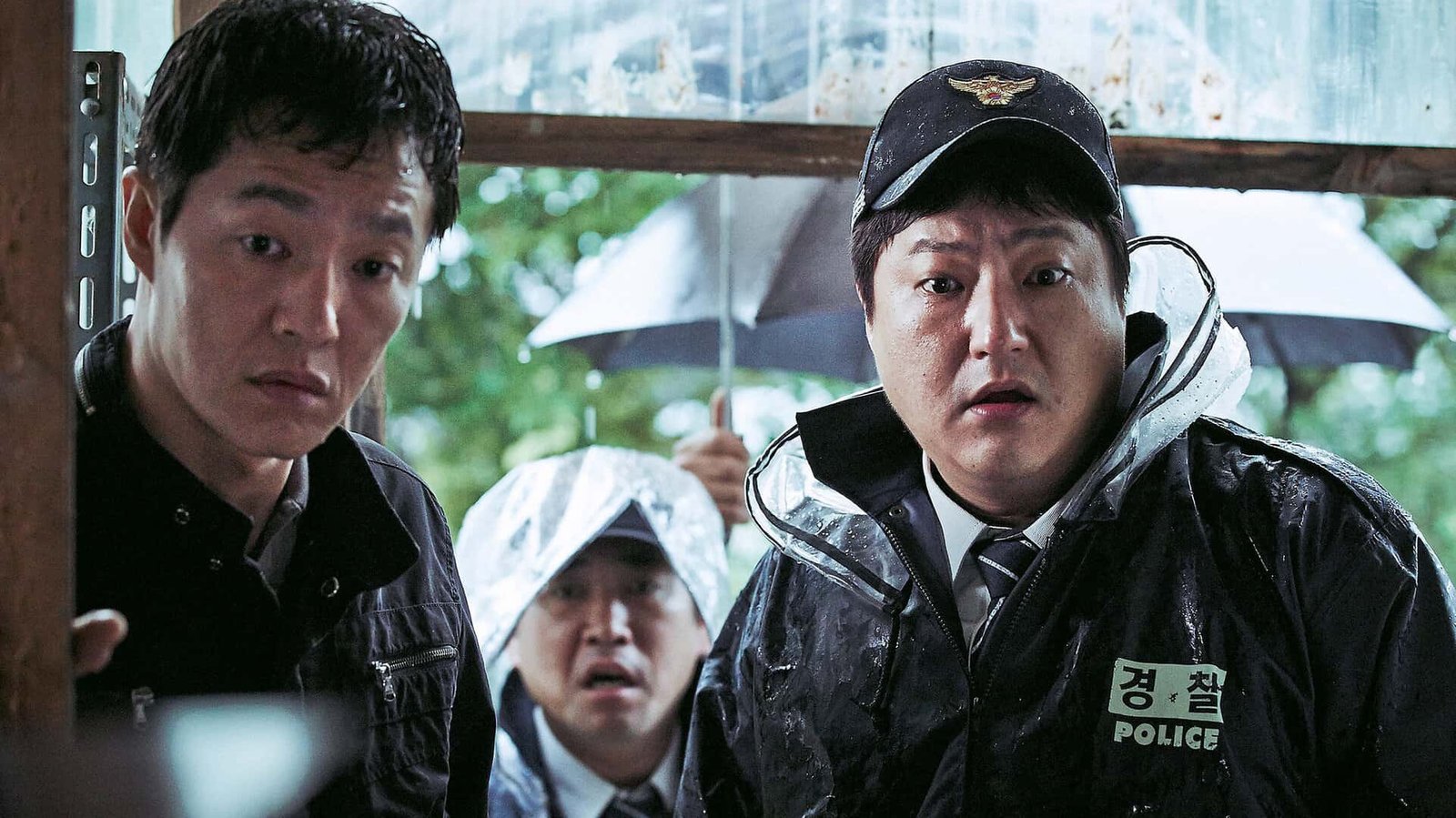
Korean horror has never been easy to define, and perhaps that is precisely why it has remained so compelling across the years. Unlike traditions that rely primarily on monsters, jump scares, or gore, the best works in the category have repeatedly turned to grief, family trauma, superstition, paranoia, and ritual in order to create something more disquieting. Fear in Korean genre cinema is rarely just physical. It is emotional, social, and frequently historical, emerging from the home, the body, memory, and the unresolved tensions between past and present. In that regard, the genre’s most memorable titles are not linked simply by style, but by their ability to transform personal pain into something larger and more haunting.
From Kim Jee-woon’s “A Tale of Two Sisters” to Na Hong-jin’s “The Wailing,” and from the found-footage nightmare of “Gonjiam: Haunted Asylum” to more recent works such as “Midnight,” “Seire,” and “The Sin,” Korean horror has shown a remarkable ability to change form while retaining a recognizable emotional core. Ghosts may appear in different guises, guilt may pass from one generation to another, and ritual may be depicted as faith, performance, manipulation, or desperate last resort, but these elements continue to shape a tradition that remains among the richest in world cinema.
Kim Jee-woon’s “A Tale of Two Sisters” is, in many ways, one of the defining modern examples of this approach. At its core, it is a deeply moving and quite disturbing family drama about deception, emotional trauma, and repression, wrapped in the mechanics of psychological horror. The premise is deceptively simple. Two sisters, Su-mi and Su-yeon, return to their family home in the countryside, where their father hopes they will recover after Su-mi’s nervous breakdown and adapt to the presence of their stepmother, Eun-joo. Very quickly, however, the domestic setting becomes a battlefield of emotional distance, grief, and hostility. The memory of the dead mother still lingers, the stepmother carries the aura of an evil fairy-tale figure, and the bond between the sisters becomes the only refuge within an increasingly oppressive household.
What makes the work so effective is how thoroughly Kim Jee-woon understands the mechanics of psychological horror. While quickly establishing the strong bond between the sisters, he allows tension to build gradually through performance, framing, and space. With the father remaining largely passive, much of the uncomfortable atmosphere derives from Yum Jung-ah’s performance as Eun-joo, who seems to be inspired by a multitude of evil fairy-tale stepmothers. At the same time, there is an idea of unprocessed trauma between the characters, as well as a distinct power struggle between Su-mi and Eun-joo, who are essentially fighting for the still vacant mother-role within the family.
The house itself becomes central to this transformation. As the tension rises, the family home seems increasingly maze-like, with cinematography highlighting what is essentially the transformation of the familiar into the strange, haunting, and disturbing. Kim’s understanding of setting as a mirror to the emotional landscape of the characters is what makes “A Tale of Two Sisters” stand above many of the Asian horror entries of the early 2000s. This is not merely a haunted house story. It is a story in which the house is haunted because the family is haunted, because grief has not been processed, and because guilt has seeped into every room.

If “A Tale of Two Sisters” helped define one key branch of Korean horror, namely the merging of psychological terror and family melodrama, “The Wailing” expanded the genre into something broader, angrier, and more allegorical. Na Hong-jin’s return after the success of “The Yellow Sea” was quite felt in Korean cinema, and “The Wailing” more than compensated for his absence. While it functions magnificently as an agonizing thriller about a rural community overtaken by madness, violence, and suspicion, beneath its elaborate script lies a very sharp sociopolitical allegory. This duality is one of the reasons the work remains so powerful.
Set in a seemingly peaceful village where an epidemic breaks out, with residents losing their minds and attacking relatives as their skin is consumed by hideous infection, the narrative begins as folk horror, shifts into investigative thriller territory, and eventually becomes something much more unstable. Officer Jong-goo hears rumors that a Japanese man living on a nearby hill is responsible, and his suspicions intensify once a strange young woman named Moo-myeong confirms them. However, the truth about what is really going on, and who the actual evil characters are, changes all the time until the very end. In that fashion, Na Hong-jin manages to retain the agony for the whole duration of the story, since the twists are continuous and quite shocking.
What distinguishes “The Wailing” from more straightforward horror is the way it mobilizes ritual, religion, and xenophobia as interconnected forces. The work incorporates zombies, vampires, demons, and exorcists, although the only one majorly implemented is the latter, with the rest existing mostly to create an atmosphere of supernatural horror. Yet the supernatural is never just spectacle. Moo-myeong, Il-gwang the shaman, the Japanese outsider, and the wannabe priest each point to a society in which faith and prejudice have become inseparable. Racism makes targeted people seem like monsters, and ritual becomes both a means of salvation and a tool of deception.
This is perhaps most evident in the exorcism sequence, which remains one of the most impressive and meaningful scenes in contemporary Korean horror. The simultaneous rituals, one in light and one in darkness, the opposite colors of the sacrificed cocks, the hand drums, the agonized reaction of the possessed child, and the mounting desperation of the adults all converge into a sequence where acting, editing, music, and cinematography find their apogee. It is also the point where ritual ceases to be merely cultural texture and becomes the very language through which the work explores fear, power, and collective delusion.
At the same time, “The Wailing” shows how Korean horror can absorb grotesque imagery without surrendering to excess. Cannibalism, violent killings, the skin infection, the ritual slaughter, and the behavior of Hyo-jin all point toward extreme horror. However, Na Hong-jin manages to hide this grotesqueness because the intricate script, the deep allegory, the carefully developed characters, and the elaborate cinematography dominate in the end. The result is a great combination of artistry, meaningfulness, and entertainment, one that demonstrates how expansive Korean horror had become by the mid-2010s.

If “The Wailing” represents one kind of expansion, “Gonjiam: Haunted Asylum” represents another. Jeong Beom-sik’s work proves that Korean horror could also appropriate one of the most globalized and often critically dismissed formats, found footage, and make it genuinely frightening. The premise is simple and knowingly contemporary. The crew of a horror web show visits the abandoned Gonjiam asylum in order to attract more viewers, rigging scares inside the building before realizing that the place may indeed be haunted. On paper, this sounds like familiar territory. In execution, however, the result is remarkably effective.
One of the work’s most impressive elements is the overall atmosphere and sense of dread established by the hospital itself. The long, dark corridors, the blood-smeared writing on the walls, and the air of decay and abandonment create exactly the kind of foreboding setting the narrative requires. Once the ghostly activity begins, the work truly lets loose with abandon. Under the guise of the reality-show shoot, the found-footage style affords a frantic zig-zag approach that follows the characters through the asylum and generates the expected flickering lights, slamming doors, and sudden disruptions. Still, “Gonjiam: Haunted Asylum” finds ways to surprise, whether through a floating wig in a pool of water, séances gone wrong, or later sequences involving unseen forces and terrifying apparitions.
Its greatest strength lies in the fact that the style and setting complement each other perfectly. The frantic action inside the asylum includes several terrifying encounters with ghosts and offers fantastic imagery, especially when the thermal camera captures presences the naked eye cannot see. The finale, with the group fully convinced they are cursed and desperately trying to escape, delivers the perfect closing note. In a genre where found-footage often functions as a shortcut, Jeong uses it as an engine for immersion, panic, and immediacy. The result is a genuinely frightening effort that holds up incredibly well and confirms that Korean horror could adapt even heavily codified international subgenres to its own strengths.

At the same time, Korean horror has also frequently bled into adjacent forms, particularly the thriller. Kwon Oh-seung’s “Midnight” is a key example of how the tradition’s core anxieties can survive even when ghosts and overt ritual disappear. Structurally, the work is closer to a crime thriller in the vein of “The Chaser,” but its atmosphere, vulnerability, and bodily tension place it close to horror. The story of Kyung-mi, a deaf-mute woman pursued by a serial killer through dark urban spaces, transforms the city into a nightmare zone where communication breaks down, institutions fail, and danger can emerge from the most ordinary encounter.
What makes “Midnight” especially relevant in this context is the way fear is built through helplessness, social prejudice, and predatory intelligence. Kwon Oh-seung creates a rather intriguing narrative whose greatest strength lies in three elements. First, Kyung-mi and her mother are deaf-mute, which means their communication with the people who could potentially help and save them is extremely difficult. Second, the killer Do-sik is defined by his intense nerve and manipulating abilities, repeatedly escaping capture even when his arrest seems certain. Third, the mother suspects that something is wrong with the surprisingly polite man in front of her, but cannot convince anyone until it is too late. Together, these aspects turn the thriller into something agonizingly close to horror.
The noir atmosphere of the narrow streets, as framed by the excellent cinematography, communicates danger in the most eloquent way, while the action remains brutal and immediate. Furthermore, the work makes pointed social comments, especially in the way people appear more willing to believe the killer than the vulnerable women trying to expose him, in a remark that can be perceived as discrimination against both women and disabled people. In that sense, “Midnight” belongs in this discussion because it shows that Korean horror across eras is not defined solely by the supernatural. Sometimes the ghost is replaced by the sociopath, ritual by routine urban movement, and possession by social blindness, but the emotional mechanism remains similar: helplessness, dread, and the terror of not being heard.

The same ability to renew itself while remaining rooted in older anxieties can be seen in Park Kang’s “Seire.” The title may not have achieved the visibility of “The Wailing” or “Gonjiam,” but it is one of the clearest signs of where Korean horror has moved in recent years. Superstition, suspicion, and paranoia define the story of a first-time father who becomes trapped in a cycle of guilt and fear after violating traditional restrictions surrounding his newborn child. The concept of “seire,” the period in which certain acts are forbidden for the safety of the baby, immediately grounds the horror in ritual and familial obligation rather than in spectacle.
What follows is a slow-burn narrative in which the protagonist’s skepticism gradually gives way to uncertainty, then terror. Park’s screenplay leaves much to the viewer’s imagination, particularly regarding whether what we see is supernatural or psychological. That ambiguity is familiar territory for horror, but the work’s emphasis on male guilt and responsibility gives it a different texture. The dilemma of guilt and responsibility is shown quite well, and Hyun-woo Seo’s performance makes the struggle believable, making the horror he experiences feel very real. “Seire” does not rely on cheap jump scares, but on performance, atmosphere, cinematography, and score to create a constant sense of dread. In doing so, it connects to a longstanding Korean horror tradition while pushing it toward a more intimate and meditative register.

Han Dong-seok’s “The Sin” moves in yet another direction, one that perhaps captures the current state of the genre most clearly. One of the latest and most interesting slight trends in Korean cinema is combining genre basis with arthouse aesthetics, particularly in science fiction and horror, and “The Sin” embraces that tendency fully. Beginning as a story about an experimental art project before becoming full-throttle horror, it retains its arthouse aesthetic throughout even as zombies, stabbings, rituals, and supernatural twists multiply.
What is especially striking here is the way horror creeps into a narrative that initially resembles a drama. This gradual contamination recalls older Korean horror’s interest in unstable reality, but Han adds a more openly iconoclastic sensibility through hooded figures, projected images, and an emphasis on visual doubling. Guilt, revenge, and the impossibility of letting go emerge as central concerns, while the finale also makes a remark on how the actions or inaction of parents shape their children. In that sense, even when the narrative becomes convoluted, the work remains tied to the same anxieties that power “A Tale of Two Sisters” and “Seire”: family wounds, inherited damage, and the persistence of the past.
Seen together, these works reveal that Korean horror has evolved not through rupture but through accumulation. The genre has not abandoned its earlier concerns. Rather, it has found new forms through which to revisit them. “A Tale of Two Sisters” turns grief into spatial and psychological terror. “The Wailing” transforms ritual and xenophobia into an agonizing rural nightmare. “Gonjiam: Haunted Asylum” channels digital-age spectacle and communal panic through found-footage immediacy. “Midnight” pushes horror toward urban thriller territory, where bodily vulnerability and social indifference become terrifying in themselves. “Seire” uses folklore and family anxiety to create quiet but relentless dread. “The Sin” folds arthouse imagery into a story of trauma, violence, and ritualized reckoning.
This is why ghosts, guilt, and ritual remain such useful coordinates for approaching Korean horror across eras, even when one of the works moves beyond the strictly supernatural. The ghost is rarely just an apparition. It is memory, repression, history, or social anxiety given form. Guilt is rarely private. It belongs to families, to communities, and sometimes to nations. Ritual, meanwhile, is never merely decorative. It can be sacred, transactional, manipulative, desperate, or empty, but it always reveals something about the world in which it appears. And in a work like “Midnight,” where ritual is largely absent, its place is taken by the ritualized patterns of urban life and institutional failure, proving that the genre can preserve its emotional logic even when its iconography changes.
Ultimately, the enduring strength of Korean horror lies in its refusal to be reduced to mere fear delivery. Its best works remain unsettling because they understand that terror is most effective when it emerges from recognizable pain. Whether in the country house, the remote village, the abandoned asylum, the city streets, the newborn’s room, or the derelict artistic space, horror becomes a means to explore emotional truth. And as long as Korean filmmakers continue to find new ways to stage that collision between the intimate and the uncanny, the genre will remain not only relevant, but essential.



