
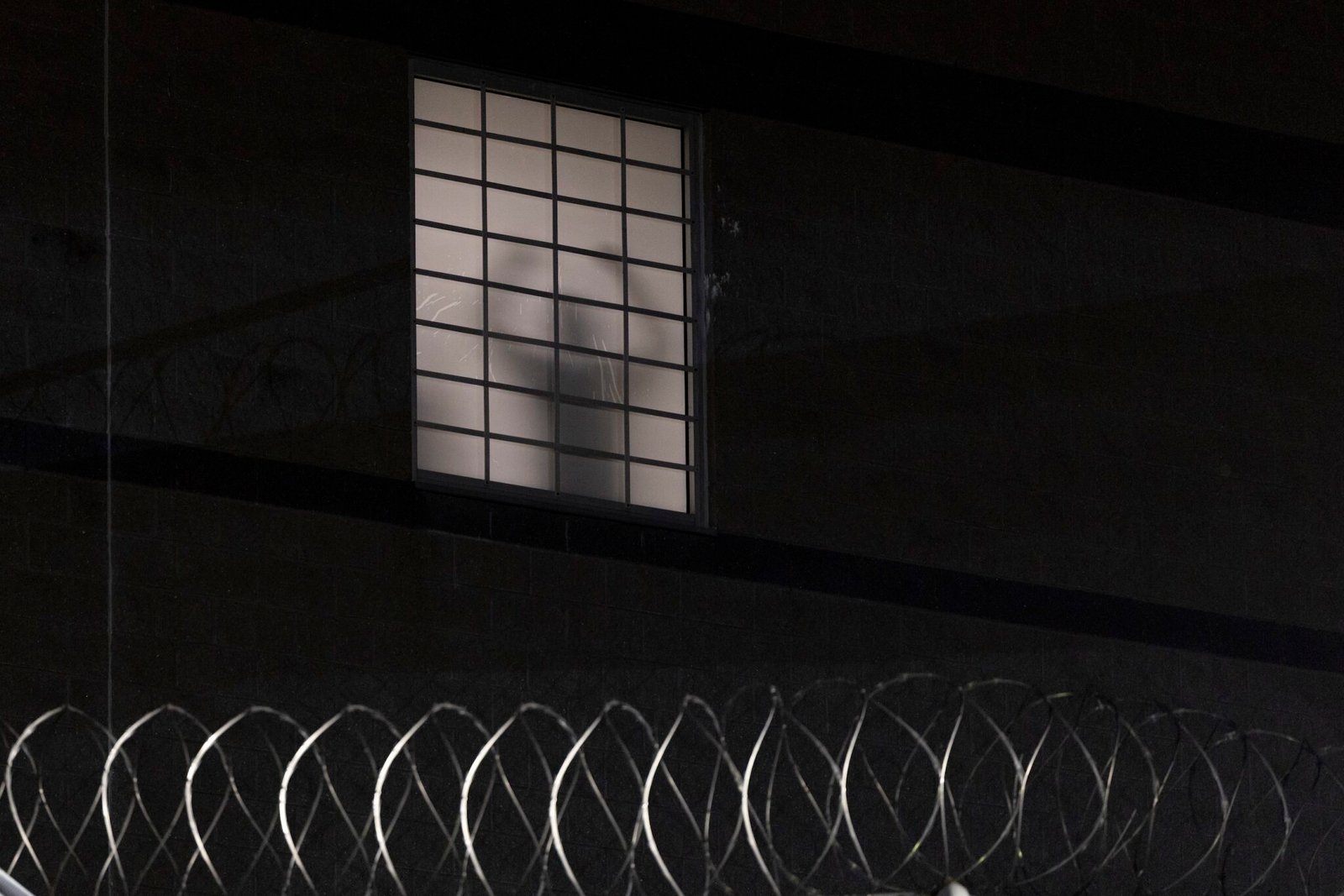
A hunger and labor strike by detained immigrants at Newark migrant jail Delaney Hall that drew national attention and sparked weeks of violent protests outside the detention center has effectively ended, immigration advocates said Monday.
The detainees ended their strike because of the actions taken by the jail’s guards, and not because conditions behind bars have improved, the advocates said.
Scenes from outside Newark migrant jail Delaney Hall
“Because of the intimidation tactics, the disciplinary consequences for folks to be placed in segregation, (detainees) have now resorted to going back to job assignments and eating,” said Sally Pillay, an advocate with Eyes on ICE who has spent months outside of the migrant jail aiding families of detainees.
A request for comment from the U.S. Department of Homeland Security was not immediately returned. Federal officials have said for weeks that detainees never engaged in a hunger or labor strike.
More than 300 detainees inside the immigration detention center said they launched the strike May 22 to call attention to what they called inhumane conditions, including inedible food and poor treatment by guards. Delaney Hall soon became a national flashpoint, attracting members of Congress, state officials, and sustained crowds of protesters to Doremus Avenue in Newark on a near-daily basis.
Amy Torres, executive director of the New Jersey Alliance for Immigrant Justice, said the tactics used to break the strike are nothing new. Some detainees were transferred out of the facility as a “means of punishing them for being part of that dissent,” she said.
Torres said among those transferred was a 20-year-old man who crossed the border at 18. He was transferred in the last two days and his location remains unknown as of Monday, she said.
“There are hundreds more that have disappeared,” Torres said. “There’s no way to account for where they are. Are they OK? What’s going on with them? It’s pure heartbreak.”
Pillay said activist groups have tracked detainees to facilities in Louisiana, Texas, Pennsylvania, California, Arizona, and Colorado.
“These transfers have had devastating consequences,” she said. “We know that these facilities are in remote locations where people do not have access to their lawyers, to their families, and their support networks.”
She noted that detainees in the units most active in the strike were deliberately broken up, with people dispersed throughout the facility. Detainees have also raised new concerns inside the jail, like discolored drinking water and weeks without access to hot water, Pillay said.
Family visitation, which was briefly suspended during the strike, was reinstated with sharp restrictions. Pillay said visitations have been cut to 30 minutes, are only offered twice a week in some units, and are limited to immediate family members on an approved list. She said Geo Group — the private company that runs the detention center — has not posted information about the new visitation schedule online, so families show up expecting the old schedule and are turned away.
Detainees have also been blocked from speaking with members of Congress conducting oversight visits. Detainees must now sign a privacy waiver, provided only in English, before a member of Congress can speak with them, and forms must be submitted in advance of the visit, a process Pillay said is “to probably intimidate and use retaliatory tactics against the individuals who speak out.”
On Father’s Day, Pillay said of the 80 family members who arrived to visit loved ones, more than 30 were turned away.
“We saw heightened emotions, distraught families, and loved ones outside,” she said.
Dozens showed up for a protest Sunday. Some tied neckties to the fence outside the jail in honor of the fathers who remain detained and some held up signs that read, “Free the dads.”
One protester holding an upside-down American flag near the driveway of the prison was hit by a car entering the jail parking lot, video shows. Newark Public Safety Director Emanuel Miranda said the incident is under investigation.
“Federal agents are brutal, abusive, and reckless with the public,” Torres said. “We can only imagine what they’re doing to people in detention behind closed doors.”




