
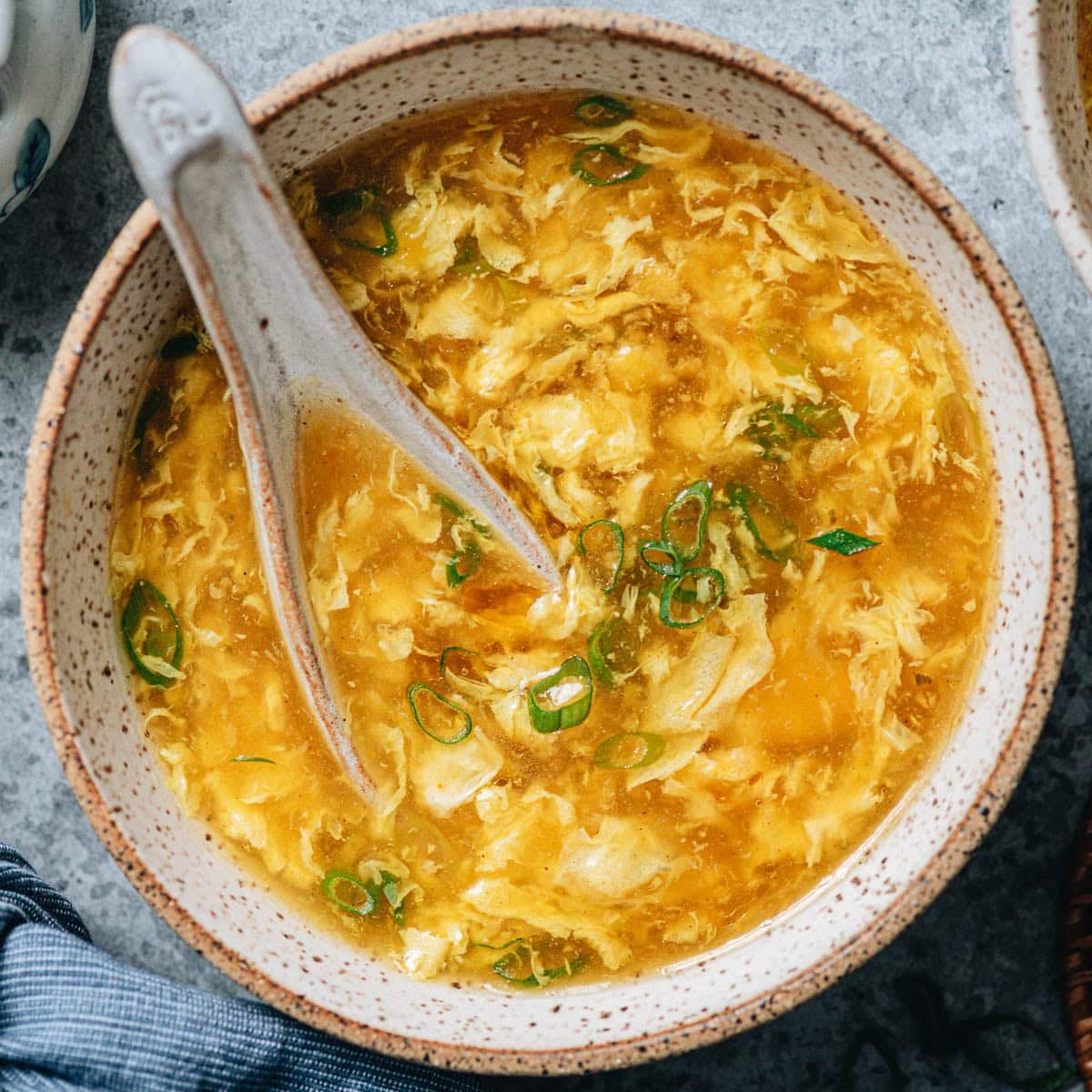
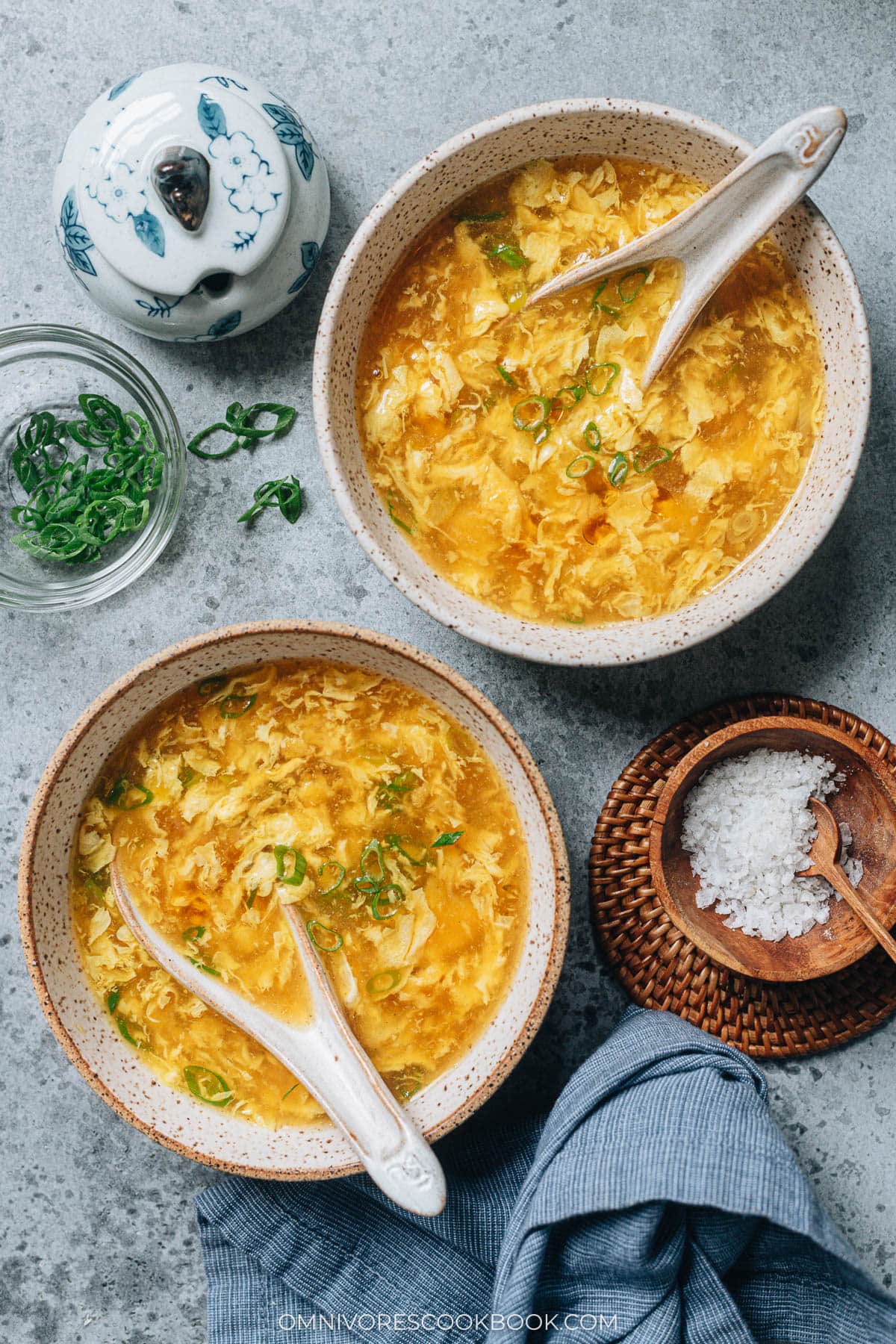
Egg drop soup is one of the most familiar dishes on a Chinese American takeout menu, and the version I make at home stays close to that restaurant style. The broth is thickened lightly with a cornstarch slurry so the egg ribbons stay suspended instead of sinking, the eggs are drizzled in carefully so the soup stays clear, and the seasoning leans on chicken bouillon instead of plain salt for more flavor with less sodium.
Back in Beijing when I was living with my parents, my mom would serve soup every day along with steamed rice, a stir fried seasonal vegetable, and a meat dish. Egg drop soup was always her first choice when she wanted something quick on a weeknight. Her trick was always a small spoonful of chicken bouillon to give the soup body, because chicken stock on its own can taste mild without that lift, and the bouillon was a permanent fixture in her pantry.
I re-developed this recipe to get even closer to the takeout style I remembered. The biggest changes are fewer eggs, to optimize the egg to soup ratio. I also used a new drizzling method that adds the egg in three small batches with a short wait between each one, which keeps the broth clear instead of cloudy. The result is thin even egg ribbons and a broth that stays clear. I encourage you to make this for your family anytime you crave a comforting but easy soup at home.
Ingredients
I group the ingredients in four short groups, the broth and aromatics, the seasoning slurry, the eggs, and the finish.
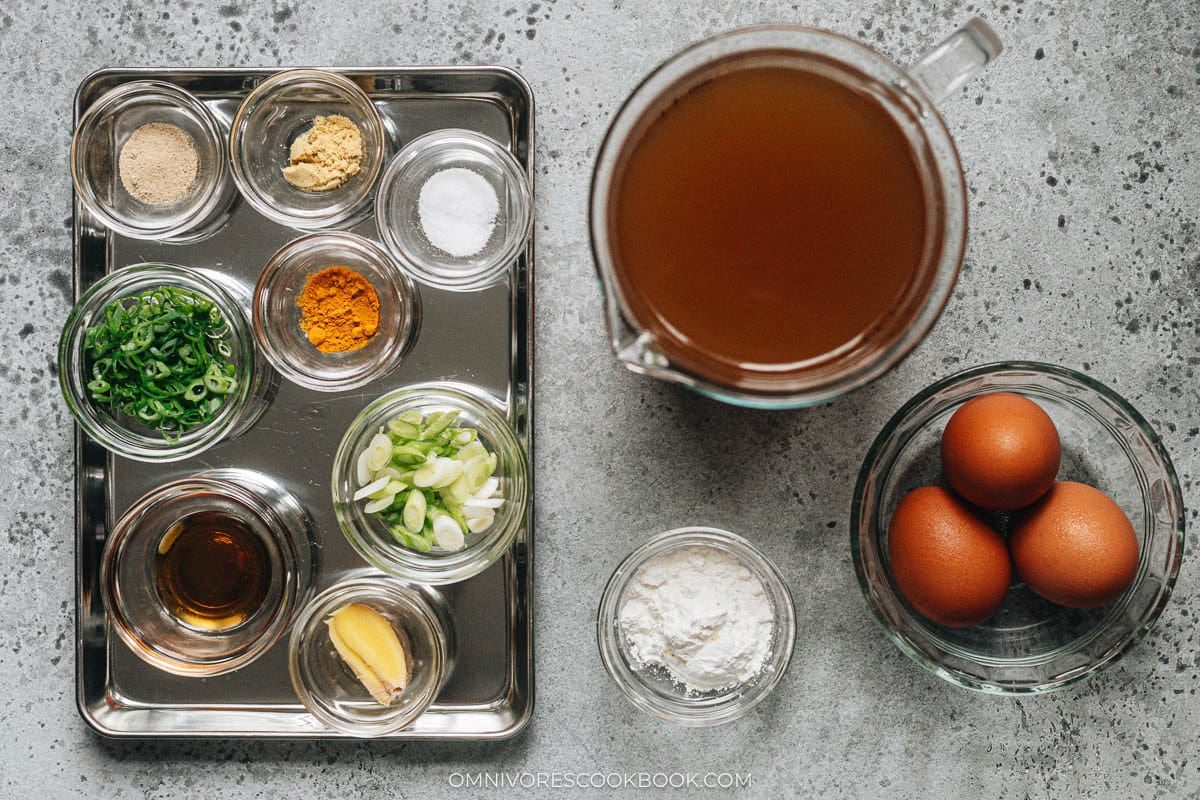
Broth and aromatics
A good chicken broth is the base, plus the white parts of two green onions sliced and a couple of slices of ginger. The aromatics simmer with the broth at the start to give it a Chinese cooking foundation that store bought stock alone usually lacks.
Seasoning slurry
Cornstarch dissolved in water is what gives the soup its restaurant style body, 2 tablespoons for a thicker takeout texture or 1.5 tablespoons for a lighter version. The slurry carries the chicken bouillon powder, white pepper, and an optional pinch of turmeric, which gives the broth a faint yellow color that looks like the takeout version. Chicken bouillon is my preferred seasoning over plain salt because it adds more depth than salt does, with less sodium overall, and it is the same trick my mom used in her kitchen.
Eggs
Two large eggs give a texture that is very close to takeout style egg drop soup. Three eggs gives a richer, more substantial soup with more egg in every spoonful.
Toppings
Toasted sesame oil drizzled in at the very end and a sprinkle of the green parts of the green onion on top. The sesame oil goes in off the heat so its fragrance does not cook away.
How to Make
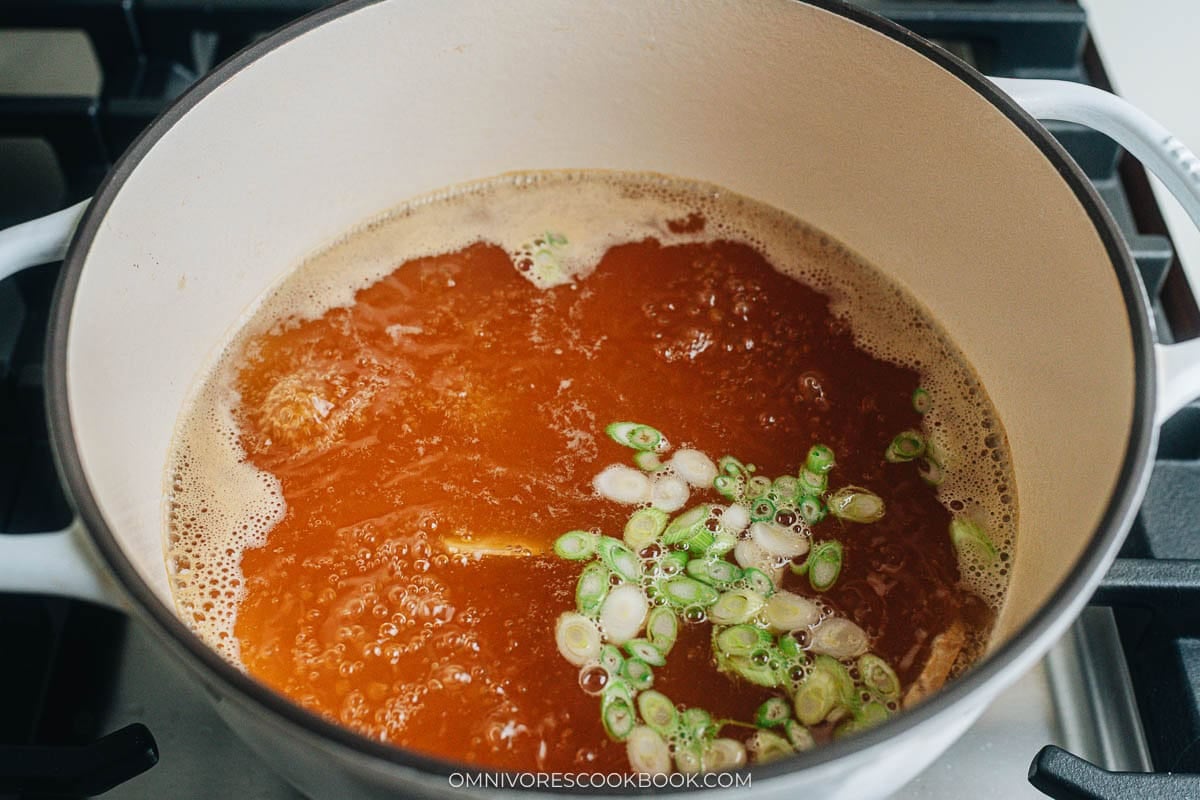
1. Simmer the broth with aromatics: Combine the chicken broth, the white parts of the green onion, and the ginger slices in a small pot. Bring to a boil over high heat, then turn down to low so the broth sits at a slow simmer with small bubbles.
2. Mix the seasoning slurry: In a small bowl, whisk together the cornstarch, chicken bouillon, white pepper, optional turmeric, and 2 tablespoons of water until the cornstarch is fully dissolved with no lumps.
3. Thicken the soup: Swirl the slurry into the simmering broth and stir with a spatula to distribute. Keep stirring for about a minute until the soup thickens to a light body.
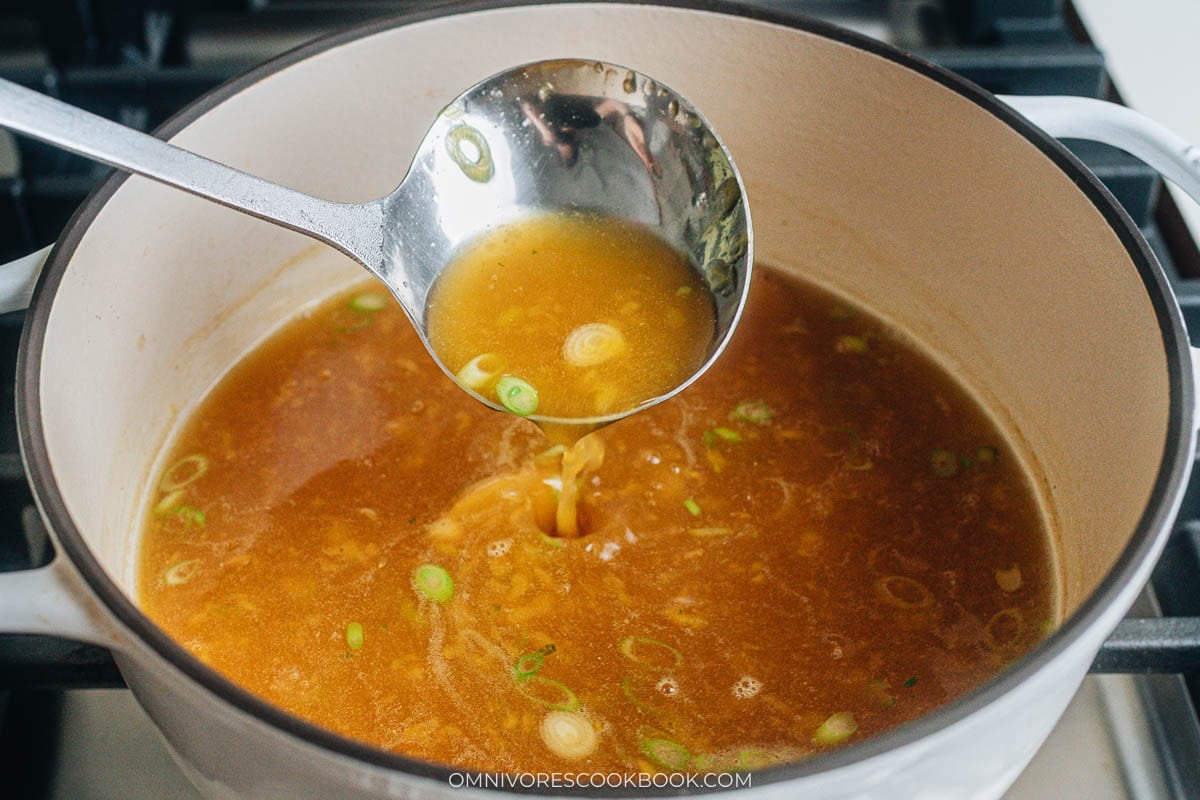
4. Check the simmer (very important): Before adding the eggs, look for a low simmer with small bubbles rising, not a hard boil. The simmer needs to be active enough to cook the eggs as they meet the surface, but slow enough that they form thin ribbons instead of clumps.
5. Drizzle in the first third of the eggs: I like to use a cup with a spout for easy drizzling. If you don’t have one, hold a fork or two chopsticks held slightly apart across the top of a small bowl to form a thin drizzle. Pour about a third of the beaten egg through the fork into the soup in a thin stream. Aim for a spot where no egg has formed yet so the ribbons stay separate.
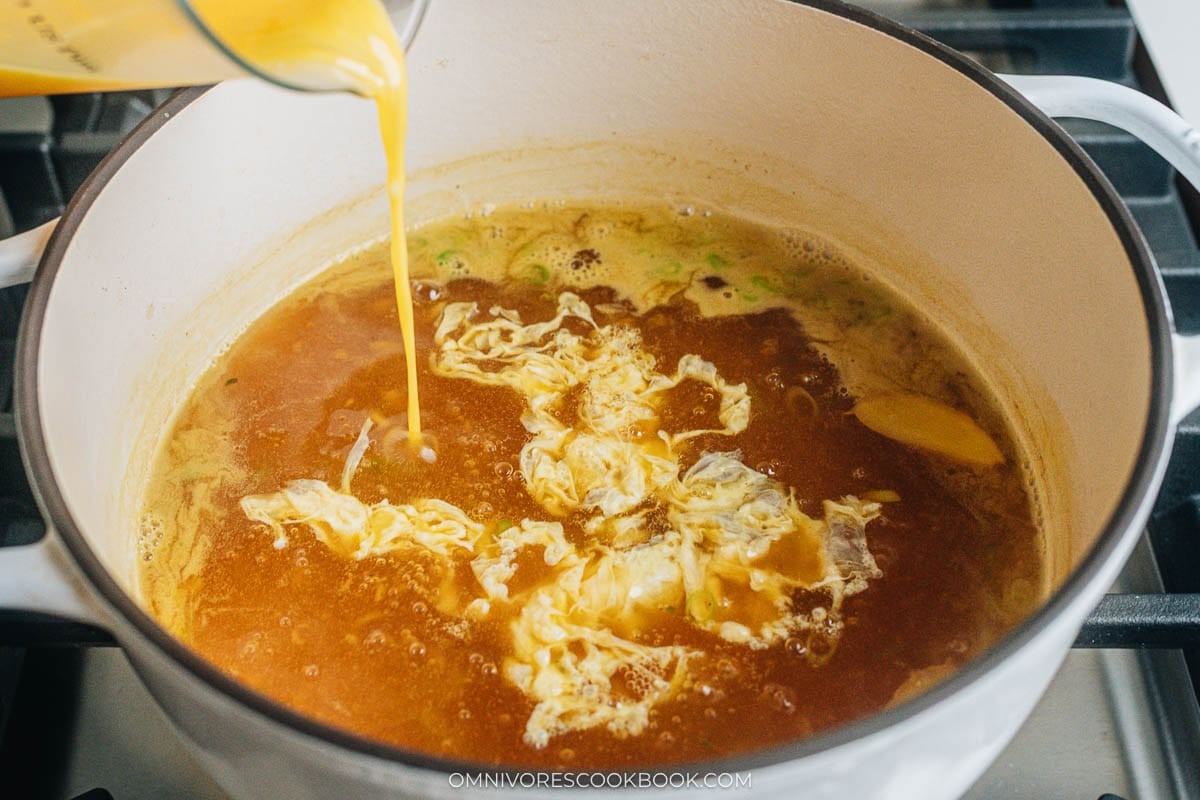
6. Wait and stir the first batch: Let the eggs sit on the surface for 10 to 20 seconds without touching them, just long enough for the proteins to set. Then stir with a light hand to break up the egg into the ribbon size you want.
7. Drizzle and stir the second batch: Repeat with the next third of the eggs, drizzling into a fresh spot, waiting 10 to 20 seconds, then stirring with the same light hand.
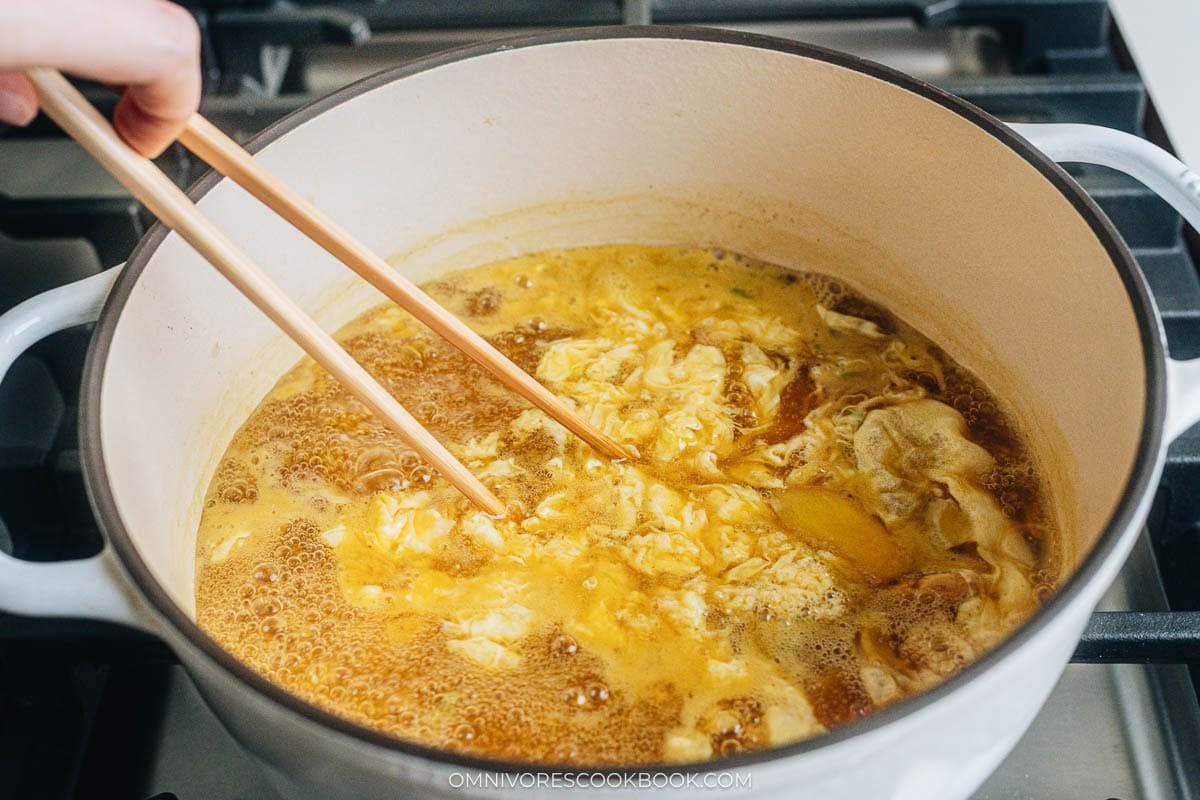
8. Drizzle and stir the final batch: Finish with the last third of the eggs the same way.
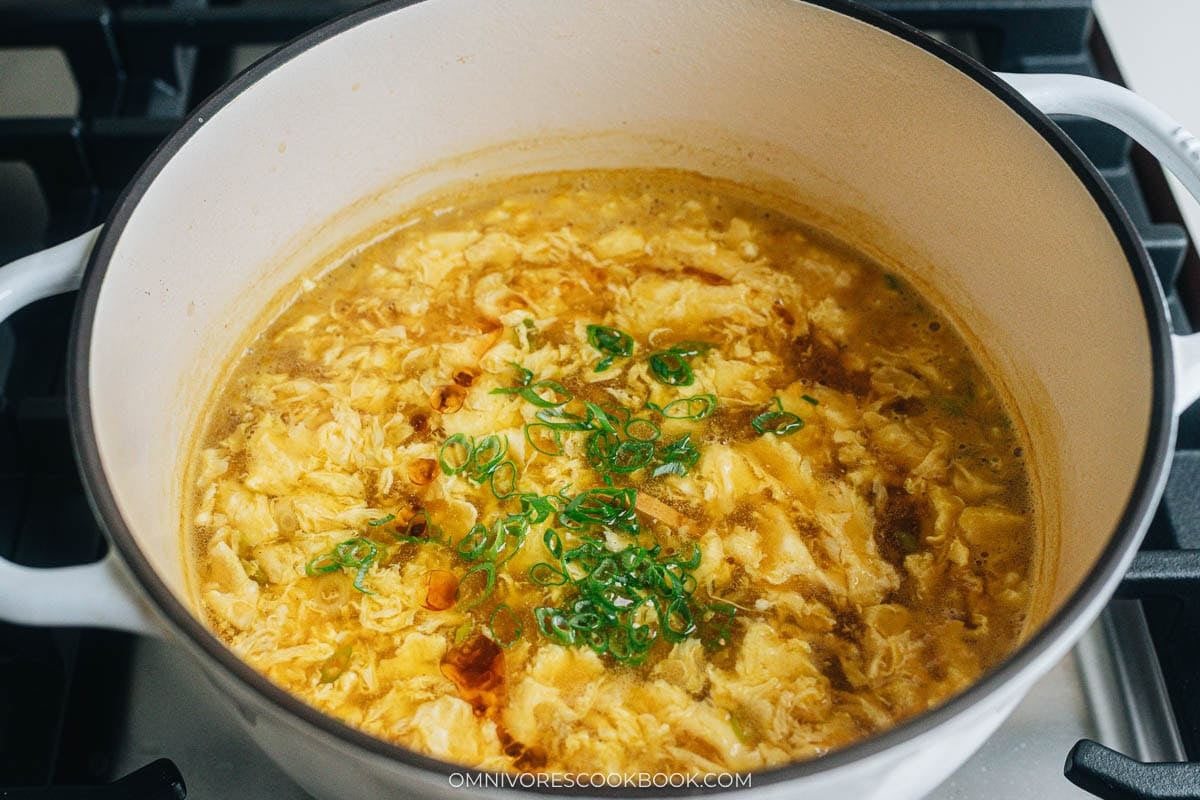
9. Add the toppings: Turn off the heat. Drizzle in the sesame oil and sprinkle the green parts of the green onion over the top. Serve hot.

My Cooking Tips
Keep the simmer slow and steady: The simmer is the single most important variable here. If the soup is not bubbling at all, the eggs will drop to the bottom of the pot and stick. If the soup is bubbling hard, the eggs will overcook into big clumps. A low simmer with small slow bubbles is what gives thin even ribbons.
Beat the eggs without whipping in air: A few quick passes with a fork is enough to blend the yolks and whites. Whipping the eggs hard adds air bubbles that turn into foamy clumps in the soup. I look for an even pale yellow with no streaks of clear white left.
Beat the eggs in a measuring cup with a spout: A spouted cup gives me a slow controlled stream when I pour, which is exactly what the drizzle technique needs. Without a spout, the fork held across a small bowl works the same way.
Break up any thick whites before drizzling: If the eggs have any stringy unbroken white left after beating, those pieces will jam at the fork and drop into the soup as a clump instead of a ribbon. I look for those and break them up with the fork before pouring.
Add the eggs in three batches, not all at once: Dumping the eggs in all at once gives uneven cooking. Some of the egg cooks already and clumps while the rest emulsifies into the broth and makes it cloudy. Three small drizzles with a wait between each one gives the best ribbons.
How to Serve
This soup is rarely the centerpiece. I serve it as part of a balanced family meal alongside steamed rice, a stir fried seasonal vegetable, and a meat or seafood main, which is how my mom served soup at our table when I was growing up. The soup goes in small bowls at every place setting, and people sip it between bites of the heavier dishes to reset the palate.
For a takeout style dinner at home, I serve a bowl of this soup as the warm starter and follow it with a noodle or rice dish for the main. It pairs well with Mom’s pork dumplings when I want a fuller Chinese spread, with tomato and egg stir fry when I am leaning on a simple homestyle table, and with Chinese corn soup with chicken traded out as the soup course when I want a soup with more substance but has the similar egg drop texture.
Frequently Asked Questions
Why is my soup cloudy instead of clear?
Cloudy broth usually means you stir the eggs before they set, which happens when the soup was not at a real simmer, or the eggs were stirred too early before they had time to set. The fix is the three batch drizzle method, a low simmer with small bubbles, and a 10 to 20 second wait after each drizzle before stirring. If the egg goes into the soup before it has set even a little, the proteins emulsify into the broth and turn it cloudy instead of staying as separate ribbons.
Why are my egg ribbons in big clumps?
Clumpy eggs come from one of three things. The soup was at a hard boil instead of a slow simmer, so the egg cooked too fast on contact. The egg was poured in one stream instead of drizzled through a fork. Or I waited too long to stir after the egg went in, so it set into a sheet before I broke it up. The three batch method with 10 to 20 seconds of waiting per batch fixes all three.
How do I store egg drop soup?
Leftovers keep in an airtight container in the fridge for 2 days, though the soup is at its best when served fresh, because the cornstarch loses thickening potency when refrigerated, and the soup becomes thin. I reheat slowly over medium low heat just until heated through but to a hard boil. If I want the soup thickens again, I add more cornstarch slurry. I do not recommend freezing this soup because the eggs and soup texture change too much and won’t taste good once thawed.
Want to Save This Recipe?
Enter your email below & we’ll send it to your inbox. Plus get great new recipes from us every week!
My Chinese egg drop soup is a 15 minute restaurant style soup with silky egg ribbons drifting through a clear chicken broth seasoned with green onion, ginger, white pepper, and a finishing drizzle of sesame oil.
Prevent your screen from going dark
Combine the chicken broth, the white part of the green onion and ginger in a small pot. Cook over high heat until brought to a boil. Turn to low heat and let the soup reduce to a simmer.
Combine cornstarch, chicken bouillon, sea salt, white pepper, turmeric, and 2 tablespoons of water in a small bowl. Whisk until cornstarch is completely dissolved. Swirl into the soup and mix well with a spatula. Stir and cook until the soup thickens.
To add eggs, make sure the soup is simmering. (*Footnote 4) Hold a fork (or two chopsticks slightly apart) across the top of a small bowl, drizzle the egg mixture in 3 batches into the soup, where no egg strands have formed. Let the eggs sit for at least 10 to 20 seconds to make sure they have cooked, then stir gently to break up the egg to the desired sized pieces. Then keep drizzling and breaking up the rest of the egg mixture. (*Footnote 5)
Turn off the heat. Drizzle sesame oil and sprinkle with the green part of the green onion. Serve hot.
Ingredient Substitution Guide
- I found 2 tablespoons of cornstarch creates a thicker soup that is the closest to the Chinese takeout version. If you prefer a thinner soup, use 1.5 tablespoons of cornstarch.
- I prefer to use chicken bouillon instead of salt to season the soup. Chicken bouillon contains much less sodium than salt but adds more flavor to the soup.
- Use 2 eggs if you prefer the soup to have a texture that’s similar to Chinese takeout. For a richer soup, use 3 eggs. To make the best egg ribbons, you want the beaten eggs to be even and smooth. Do not beat the eggs with a lot of force, which creates air bubbles. Pay attention to breaking up the thicker pieces of egg white, so it is easier to drizzle. For an easy drizzle, I like to beat the eggs in a cup with a spout. If you do not have one, use the “fork method” in the recipe.
- It is very important to have the soup on a low simmer, so it cooks the eggs gently. If the soup is not bubbling at all, the eggs will drop to the bottom of the pan and stick. If the soup bubbles too rapidly, the eggs cook very quickly and form larger clumps.
- I found the best way to create thin, even egg ribbons is to not add all the eggs at the same time. The eggs require some time to set. If stirred too early, the uncooked eggs will emulsify into the water and make the soup cloudy. If stirred in too late, the egg will start to clump together and form bigger pieces. Adding it in small batches, then waiting and stirring, creates the most even result.
Serving: 1serving, Calories: 52kcal, Carbohydrates: 6g, Protein: 2g, Fat: 3g, Saturated Fat: 0.3g, Polyunsaturated Fat: 1g, Monounsaturated Fat: 1g, Cholesterol: 5mg, Sodium: 857mg, Potassium: 67mg, Fiber: 0.2g, Sugar: 1g, Vitamin A: 65IU, Vitamin C: 1mg, Calcium: 15mg, Iron: 0.3mg

Did you make this recipe?
I’d love to hear how it turned out for you! Please take a moment to leave a 5-star rating ⭐️ and share your thoughts in the comments further down the page. It really helps others discover the recipe too.



