
When naturalist John James Audubon visited Florida in the 1830s, he marveled at our vast flocks of birds but complained about all the wetlands covering the landscape.
“The general wildness, the eternal labyrinth of waters and marshes, interlocked and apparently never ending, the whole surrounded by interminable swamps — all these things had a tendency to depress my spirits,” he wrote in a poor-me note to his editor.
Hey, Mr. Audubon, cheer up! Congress is jumping in to help wipe out what’s left of Florida’s depressing swamps, marshes, and bogs! Isn’t that great news?
Here’s the situation: In 2020, at the tail end of the first Trump Administration, the U.S. Environmental Protection Agency’s administrator — a former coal industry lobbyist —granted Florida’s request to take over issuing federal wetland destruction permits. We became the third state in the nation to do that.
Environmental groups sued, accusing the state of doing an illegal end-run around the Endangered Species Act to make its processing of the permits go faster.
When the state officials involved had to defend their actions in court, said attorney Tania Galloni of Earthjustice, their excuse was that the Endangered Species Act is just sooooooo doggone difficult to obey!
“’It’s hard’ is NOT a reason to not comply with federal law,” she told me four years ago.
In 2022, a federal judge agreed with the environmental groups. He ruled that the Florida Department of Environmental Protection had to stop handing out federal wetlands permits the same way wedding guests hurl rice at newlyweds.
The DEP appealed the judge’s ruling. In March of this year, a federal appeals court said the judge was right.

“Today’s decision restores critical protections for wetlands, endangered species, and the people who depend on clean water,” one of the environmental group leaders, Rachel Silverstein of Miami Waterkeeper, said.
So, naturally, the homebuilders who have spent years pushing this sped-up wetlands permitting program turned to Congress for help, crafting HR 9017, the “Restore Florida Water Independence Act.” The goal: Make what the court called illegal into something that’s officially legal, so they can get back to wiping out wetlands.
I’m sure Mr. Audubon would approve! But a lot of environmental groups do not.
“It seems to be in the service of making it easier and quicker for developers to develop,” said Gil Smart, executive director of Vote Water. “Look around you. Does it appear that Florida’s problem is that it’s developing too slowly?”
Land by the gallon
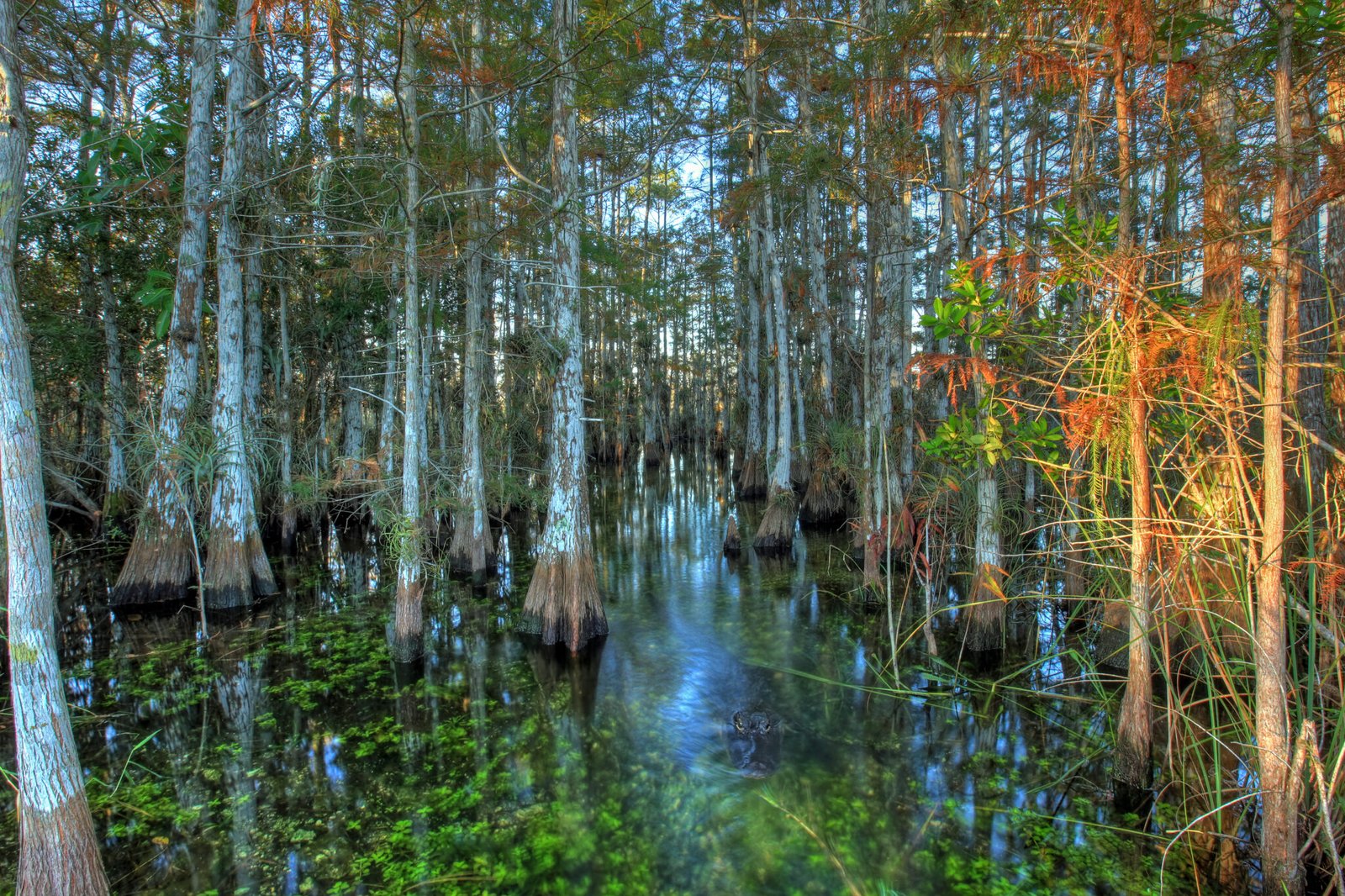
Unlike Mr. Audubon, I like Florida wetlands. I’ve tromped through quite a few swamps, all of them wild and beautiful and full of life.
One of my favorite soggy-shoe excursions was a tour through the Big Cypress National Preserve organized by acclaimed photographer Clyde Butcher and his wife Niki.
The water was remarkably clear and, because this was late fall, a bit chilly. My group started off with the water level up to our knees. Then, suddenly, it was up to our waists. All the men’s voices, mine included, abruptly jumped an octave higher.
Despite occasionally being uncomfortable for us humans, wetlands are absolutely essential to our continued existence. They replenish our drinking water. They filter out pollutants. They protect us from flooding. They provide important habitat for wildlife. They combat climate change by soaking up excess carbon dioxide.
And, of course, they’ve long been used by scam artists trying to sell unsuspecting customers land not suitable for building. As one such sucker said after inspecting his bought-and-paid-for Florida swamp, “I have bought land by the acre, and I have bought land by the foot, but, by God, I have never before bought land by the gallon.”
But then the builders got the last laugh by filling in those swamps and paving over them.
Wetlands are supposed to be protected by the Clean Water Act, passed by Congress in 1972. Under that law, the U.S. Army Corps of Engineers was put in charge of issuing permits to limit the damage to wetlands.
That same law grants EPA veto power over any permits that should not have slipped by the Corps. In all this time, the EPA has vetoed only 14 permits — two in Florida.
In 2005, I was interviewing a well-connected lobbyist for Florida’s powerful development industry about federal wetland permits. He didn’t like them. The Corps said yes to nearly everything but took a looooong time to do so.
The state DEP would be SO much faster with those permits, he told me. Getting the feds to defer to the state on wetlands permits was, he said, “the Holy Grail” for developers.
It took them a while to make it happen, but finally they did. And then it blew up in their faces.
Streamlining destruction
Two states, Michigan and New Jersey, had already jumped through all the legal hoops of the Clean Water Act to take over handing out federal wetland permits. But none of the other 48 followed suit. They knew doing so would be expensive and labor-intensive.
In 2006, the Florida DEP looked into becoming the third state but quickly dropped the idea. The agency’s leaders realized it would require a lot more employees and money to do what the Corps was doing.
But by 2018, the builders had persuaded enough Florida legislators to join their cause. The Legislature passed a law calling for the DEP to take over federal permitting. They called it “streamlining,” as if you’d get the same product, but faster.
Ignoring the objections of every environmental group in the state, the DEP announced in 2020 that it would actively pursue the takeover. The state got a quick yes from the EPA boss, who claimed Florida had “beyond question one of the greatest environmental records of any state.” I’m assuming he then went and got his eyes checked.
But here’s where the DEP and homebuilders made their big mistake.
It’s all good bro
In designing the new state-run federal wetlands program, the DEP’s goal was the same as Sonic the Hedgehog’s: Gotta go fast!
One of the things that’s always slooooowed down the Corps from issuing wetlands permits was consulting with the U.S. Fish and Wildlife Service or the National Marine Fisheries Service.
The Corps permit reviewers would have to do this when the development project might affect an endangered species — say, by paving over Florida panther habitat or destroying a coastal marsh used by manatees.
Those agencies would be asked to provide an analysis for each project, called a “biological opinion,” about whether it would imperil the existence of the remaining population of the species.
They never said, “No, don’t do it!” Instead, they’d set a limit on how many of that species could legally be “taken” — in other words, harmed or even killed.
But the DEP was trying to speed everything up like in a Benny Hill chase scene. To that end, the agency obtained a blanket statement from the U.S. Fish and Wildlife Service that said the state’s permits would never threaten the future existence of ANY of Florida’s more than 100 imperiled species.
The feds didn’t write, “It’s all good, bro! No worries!” but that was the intent.
That blanket biological opinion named just a handful of species “and, even for those, offers little analysis,” wrote the federal judge who found it illegal.
Five tries, four failures
The developers’ attempt to turn DEP into something like The Flash backfired in more ways than one.
According to a Bloomberg Law story from 2023, the developers didn’t get the speed-up they wanted. It was their own fault.
They filed triple the number of applications and DEP couldn’t handle it.
“Faced with the onslaught of permit applications, early staffing challenges, and the steep learning curve involved in taking over permitting from federal agencies,” Bloomberg reported, “Florida officials have approved wetlands permits at roughly the same rate as the Army Corps did in the eight years prior to 2021.”
And then the judges said stop.
You’d think the developers would have tallied their losses and dropped their pursuit, but no. Instead, they sought help from Congress to override what the judges said.

“There have been five attempts so far,” said Bonnie Malloy, senior attorney in the Florida office of Earthjustice.
Some have been ham-handed efforts to slip language allowing the Florida DEP wetlands program into the federal budget.
“A lot of it was complete nonsense,” Malloy told me.
There have been actual bills, too.

Take, for instance, a bill filed by Rep. Aaron Bean in March 2025. Bean, R-Fernandina Beach, called it the “Maintaining Cooperative Permitting Act of 2025.”
The key word there is “cooperative,” as in “cooperating with everything the developers demand.”
Bean tried to spin it as something GOOD for the Florida environment.
Florida’s illegal wetlands permitting “remains essential for protecting our iconic wildlife and valued wetlands, while reducing wasteful duplication and improving responsiveness to applicants and the communities’ projects they serve,” Bean said.
When that bill went nowhere, the language was slipped into a bill modifying the Endangered Species Act, according to Casey Darling Kniffin of Friends of the Everglades, who’s been tracking all of this.
But that bill had so many problems that House leaders wound up pulling it from consideration.
Which brings us to the latest attempt, HR 9017. This bill was the subject of a hearing two weeks ago by the House Subcommittee on Water, Wildlife, and Fisheries.
The bottom line for this bill is the same as the rest: Speed things up and don’t worry about what gets flattened like so much roadkill.

“The consequences of getting this wrong will be disastrous,” warned Elizabeth Neville of the Save the Manatee Club.
A free pass
The three-page bill is sponsored by five Florida congressmen — four Republicans and one Democrat. So, it’s sort of bipartisan! How often do you see that these days?
The four Republicans are Mike Haridopolous, Vern Buchanan, Brian Mast, and Byron Donalds. The lone Democrat is Jared Moskowitz.
Within its tangled legalese, the gist of the bill is, “Those judges are wrong. We hereby declare Florida to be in compliance with the Endangered Species Act. The DEP can rubber-stamp all the federal wetlands permits anyone wants.”
During the subcommittee meeting, the members heard testimony from a U.S. Fish and Wildlife Service official, who said, “We’re working in alignment with the administration’s priorities, to … reduce environmental review.”
So, you can see what their priority is. This administration has been hard at work peeling back thick slices of wetlands protections and gutting endangered species language and the heck with the consequences.
Another witness speaking in favor of the bill was George Roberts, chairman of the Northwest Florida Water Management District board — and oh, by the way, co-owner of Roberts & Roberts, a Panhandle construction company.
Roberts seemed particularly interested in what he called “efficiency” in permitting. I’m sure that wasn’t just the construction contractor in him talking.

The one witness most familiar with the bill’s origin and consequences: Amber Crooks of the Conservancy of Southwest Florida.
She warned the subcommittee that by approving the bill, they would be approving a permitting program “with no guardrails or backstops” to save Florida panthers, manatees, Key deer, and other endangered wildlife.
“This is essentially a free pass for development,” Crooks said.
But that’s not the way one of the bill’s sponsors saw it.
Congressman Donalds testified that the court rulings that stopped the DEP program involved “procedural paperwork, not an environmental failure.” He insisted that putting the DEP back in charge would cut “unnecessary red tape imposed by Washington.”
And then the gubernatorial candidate said one absolutely true thing.
“If we don’t take care of our environment, our state is finished.”
Who could disagree with that? Certainly not Mr. Audubon.



