
Donald Trump has never been noted for his vote-counting skills. In January, 2021, during his infamous call to Georgia’s secretary of state looking to find eleven thousand seven hundred and eighty more votes in the Presidential election he’d just lost, he claimed that “fifties of thousands” of his potential supporters had been turned away at the polls, and that five thousand dead people had voted. He later called Joe Biden’s win “statistically impossible,” and his own subsequent victory, in 2024, “the biggest mandate in 129 years.” (None of those claims are true.) In a speech in July, in which he demanded that the Senate pass the Safeguard American Voter Eligibility Act—also known as the SAVE America Act—he complained that there were “tens of millions of ballots floating aimlessly through the mail,” as if the U.S. Postal Service were a road to nowhere. Later in the month, he said, referring to Senator John Thune, the Majority Leader, “He’s got the votes” to pass the bill. “That must be a different form of math,” Thune told CNN.
Thune’s count was more accurate than Trump’s: the Senate adjourned without voting on the save America Act. But what has been a season of tumult in Trump’s efforts to change the parameters of voting in the United States is not over; the midterms are fast approaching, and the bill will be back in some form in September. And it is only one part of a package that includes an executive order, threats of prosecution, and street-level intimidation, all in an effort to make Trump’s math work.
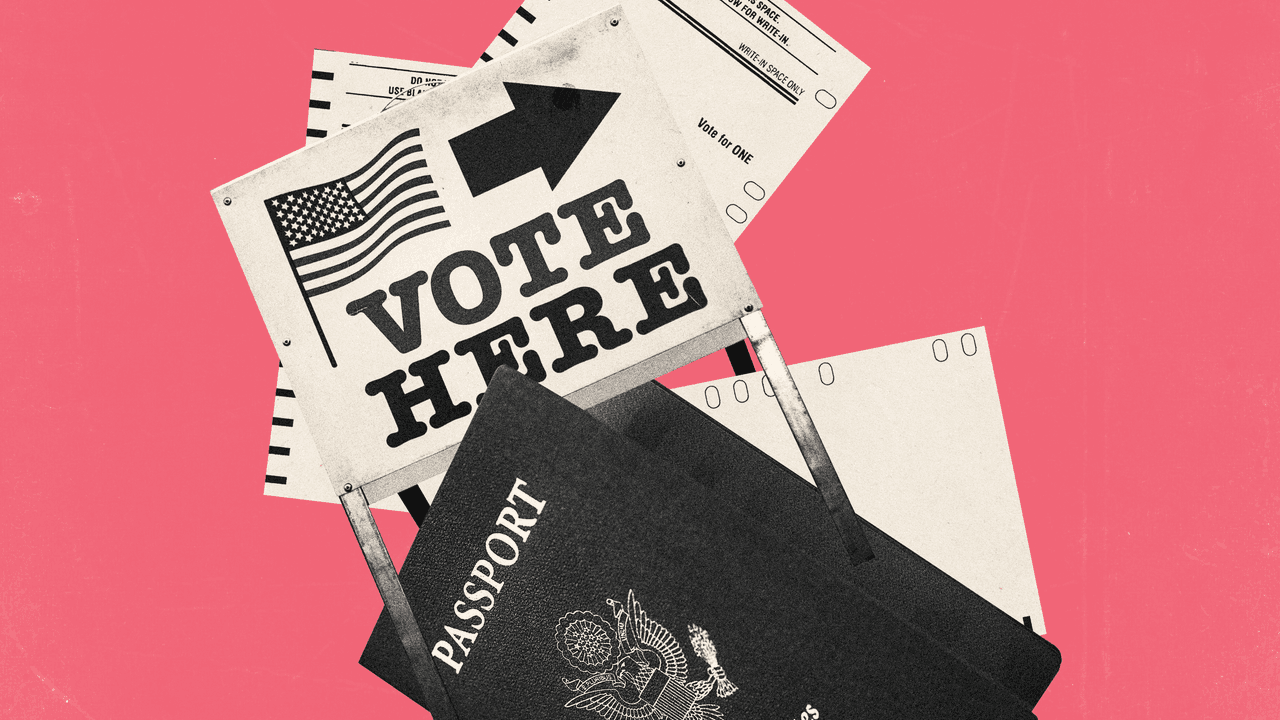
Four Republican senators—Lisa Murkowski, Susan Collins, Thom Tillis, and Mitch McConnell—have opposed the bill, which would mandate that Americans produce “documentary proof” of citizenship that many cannot easily obtain in order to register to vote, and that they generally must do so in person. Murkowski, who represents Alaska, wrote in an op-ed for the Wall Street Journal that just registering would require some of her constituents to take a Bering Air flight from an island to the mainland, perhaps only to find—if they are older or Native Alaskan or married women who have changed their name—that their documents are not proof enough. Voters would also need to present a photo I.D. on Election Day or send a copy of their I.D. with mail-in ballots, leading to privacy concerns.
Acts of Congress, however, are not Trump’s only tool, or necessarily his preferred one. Solicitor General D. John Sauer has filed an emergency petition with the Supreme Court, asking that the President be allowed to implement an executive order, regarding mail-in voting, that lower courts have enjoined ahead of the midterms. The order is an absolute mess; if it were ever fully put into effect, it would not only disenfranchise many eligible citizens but break the mail-in-voting system and possibly the Postal Service. Basically, it mandates a multidirectional game of Ping-Pong, in which, by sixty days before an election, the Department of Homeland Security would send each state a list of people who it believes are citizens, based on a grab bag of databases, and the states would give the Postal Service lists of people they believe are eligible for mail-in voting. The Postal Service would then, in some yet to be defined way, craft a “Mail-in and Absentee Participation List.” If you are not on that list, the Postal Service would not be allowed to deliver your ballot. Unsurprisingly, one lower court has said that the order appears to be an unconstitutional use of Presidential power.
There are multiple ironies here. As Murkowski’s objections indicate, some of the Americans most affected by these rules would be rural voters, who tend to lean Republican. It’s estimated that about half of Americans hold valid passports—the easiest proof of citizenship—but the number is far higher in blue New York (more than seventy per cent) than it is in red West Virginia (about twenty per cent). And traditionally it has been Republicans who have opposed “federalizing” election practices, preferring to leave states to their own devices.



