
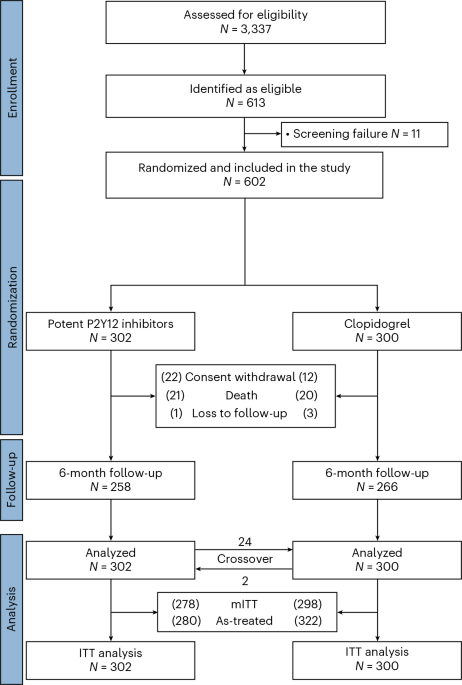
Trial design and oversight
EPIDAURUS was a prospective, investigator-initiated, parallel-group, open-label, randomized controlled trial conducted at 37 tertiary sites in Germany and Austria. The trial was approved by the local ethics committee of the Ludwig Maximilians University Munich (number 21-0807 fed), at all participating centers and by the legal authorities (German Federal Institute for Drugs and Medical Devices (BfArM) and Austrian Federal Office for Safety in Health Care (BASG)). The study was performed in accordance with the Declaration of Helsinki and Good Clinical Practice principles. The trial was overseen by a Steering Committee and a DSMB. The sponsor of the trial was the Ludwig Maximilians University Hospital Munich. Safety assessment, monitoring and data management were done by the ISAResearch Center, TUM University Hospital German Heart Center, Munich. The study is registered with ClinicalTrials.gov (NCT04981041). The first and latest study protocol versions, as well as the statistical analysis plan of the trial, are appended in Supplementary Notes 2 and 3, respectively. Daiichi Sankyo Europe and the Ludwig Maximilians University Hospital Munich funded the trial. Daiichi Sankyo Europe did not participate in the trial design, data collection or data analysis or in the decision to submit the manuscript for publication. There were no agreements between the investigators and Daiichi Sankyo Europe. The three principal investigators (K.D.R., U.M. and S.M.) had unrestricted access to the data.
Participants
Eligible patients were 18 years of age or older who had an indication for OAC because of AF. All patients underwent successful PCI no more than 5 days prior to randomization, because of a biomarker-positive myocardial infarction with (STEMI) or without (NSTEMI) ST elevation. Patients were excluded if they had chronic renal insufficiency with estimated glomerular filtration rate < 15 ml min−1 per 1.73 m2, had chronic liver disease Child−Pugh class C, had a history of both ischemic stroke/transient ischemic attack and intracranial bleeding, had an indication for OAC with VKA, had severe mitral stenosis, had an implanted mechanical heart valve, had a contraindication for clopidogrel or aspirin or had a contraindication for both prasugrel and ticagrelor. Individuals were also excluded if they were treated with glycoprotein IIb/IIIa inhibitors within the last 12 h, had BARC ≥ 2 bleeding within the last 4 weeks before the index PCI or had a known genetic disorder involved in the metabolism of the study medication. All study participants provided written informed consent. At baseline medical history, comorbidities, symptoms, laboratory values, medication and electrocardiographic, echocardiographic and interventional data were recorded. All sites were encouraged to provide detailed screening logs. For sites with no availability of screening log, we considered the same number of screened and randomized patients.
Intervention
Eligible patients were randomly assigned in a 1:1 ratio to receive DOAC and prasugrel or ticagrelor (experimental group) for 4 weeks followed by DOAC and clopidogrel or DOAC, clopidogrel and aspirin (control group). The trial was designed to estimate the effect of a treatment strategy of transient intensified P2Y12 inhibition with a direct factor Xa inhibitor rather than the isolated pharmacological effect of a specific P2Y12 inhibitor or DOAC. Therefore, the selection of prasugrel or ticagrelor in the experimental group, the dosage of prasugrel (5 mg versus 10 mg) and the selection of DOAC medication were at the discretion of the treating physician. Randomization was internet based and was performed with the use of blocks of block size 8 and was stratified by center. The default duration of aspirin therapy in the control arm was in-hospital and up to 1 week. However, the treating physicians were allowed to extend the therapy with aspirin in the control arm for a period of up to 4 weeks in patients with high ischemic risk. Loading during switching between P2Y12 inhibitors was performed according to the discretion of the treating physician. The recommendation of the Steering Committee, which was documented in the study protocol and question-and-answer manual of the trial, was to load with 180 mg ticagrelor during switching from clopidogrel to ticagrelor and to load with 600 mg clopidogrel during switching from ticagrelor to clopidogrel. Switching between clopidogrel to prasugrel and vice versa was recommended to take place without concomitant loading. With respect to DOACs, only factor Xa inhibitors (edoxaban, apixaban and rivaroxaban) were allowed to be used in the trial. Patients on treatment with dabigatran or VKAs were permitted to participate, provided that their OAC was switched to a factor Xa inhibitor. Patients who withdrew their consent and had been randomized to the experimental group were switched to the control treatment, according to current guidelines14.
Outcomes
The primary efficacy endpoint of the study was defined as the composite of (1) all-cause mortality, (2) definite or probable stent thrombosis, (3) myocardial infarction, (4) ischemic stroke, (5) systemic thromboembolism, and (6) urgent revascularization within 6 weeks after randomization. The composite safety endpoint was defined as the composite of (1) death, (2) BARC 3c bleeding, (3) BARC 3b bleeding, (4) BARC 3a bleeding and (5) BARC 2 bleeding. All components of both primary endpoints were adjudicated in a blinded manner by an independent Endpoint Adjudication Committee consisting of three experienced cardiologists. Secondary endpoints included the primary endpoints evaluated at 6 months, all individual components of the primary endpoints evaluated at 6 weeks and 6 months, unplanned hospitalization due to ACS or acute decompensated heart failure at 6 months and all bleeding complications (including BARC 1 bleeding) at 6 weeks and 6 months.
Follow-up
The patients received a personal discharge visit and a personal or telephonic visit at 42 ± 7 days (primary endpoint) and at 180 ± 10 days (secondary endpoints). Patients who withdrew their consent completely were censored at the time of withdrawal and analyzed up to that point. Those who partially withdrew their consent but agreed to receive follow-up visits were switched to control therapy and were registered as protocol deviations.
Sample size calculation
The trial was designed to detect superiority of the experimental treatment compared to the control treatment with respect to the efficacy endpoint and non-inferiority with respect to the safety endpoint using a hierarchical testing. The analysis of both endpoints was planned to take place using the Finkelstein and Schoenfeld WLR according to the defined ranking of endpoints in the outcomes section. For sample size calculation, we used aggregate component-specific event rates observed among the first 223 control group participants. No between-group treatment effect estimates or comparative analyses were reviewed. Sample size operating characteristics under the revised WLR analysis were evaluated using 1,000,000 simulation iterations. For the efficacy endpoint, we found that with a two-sided α of 0.05 and 6-week hazard rates and standard errors of hazard rates according to the values provided in Extended Data Table 7, the power would be 80.0%, if comparison of WLR would be performed on a total sample size of 615 per group. To account for dependency between efficacy endpoints, the sample size was increased by 10%, according to previous suggestions24, which led to a calculated sample size of 677 per group. For the safety endpoint, we assumed an effect size of 0.95 and a non-inferiority delta of 30%. We found that with a total sample size of 695 per group, a two-group large-sample normal approximation test of proportions with a one-sided 2.5% significance level would have 80% power to reject the null hypothesis that the lower 97.5% CI of the WLR compared between the experimental arm and control arm is lower than 0.77 (1/(1 + delta), with delta = 0.3) in favor of the alternative hypothesis, that the lower 97.5% CI is greater than or equal to 0.77. For safety endpoints, no dependency between the endpoints was considered, as the endpoints of the safety analysis are mutually exclusive. The sample size of the trial was given by the maximum of both sample sizes—that is, 695 per group. Assuming an allocation ratio ncontrol/ninterventional = 1.0 and a 6% drop-out rate, the sample study of the study was calculated to be N = 1,474.
Statistical analysis
Continuous data are presented as medians with lower and upper quartiles (Q1−Q3). Categorical data are summarized with the use of frequencies and proportions. A hierarchical testing was applied to test the superiority of the experimental treatment compared to the control treatment with respect to the efficacy endpoint and the non-inferiority with respect to the safety endpoint. Because the primary efficacy superiority test was the first step in the testing hierarchy, all subsequent safety, secondary, subgroup, landmark and sensitivity analyses are interpreted descriptively and exploratively unless the first step is met. Outcomes were analyzed using WLR and time-to-event methods. For WLR, CIs and superiority P values were calculated using the Finkelstein and Schoenfeld method24, whereas non-inferiority P values were calculated using bootstrapping and 1,000 iterations. For time-to-event analysis, we used the Kaplan−Meier method and Cox regression analysis. Event rates and their CIs were estimated using the Kaplan−Meier method. The absolute risk difference and its CI were calculated using bootstrapping with 2,000 iterations, by estimating and subtracting the event rates calculated using the Kaplan−Meier method. The effect of bleeding on ischemic complications was exploratively tested by introducing bleeding as a time-dependent covariate in a Cox regression model stratified by treatment. Ischemic events occurring before the bleeding event were not counted as subsequent ischemic events. Subgroup analyses were performed by introduction of the product of treatment and subgroup identifiers in a multivariable Cox regression model. For subgroups without events, we calculated CIs using Cox regression with Firth’s penalized likelihood implementation. The proportional hazards assumption was tested using the method proposed by Grambsch and Therneau25. Landmark analysis for ischemic events was performed between week 6 and month 6. According to the study protocol, we analyzed efficacy endpoints in the FAS according to the ITT principle. Safety endpoints were analyzed in the predefined mITT/PPS population, comprising randomized patients who received the assigned treatment strategy without major protocol deviations affecting safety analysis. Non-inferiority testing for the safety WLR was tested using a one-sided α of 0.025 and a non-inferiority margin of 30%. For all other analyses, differences were considered statistically significant when the two-sided P value was less than 0.05. All statistical analyses were performed using CRAN R, version 4.6.0, and the following packages: survival (version 3.8.6), coxphf (version 1.13.4), ggplot2 (version 4.0.3) and survminer (version 0.5.2).
WLR approach
For the primary WLR analysis, each patient in the experimental group was compared with each patient in the control group, resulting in all possible unmatched pairwise comparisons between treatment groups. Pairwise comparisons were performed according to the prespecified hierarchical order of the endpoint components. For the primary efficacy endpoint, the hierarchy was all-cause death, definite or probable stent thrombosis, myocardial infarction, ischemic stroke, systemic thromboembolism and urgent revascularization. For the primary safety endpoint, the hierarchy was all-cause death, BARC 3c bleeding, BARC 3b bleeding, BARC 3a bleeding and BARC 2 bleeding.
For each component, only the first occurrence of that component within the 6-week assessment window was considered. If a patient experienced more than one component event, the comparison was determined by the highest-ranking component in the hierarchy that allowed a distinction between the two patients. Lower-ranking events were considered only if higher-ranking components did not distinguish the pair. For each pair, the patient with the less favorable outcome was assigned the loss. If only one patient experienced the relevant component event, that patient lost the pairwise comparison. If both patients experienced the same component event, the patient with the earlier event lost the comparison. If both patients experienced the same component event on the same day, that component did not distinguish the pair. If neither patient experienced the component event, the comparison proceeded to the next component in the hierarchy.
All-cause death was included as the highest-ranking component in both the efficacy and safety hierarchies. Therefore, death took precedence over all non-fatal ischemic and bleeding events when it distinguished a patient pair. For patients who experienced death after a non-fatal event, death was still considered the highest-ranking event for the hierarchical comparison. Patients who withdrew consent or were lost to follow-up before 6 weeks were censored at the date of last available information. Events occurring before censoring were included. If a patient had no event before censoring, that patient was considered event free on day 42 (6 weeks). A tie was recorded if none of the hierarchical components allowed a conclusive distinction between the two patients, either because neither patient had an event or because both had the same event at the same time. The WLR was calculated as the total number of wins for the experimental group divided by the total number of losses for the experimental group24. Thus, a WLR greater than 1 favored the experimental group, whereas a value less than 1 favored the control group. This direction applied to both the efficacy and safety endpoints, because all endpoint components represented unfavorable clinical events.
Protocol revisions
The EPIDAURUS trial was initially planned to include 2,334 patients. The primary efficacy endpoint was defined as the composite of death, stent thrombosis, myocardial infarction, ischemic stroke and systemic thromboembolism. The primary safety endpoint was defined as BARC bleeding ≥2. Both endpoints were intended to be evaluated using a logistic regression analysis. During the course of the trial, the protocol was revised in the following ways: (1) the timeframe between successful PCI and randomization was extended from 24 h to 5 days (protocol version 6; 20 March 2024; a total of 337 patients were included at this time in the trial); (2) the primary efficacy endpoint was extended to include urgent revascularization (protocol version 8; 5 January 2025; a total of 487 patients were included at this time in the trial); (3) the primary safety endpoint was revised to include all-cause mortality and BARC bleeding categories 2, 3a, 3b and 3c (protocol version 8; 5 January 2025); and (4) the evaluation of the primary endpoints was revised to use the Finkelstein and Schoenfeld WLR (protocol version 8; 5 January 2025). Protocol version 8 reduced the required sample size from 2,334 to 1,474 patients. A chronological summary of all protocol revisions, the changes and their rationale is depicted in Extended Data Table 8. All protocol revisions were approved by the Steering Committee. The decision for protocol revisions did not involve any interim analysis or access to comparative outcome data. The first and latest protocol versions (versions 4 and 8 and all protocol changes) are included in Supplementary Note 2.
Sensitivity analyses
The following sensitivity analyses were included to ensure robustness against bias. First, the FAS/ITT safety analysis was prespecified as a sensitivity analysis and is presented to assess robustness against post-randomization exclusions. Second, a conditional power analysis using bootstrapping with resampling and 1,000 iteration was used to simulate the initial sample size population. Third, we tested the association of treatment with ischemic and safety endpoints at the following intervals: 4 weeks (end of intervention), 6 weeks (predefined evaluation of the primary endpoints), 6 months (predefined evaluation of secondary endpoints) and between week 6 and month 6 (landmark analysis). Finally, the initial and revised efficacy and safety endpoints are presented throughout the paper.
Reporting summary
Further information on research design is available in the Nature Portfolio Reporting Summary linked to this article.



