
The Clearwater City Council has given initial approval to an overhaul of the city’s 21-year-old parking ordinance, voting unanimously June 18 to raise fines for the first time since 2005 and modernize how the city collects and enforces parking fees.
In a report to the council, staff said the fines had not kept pace with the market, noting that “in some circumstances it can be less expensive to receive a parking citation than to illegally park for the day.”
Under the changes, most existing fines rise $20. Overtime parking, metered or unmetered, climbs from $15 to $35, and improper or double parking goes from $20 to $40. Parking in a no-parking zone — defined broadly, from blocking a fire hydrant to stopping on a sidewalk, in a driveway or over a curb — also rises from $20 to $40.
Leaving a vehicle running with the keys in the ignition, or with no attendant, rises from $15 to $35. Fines for disabled parking violations stay at $250.
The city will also add a $5 surcharge to every parking fine to help fund a school crossing guard program.
Public Works Director Marcus Williamson said the increases are meant to keep citations from costing the same as — or less than — a space in a private lot or garage.
“Overall, the ordinance modernizes the city’s parking program while strengthening enforcement and supporting the financial sustainability of the parking system,” he wrote in his report.
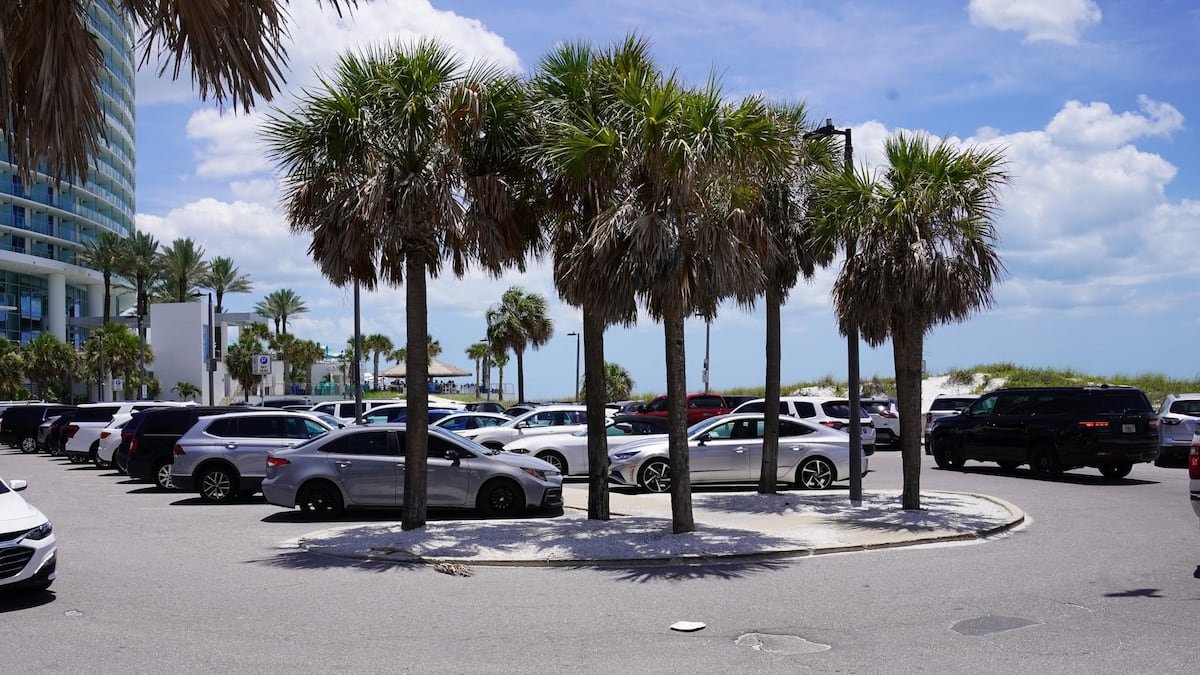
Clearwater owns and operates several parking facilities and has shifted to a mobile-payment platform, digital permits and license-plate scanning to collect and enforce fees. The updated ordinance formally recognizes those tools, creates mobile-payment zones, lets drivers respond to tickets by phone or email, and requires an original affidavit to contest a citation.
The council reviewed the changes at a June 15 work session and approved them without comment.
“We’re just coming forward with the current technology of today’s society,” Mayor Bruce Rector said.
The ordinance also spells out rules that can catch drivers off guard. Moving a vehicle to another space on the same block, without passing through an intersection, counts as one continuous parking period — and so does leaving a timed lot or block and returning later the same day. In both cases, the clock keeps running.
Drivers must park within a single marked space and may not take up more than one. They also cannot use a city lot, garage or metered space without displaying a permit, buying a digital permit or paying at a meter, pay station or through the city’s mobile-payment platform.
And motorists cannot feed a meter or pay station to stretch their time beyond the posted limit, even if they are willing to pay for the extra time.
The changes take effect once the council approves them on second reading.



