
Published August 25, 2026 06:00AM
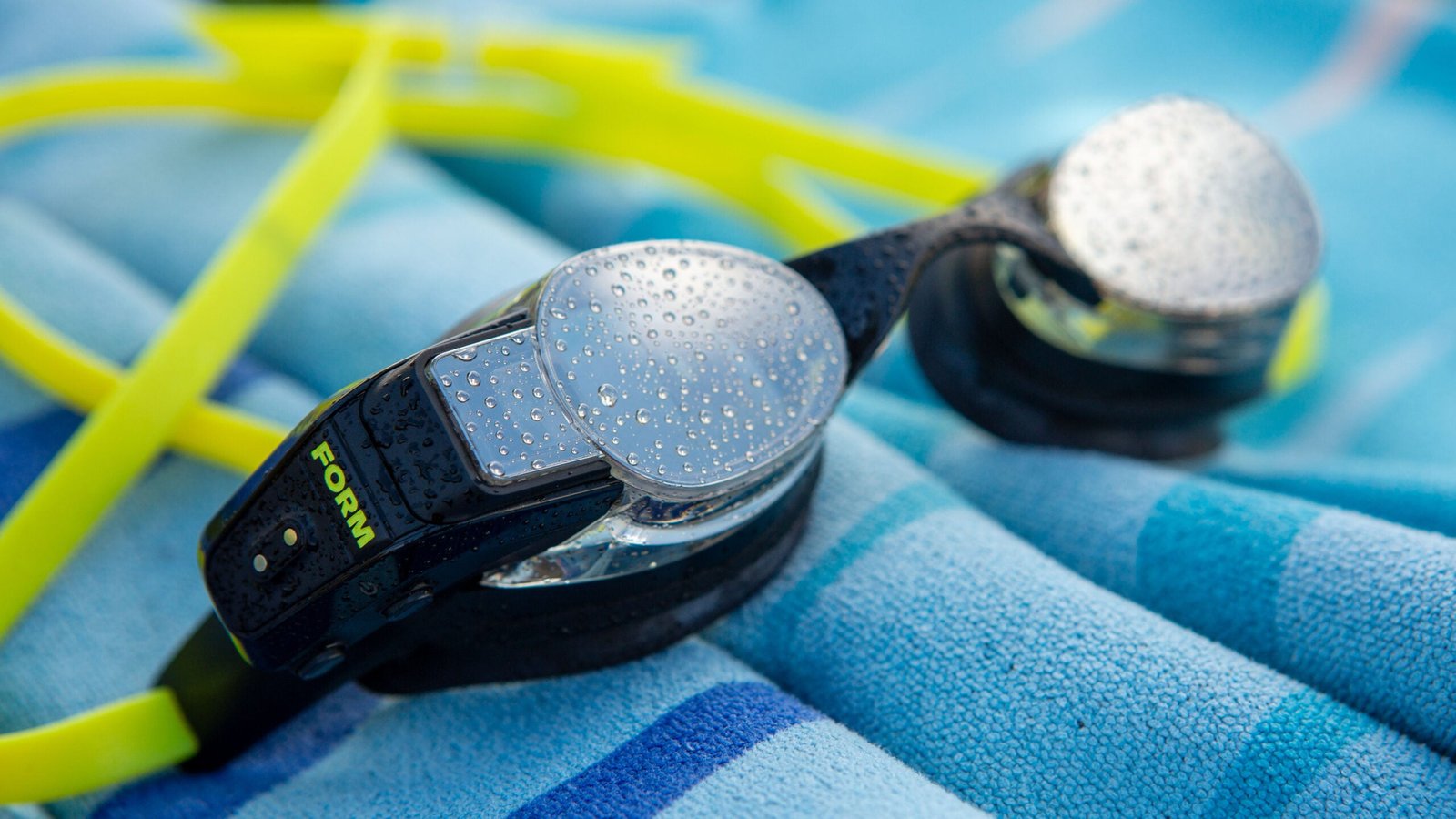
Who knew that my “time to neutral” measurement was outstanding when I was breathing to the left, but terrible when I was breathing to the right? Not me, nor my swim coach, until I dove into the impressively granular data captured by Form’s new Smart Swim 2 LT goggles.
More on this metric in a moment. First, a little background.
In late 2024, Triathlete published an exhaustive review of Form’s previous model release, the Smart Swim 2, saying the goggles are “literally game-changing when it comes to real-time and post-workout swimming data. Nothing else does what it does, and it does these things very, very well.”
Testers praised the heads-up OLED display, which appears in the right lens; the impressive performance feedback you can view while swimming; and the app’s instructional library. They were less enthusiastic about the price ($249 plus subscription) and the need to pair the goggles with a smartwatch to unlock their full open-water functionality.
That review provides in-depth descriptions of every feature and metric, and since the new 2 LT carries all of them over – with one exception – I won’t repeat every detail and spec here. But I will echo the review’s enthusiastic endorsement after my own series of pool and open-water tests.
Over the years, I’ve hired coaches, gone to swim school, attended USAT’s bootcamp at the Olympic Training Center, and tested a slew of goggles and gadgets, all in an effort to optimize my form. And the 2 LT has produced some of the most concrete and immediate improvements. At $149, I believe it’s a worthwhile investment for anyone looking for improvements.
Here’s a quick summary of the 2 LT’s key functions along with my testing observations. Note that some of the features are free, while others require a subscription to Form’s Premium plan ($119/year or $15/month).
Key features of the Smart Swim 2 LT goggles
Real-time performance data (free)
For pool swims, you can select any of the following eight metrics to customize what you see on the display: pace, distance, time, stroke rate, stroke count, distance per stroke, split times, and calories burned. After trying different combinations, I settled on pace/stroke rate/split times, finding that this troika improved the consistency of my form and speed from length to length and set to set.
In open water, your choices are limited to time and stroke rate until you pair the goggles with a GPS-enabled Garmin or Apple watch. This lets you see distance, speed, DPS, heart rate, and calorie data; it also enables the SwimStraight feature.
Real-time navigation (free)
The SwimStraight digital compass is a godsend in open water. My twice-weekly dawn swims at the Boulder Reservoir always include almost 1,000 yards straight into the rising sun. With buoys spaced 500 yards apart, sighting is a guessing game that can add dozens of zigzagging yards to a loop.
With the SwimStraight, I was able to stay on course by following the compass bearing displayed on the lens. On this morning’s course, for example, I bobbed for a few seconds after turning east, got a bearing of 100 degrees, and kept the digital dial right on that number. By tracking straighter – and not having to sight as often – I’ve seen my pace in blinding conditions improve by at least five seconds per 100 yards.
Real-time technique feedback (paid)
Subscribing to the premium plan unlocks a helpful suite of features that would be hard to capture any other way. One is the time-to-neutral (TTN) measurement, which Form defines as “the proportion of your breathing stroke duration that it takes to return your head from a breath back down to a neutral, face-down position.”
Until I saw my TTN score in the app for the first time, I had no idea that my time was so much slower when breathing to the right, a flaw that was almost certainly creating drag and misalignment in my stroke. After noticing this, I turned on the HeadCoach function, which shows up on the lens as a horizontal bar with a target line in the middle. With each breath, the bar fills up from left to right, showing how quickly your face has returned to neutral. The visual reference – plus the checkmark that appears if you beat your prior average – are both very effective as a training tool.
In addition to TTN measurements, HeadCoach tracks head pitch, peak head roll, and interval pacing; it also produces an overall efficiency score for every swim.
One of my favorite stats, which is new since Triathlete’s last review, is the Effort Pace function, which is particularly useful in choppy water and strong currents. It uses my pacing history to estimate how hard I’m working. If I’m exerting a ton of effort to maintain my regular speed, this readout will signal me to ease up.
Post-workout analysis (free & paid)
In the app, you can review performance metrics without a subscription, as well as see trends and compare historical stats. Subscribing to Premium lets you dig into more advanced analysis, in particular multiple charts evaluating your proficiency at the techniques described above. I’ve gleaned good learnings from studying these charts, such as when my TTN tends to degrade and how speed sets affect my head roll.
Training resources (paid)
Form’s feedback loop and content library is overwhelming at first, but ultimately the combination helps justify the subscription price. If you upgrade to premium, HeadCoach will serve up relevant tips and targeted drills after each swim, which I found helpful in staying focused on one flaw at a time. You can also watch instructional videos, follow guided workouts designed around specific techniques, choose from 1,500 training plans, import Triathlete workouts, create your own training plans, and sync to TrainingPeaks and TriDot. It’ll take months to master it all, but it’s incredibly helpful if you ever train alone.
The one feature that Form dropped from the Smart Swim 2 is that unit’s heart-rate sensor, which in my opinion makes the Smart Swim 2 LT the best choice in the line of goggles for most athletes. The change made the 2 LT less expensive, and it reduced drag by removing the temple-mounted sensor. (There’s still some drag due to the extra bulk of the other electronics, but not enough to complain about.) And since every triathlete I know wears a smartwatch while swimming, there’s no need to get heart rate from your goggles. That data is already available from your watch – provided you own a compatible model.
What’s missing in the Swim Smart 2 LT goggles
There are no deal-killer drawbacks with these goggles, but I’d love to see Form tackle a few tweaks with the next release.
Expanded smartwatch compatibility
These goggles only pair with select Garmin and Apple models, which deprives other smartwatch owners of the most useful open-water features.
Better antifog solution
Like most goggles on the market, the 2 LT is treated with an antifog chemical, the efficacy of which will eventually degrade. During testing, I began to experience light fogging at the outset of open-water swims, which is not unusual. The mist eventually cleared, but fogging is more problematic here for two reasons.
One is that it obscures the display, especially in strong morning glare. Another is that Form tells users not to apply antifog spray, which our testing has shown can extend the useful life of your goggles. I’ll be curious to see how the lenses hold up after another 6-12 months of testing because Form’s two-year warranty only covers manufacturing defects, and the deterioration of antifog chemicals would usually be considered normal wear-and-tear. Triathlete editors typically retire goggles after a year of steady use due to fogging, and that would be an expensive proposition if the same lifespan applies to the 2 LT.
Improved peripheral vision
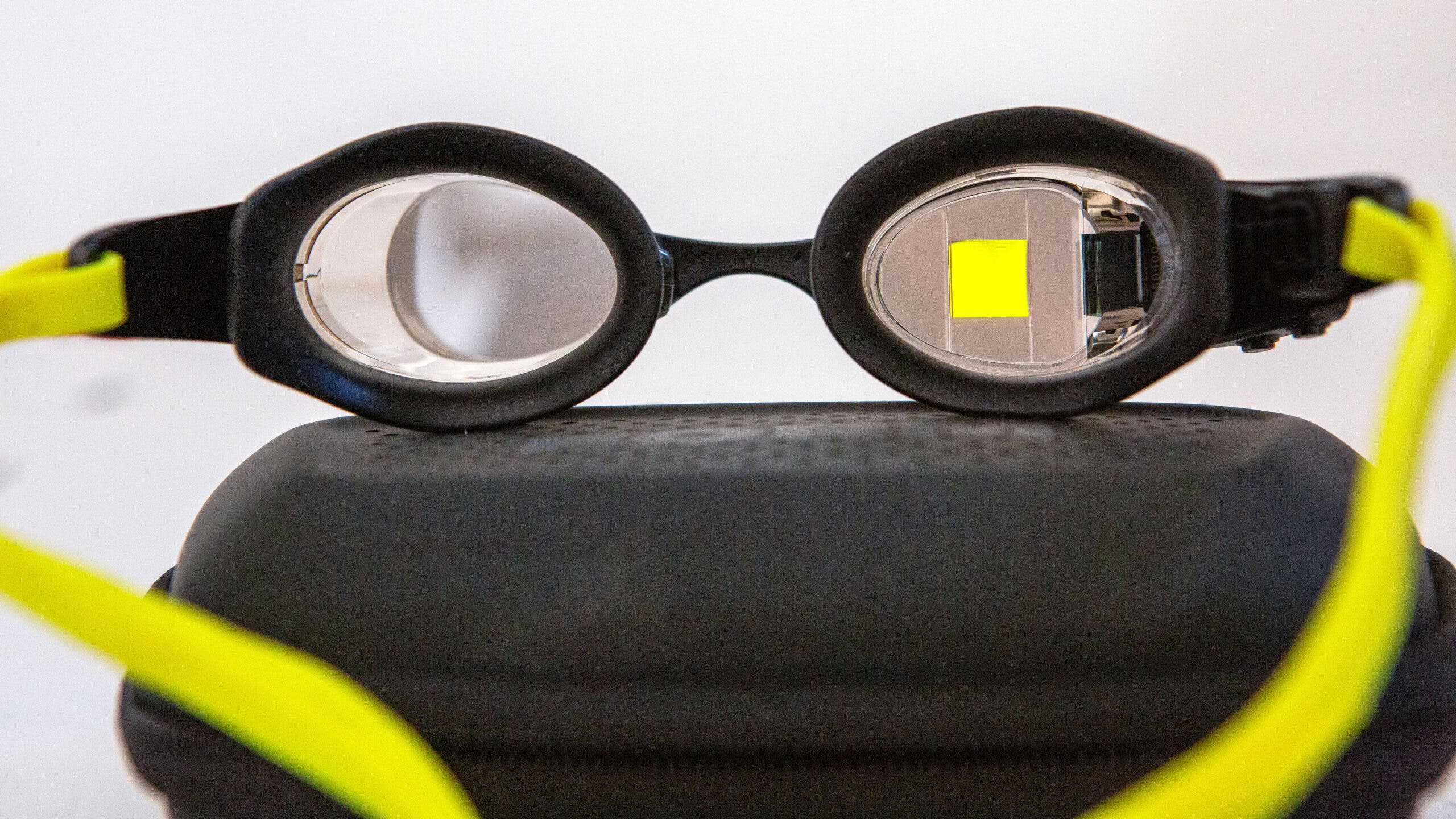
The layer of optics in the right lens creates a bifocal-like effect that – along with the mini-computer next to that lens – reduces your field of vision. It’s not catastrophic, but I had to lift my head more to spot swimmers in front of me, which will reduce efficiency in a crowded race field.
More creative subscription model
Triathlon gear is costly, but how about apps nowadays?! You’ll pay $15/month for Form’s premium membership, $20 for Training Peaks, $20 for Zwift, $12 for Strava, $7 for Garmin Connect, $39 for TriDot, and $7.50 for Outside+. That’s almost $1,500/year for a full endurance suite. Why can’t a few of these companies get together to offer a more affordable bundle of complementary tools? Haven’t they heard about the affordability crisis?
The bottom line
My rants about fog and price notwithstanding, the Smart Swim 2 LT is more than a data geek’s wet dream: It’s a uniquely powerful tool that provides valuable real-time feedback on swim form along with targeted training resources and groundbreaking open-water capabilities.



