
Updated August 6, 2026 11:04AM
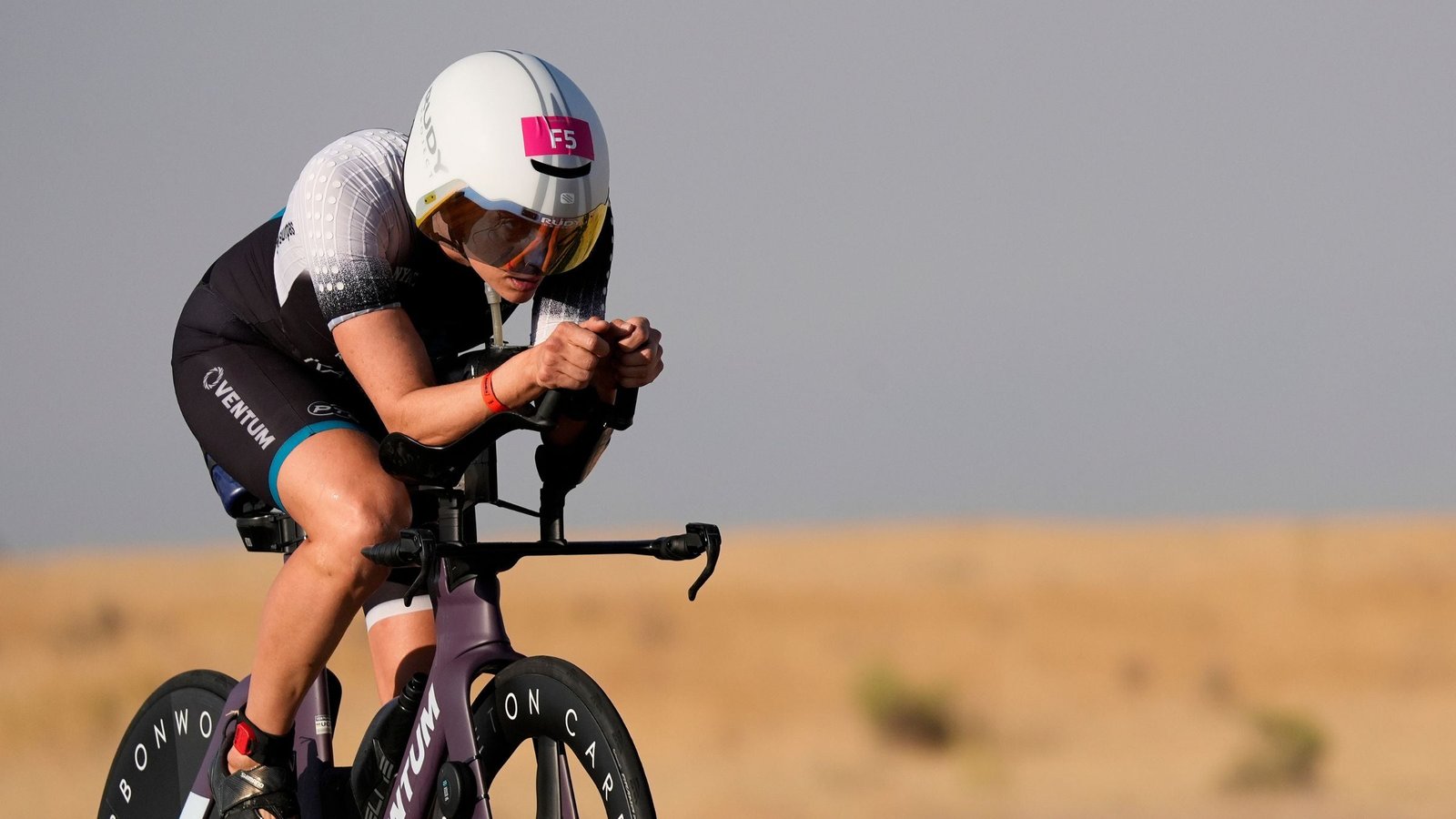
When Kirsten Kasper began the run leg of Ironman 70.3 Boise on July 26, she felt confident in her ability to catch the leaders, some five minutes ahead of her. Not only because of her footspeed – as a short-course specialist and former collegiate runner for Georgetown, she’s known for her run – but also because she knew she was ready to tackle 13.1 miles in 85-degree (and rising) heat.
“On race day, I felt prepared for the conditions instead of being surprised by them,” said Kasper, 34, who earned her second 70.3 win as a pro in Boise in 4:00:50, setting the course run record in the process of 1:19:33. “It gave me confidence that I could handle the heat, and that made a big difference both physically and mentally.”
Regardless of whether we’re in a heat wave (like the one in late July that forced the cancellation of major races in Europe and shortened Ironman Frankfurt) or simply dealing with typical summer temperatures, racing in the heat is a reality for most triathletes. And the conditions can humble even the fittest in the field. A 2022 study of 1,258 endurance races across 42 countries found that peak endurance performance declined by approximately 0.3 to 0.4 percent for every 1°C increase in Wet-Bulb Globe Temperature (WBGT) outside a range of 7.5°C to 15°C (45.5°F to 59°F).
For example, if the WBGT, which measures air temperature, humidity, radiant heat from the sun, and wind, reaches 80°F (26.7°C), or about 11.7°C above the top of that reference range, the study’s findings would correspond to an estimated 3.5 to 4.7 percent decline in peak endurance performance.
In a sport where tiny differences in pace can have a big impact on race results, that decline can be significant. But other studies show that the more prepared you are to race in the heat, the better able you are to mitigate the physical impacts like a spiked heart rate, fluid loss, and muscle fatigue that lead to those performance drops. Which is why many triathletes, especially seasoned pros like Kasper, have factored heat acclimatization, pacing strategies, and even mental tactics into their training to triumph over high temps.
So what can we learn from the pros when it comes to beating the heat? Here are five tips from those who have been successful on even the most sizzling summer days.
Train to race in the heat
Racing in hot temps soon? Give yourself at least 10–14 days of heat acclimatization, the window of time experts say allows your body to manage heat better and makes hot efforts feel more controllable.
Granted, heat training looks different for every athlete, but there are some basic ways to crank up the temps during a typical session.
When prepping for Boise, Kasper, who lives in Boulder, Colorado, purposefully planned her training for the hottest hours of the day. On cooler days, she’d run overdressed in multiple layers or ride on her trainer indoors with no fan.
“Sometimes I’ll even ride in the bathroom and make the room warm and humid by running the shower for a few minutes before starting the session,” she said. “I try to expose myself to the heat, but not for every session, as the heat adds extra stress to the body.”
Kasper also incorporates 30-minute hot tub and sauna sessions three to four times a week after training, a tactic also shared by Mirinda Carfrae, a three-time Ironman World Champion who now heads up Salty Bears Racing with her husband, Tim O’Donnell. She encourages the athletes she coaches to do sauna sessions two to three times per week starting five weeks out from race day.
“We want them to get comfortable training in warmer environments,” she said.
Professional triathlete Simon Shi of Phoenix, Arizona, has spent seasons refining his heat acclimation, blending deliberate hot workouts and sauna sessions with real-time biometric tracking. The payoff: a reduced heart rate and lower rating of perceived exertion (RPE) at race pace.
“I noticed a big change after about three to four weeks of consistent heat protocols,” said Shi, who placed second at Ironman 70.3 Shanghai in May, earning his first pro podium. Using an indoor setup, high-temp outdoor runs, and post-workout sauna sessions of 10–15 minutes, he saw initial adaptations at two weeks, with full benefits compounding by week four.
“Consistent heat training allows me to maintain a lower heart rate and lower perceived effort at a higher running pace or bike power,” Shi explained. “It’s made a noticeable difference.”
Train to fuel for the heat, too
There’s simply no “winging it” when it comes to fueling on race day, especially when you’re taking in extra electrolytes and calories to stay cool.
“You have to train your gut to consume as many calories as you can,” says Carfrae. While this is true no matter the conditions, and how much you should consume varies by the individual and the distance you’re racing, the point is, whatever strategy you use, it should be practiced in training rather than improvised on race morning.
For Kasper, this looks like practicing her hydration strategy during easy runs in the heat, where she’d carry a 250mL flask of Skratch Hydration with her just as she would during her race in Boise. (Kasper also took water from every aid station on the run on top of drinking 2 x 750mL bottles of Skratch and 2 x 500mL bottles of water in the bike, as well as several gels throughout.)
“Boise 70.3 is a great example of how beneficial heat training can be. In the weeks leading into the race, I was able to train in conditions that were similar to what I expected on race day,” she shared. “I aimed to drink at a minimum every 10 minutes on the bike and utilized the aid stations for additional water. My fueling and carb intake were still important, but I prioritized hydration first, and I was able to stay on top of it because I had done it before.”
Have a cooling plan for race day
No matter how primed your body is to race in the heat, you still need to be smart when it comes to keeping cool. Map out your stay-cool plan (and practice it, if possible, in training) so you can avoid a major meltdown as the temps rise.
For Kasper, keeping her body temp low starts well before the gun goes off.
“Before the race, I like to use an ice vest to keep cool, and I’ll sip on a slushie before the start,” she said. “It’s also essential that my bottles on the bike are cold to help lower my body temperature during the race.”
On the course, specialized gear plays a key role. Kasper and Shi both utilize Omnius headbands—designed to enhance evaporative cooling through specialized material—while other pros lean on light-colored kits, caps, or ice collars.
How you navigate aid stations is equally critical. In his Substack newsletter Frodeno Going Mental, three-time Ironman World Champion Jan Frodeno highlighted the underrated tactic of slowing down through aid zones.
“At race pace, you grab half a cup, spill most of it, and miss the ice entirely,” he wrote. “Slow to a walk for twenty seconds at aid stations so you can actually execute: get two full cups down, stash ice in your suit, douse your head. Take a breath, hydrate properly, then resume pace.”
Top American pro athlete Jackie Hering, who recently fared well in the heat and humidity of Ironman Chattanooga 70.3 (third) and Ironman Texas (fourth), has guidance that’s just as direct: “Ice is your best friend! Pack ice into your kit, put it down the back of your neck, and above all, hold it in your hands and mouth,” she says.
Know how to pace your race in the heat

As anyone who’s gone out too, well, hot on a warm day knows, patience and restraint are key to keeping it all together until the finish line.
Adjusting your expectations starts in your daily workouts, Kasper notes: “Similar to altitude, heat stress can cause your power or pace to be lower than usual. It’s important to remember this because you may need to focus more on your effort than specific numbers or paces when training [and racing] in the heat.”
Shi tracks his core temperature using a CORE sensor, which provides real-time data (which he can see on his Garmin watch) on his thermal strain, core body temperature, and skin temperature during efforts. The metrics shifted his entire approach to pacing.
“Before using the sensor, I didn’t realize how hard I was pushing my system in the heat. I used to finish races severely dehydrated or dizzy,” Shi said. “If you push too hard early in an Ironman, you’re going to end up in Zone 4, which is the point of no return. That’s when you wind up walking in an Ironman. The data forced me to be disciplined. Also, if I want to take a risk and accelerate or make a move, I can make a more calculated decision based on my body temperature.”
Even without specialized sensors, monitoring heart rate, RPE, and overall body feedback will keep you out of the red.
For her part, Kasper paced her effort methodically in Boise: She raced aggressively for the first 20–25 minutes on the bike, then settled into a power and effort level she could sustain for the remainder of the course, even though it meant the leaders put a five-minute gap on her. And despite being confident in her run, she still stayed conservative for the first 10K until she truly had her legs beneath her, at which point she began to gradually close in on her competitors.
The takeaway? Never try to bank time early in a hot race. Sacrificing a few seconds per mile in the opening half preserves crucial energy for when heat fatigue creeps in later on.
As Frodeno noted, accepting environmental reality is half the battle: “You can’t out-run physics or biology. You’ll be hotter, slower, and more exhausted. The only variable is how you handle it. You can spend the run cursing, or you can execute the best race available in the conditions you’re given.”
Trust your training
For Carfrae, who has run down 14-plus-minute deficits off the bike and out-split the male champion in an Ironman on the warmest of days, overcoming high heat comes down to belief in your preparation.
“When I was racing, there was nothing overly complex about my protocol; I ran without fans and trained in hot locations, and spent two weeks in Kona to acclimate before the World Championships,” she says. “That physical conditioning built the mental resilience I needed to fight on race day.”
Frodeno reinforced this mindset in his newsletter. “The heat isn’t out to get you. It’s just indifferent. Panic is the only optional part of your race day.”
Kasper relies on that exact mental foundation when the effort gets grueling.
“If you’re ready to race in the heat, it’ll help mentally on race day because, just like training for the swim, bike, and run, you can take confidence in knowing you’ve put in the time and work,” she said. “The confidence that comes from feeling prepared can make a huge difference when things start to get uncomfortable in the race.”



