
On Christmas Day 2020, winds blew hard across the New York City area. Hard enough, says the developer of a 38-story hotel in lower Manhattan completed two months earlier, that a section of stucco cladding on part of its recently completed building fell on to the building next door.
The developer, LAM Group, filed a breach-of-contract lawsuit in 2022 in state court in New York against several members of the construction team, including prime contractor Rinaldi Group, subcontractor Bayport Construction and the project architects. LAM Group is seeking $2.8 million to cover costs, which included replacing all the stucco cladding on one side of the building.
Five years later, the preparations and pre-trial maneuvering are only now inching closer to trial.
The section that fell was stucco on lathe, which was used to clad the two short sides of a rectangular tower. The much wider front and back were clad with aluminum and glass curtainwall on the lower five floors and brick masonry and aluminum panels for the rest of the tower.
In its court complaint, LAM Group cited a consultant inspection report blaming the failure on poor workmanship. The manufacturer of the stucco system, Dryvit, also blamed poor workmanship, the complaint stated. Along with other problems, fasteners were found to be in poor condition, the lawsuit claims.
Rinaldi Group denied the allegations against it and filed a cross-complaint against other members of the project team. Those companies have denied that they are at fault.
In July 2025 the court ordered LAM Group and the defendants to try to resolve the matter through a mediation, but it failed.
Looking for quick answers on construction and engineering topics?
Try Ask ENR, our new smart AI search tool.
Ask ENR →
Since then, the stucco-related civil lawsuit claims appear to be, stuck.
Long complex lawsuits can run up high costs in fees to lawyers and expert consultants.
In February, the defendants reported to Judge Robert R. Reed about numerous delays and complications in arranging for the required depositions needed prior to a trial. A deposition of the developer’s representative started but never finished, the defendants said. Some Rinaldi employees who had worked on the project had moved on to other employers.
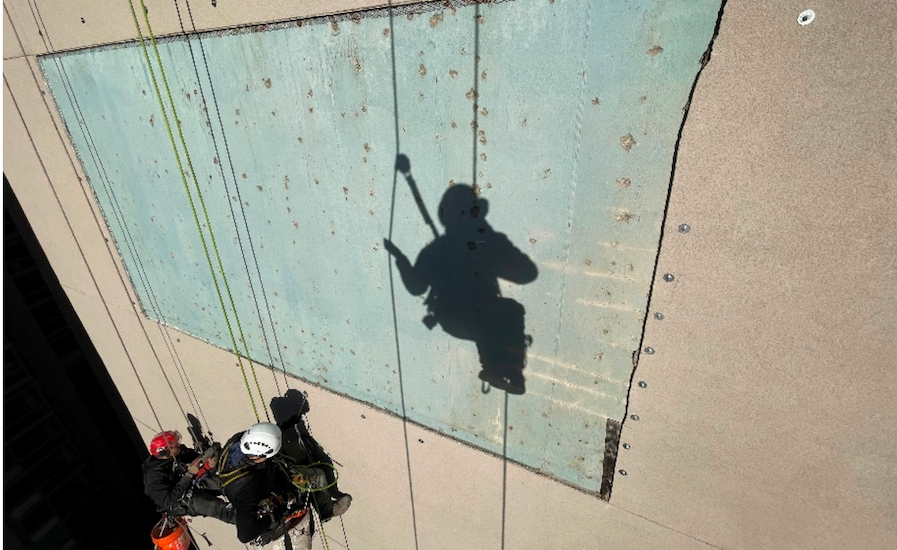
A consultant report highlights the location of the stucco cladding failure on Christmas 2020.
Photo: State court filing of report by CANY Architecture + Engineering
Some more time was lost wrangling other companies involved in the project into court.
In March, Judge Reed cleared the way for more progress when he awarded a default judgement in favor of Bayport Construction, a Rinaldi subcontractor, against its subcontractor on the project, Alfre and Sons Construction. Bayport had hired Alfre and Sons to perform the stucco work and indemnify Bayport. Since Alfre and Sons had filed no court response to the claims against it, the defendants wrote, Reed awarded the judgement to Bayport.
Progress toward trial was slow in ensuing months as depositions from third-party defendants had not been completed, Judge Reed noted.
In an August letter to the judge, the companies involved noted that “expert disclosure” is scheduled to end November 30, 2026. The companies involved, however, had held off on depositions waiting for one company involved to participate, they reported.
Now that that company “has defaulted,” by not replying to the lawsuit against it, “there is no basis to delay the completion of discovery
any longer,” the companies stated.
Last month Reed gave the parties to the lawsuit 60 days to submit any additional motions. The next conference on the status is scheduled for November, almost seven years after the facade trouble.
The trial isn’t going to get underway until some time in 2027.
Source: www.enr.com



