
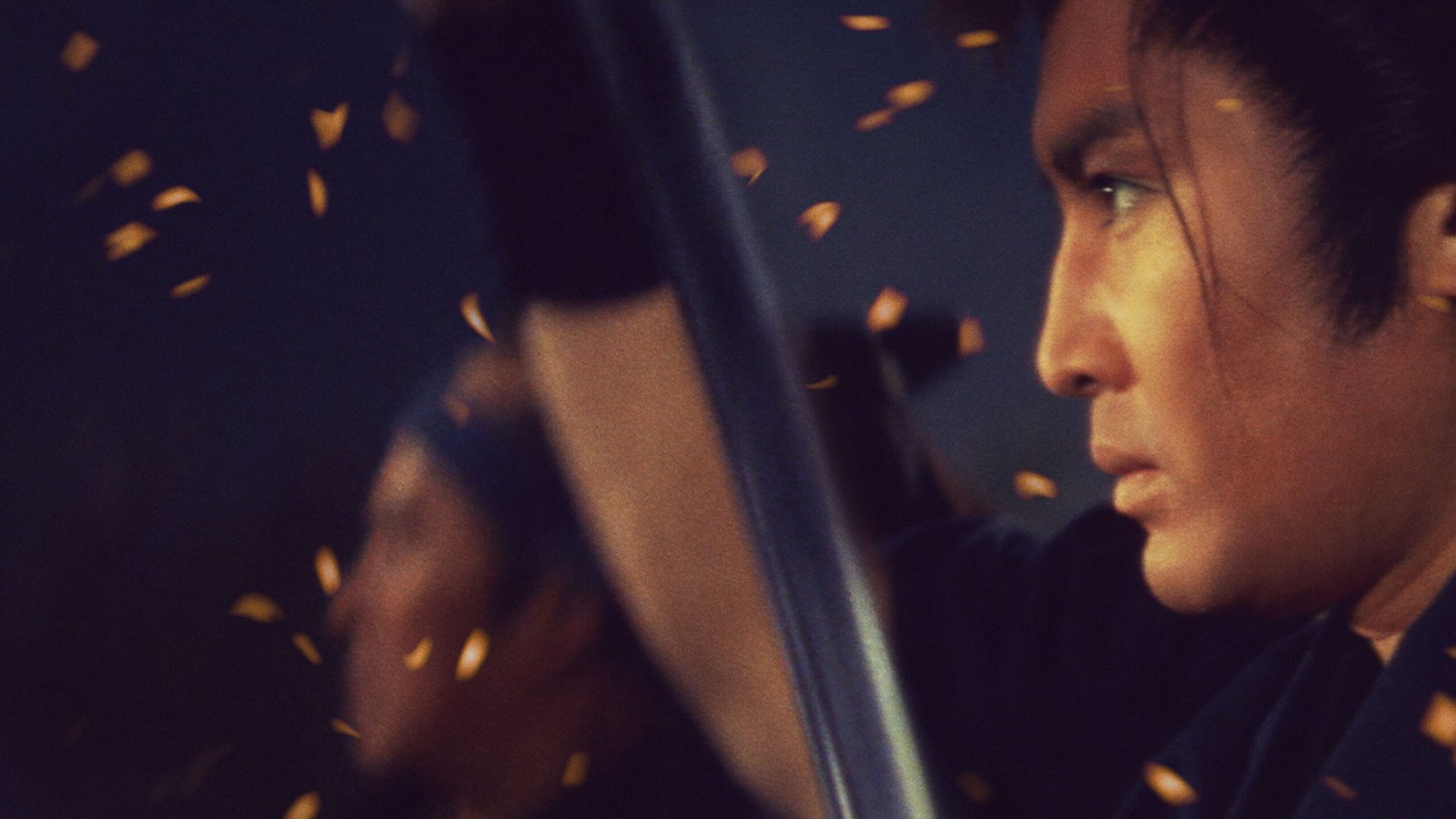
While depicting a historical period and its culture, the majority of samurai films also present the grim side of that society. Especially the code of honor, bushido, is nearly always shown as a tool for those in charge to command their men, demand obedience from them and, if necessary, lead them to their demise when it serves their own motives. Many stories tell us about that particular dynamic, but in the case of Tai Kato’s “Tokijiro: Lone Yakuza”, we see these ideas in a different light, as the main character already knows about the exploitation of this code of honor by the lords, bosses and all those men in charge in his world.
However, considering his choice to become a yakuza and a sword fighter, he has sealed his fate, making Kato’s feature a deterministic view of the lives of characters such as Tokijiro, whose story is not so much about a duel or supporting people in their fight against injustice, but more about the question of whether he can truly mend his ways and become someone else.
Buy This Title From Terracotta by Clicking on the Image Below
Tokijiro (Kinnosuke Nakamura) is a wandering gambler who tries to leave behind his life as a yakuza. Accompanied by Asakichi (Kiyoshi Atsumi), he goes from town to town, searching for easy ways to make money, while his companion dreams of becoming like him one day. As he accepts the hospitality of the Kinzo gang, Tokijiro soon regrets that decision, since the leaders of the gang want to involve them in their feud with a rival group. When asked for his support, he politely declines, but Asakichi eventually returns to the gang, offering his services. As Tokijiro arrives to help his companion, he realizes he has come too late to stop the tragedy from happening.
Even though this experience should have taught him otherwise, Tokijiro again accepts the hospitality of another gang in a neighboring village. This time, he does not deny their request to repay them by killing a man, the last member of a rival faction. Before he dies, the man tells Tokijiro to take care of his wife Okinu (Junko Ikeuchi) and their child. The yakuza obliges, and the more time he spends with the mother and her son, the more he wishes for a different life – which may just be a possibility for him if he is finally able to change his ways.
With “Tokijiro: Lone Yakuza”, director Tai Kato aims for a return to traditional jidaigeki. At the same time, he stays true to the themes that define his other works, such as “I, the Executioner” or “By a Man’s Face Shall You Know Him”, as he explores the depths of the human condition. In the case of “Tokijiro: Lone Yakuza”, his theme becomes quite clear as he presents a main character who is isolated and lonely, despite having people around him all the time. Having chosen to become a gambler, Kinnosuke Nakamura’s Tokijiro balances on the border between the seedy underworld and the “normal”, civilized world, even though his choice to become a yakuza earlier in his life has clearly determined his path.
Whereas characters in the features of Akira Kurosawa often obey the rules of bushido and the words of their lords, Tokijiro has no illusions about the true nature of these rules and has learned to avoid them more or less successfully. This notion makes Tokijiro a fascinating figure, as his choice not to engage in bloodshed and to decline any offers from the various gangs he encounters actually exacerbates matters and leads people to their doom. In the end, he still has to fight, kill and maim – a grim irony and a confirmation that he is unable to escape the path he picked a long time ago.
Indeed, this idea is established quite early in the movie but it does not take away from the impact of the story. Nakamura plays a man who desperately wants to change his ways and those of others, which is best shown by his interactions with Asakichi and, later on, another young man who also wants to become a yakuza. He implores both men to return to their farms and live a simpler life, a life he himself rejected a long time ago – but sadly, his words fall on deaf ears. Tai Kato shows the absurd and cruel cycle in the main character’s life, as he cannot help but cause suffering, despair and violence for the people he meets.
However, in its second half, “Tokijiro: Lone Yakuza” presents a glimpse of hope for our “hero”. Despite his knowledge of what his actions cause for the people around him, his relationship with Okinu presents a rare chance to truly change his ways and become someone else. His longing for the life he implored his companions to return to may just become an option for him, although we can already see the fatal signs of where this hope may be leading. Junko Ikeuchi’s emotional performance serves as a much-needed catalyst for Tokijiro to question what he does and why violence still follows him, even though he attempts to avoid it. Their relationship is also a test for Nakamura’s character, showing whether he is truly able to go through with his choice to change his life or whether he will remain a thug for the rest of his life.
“Tokijiro: Lone Yakuza” tells the story of a man trying to change his ways and escape the course he set himself on a long time ago. Tai Kato’s jidaigeki is a deterministic tale about whether a yakuza can live a different life without violence and bloodshed. Carried by a great cast, it is a timeless feature dealing with the idea of fate and the longing for a second chance in life.



