
Virginia’s plan to redraw its congressional maps to create as many as four new Democratic seats is dead, struck down by the state supreme court. Its impact on Virginia politics, though, is still being felt — and nowhere more visibly than in Virginia’s First District.
The district, which covers much of Virginia’s coastline and includes parts of the Richmond suburbs, is one of the few in the country that is actually competitive, and it’s been thrown into chaos due to the ongoing gerrymandering wars that have consumed the 2026 midterm cycle.
To learn more, I traveled there last month for the latest episode of Vox’s video podcast, America, Actually.
Originally, Virginians voted to redraw their maps to be more favorable to Democrats in response to Republican efforts to do the same in Missouri, Texas, and elsewhere. But a court effort threw out that result, restoring the state’s original maps and sowing uncertainty for candidates and volunteers who had been advocating for the change.
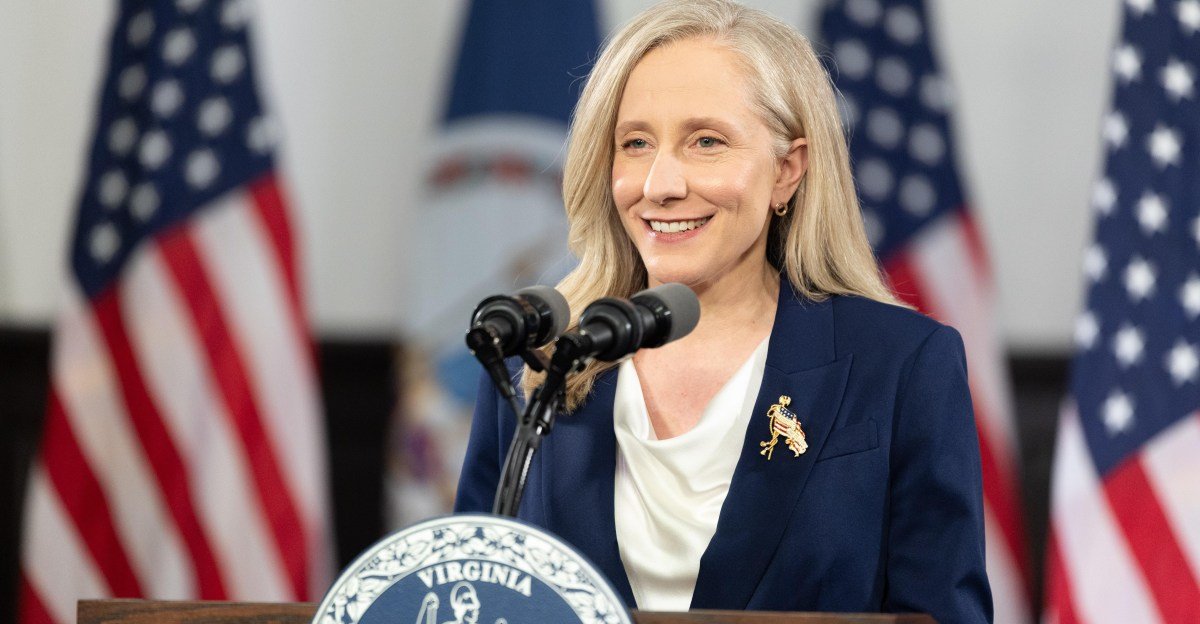
Even more, Virginia has become a place where the underlying tensions in the gerrymandering battle have begun to bubble up to the surface. Newly elected Virginia Gov. Abigail Spanberger’s approval rating has taken a hit since endorsing the Democrats’ campaign to draw new maps, and she recently admonished House Minority Leader Hakeem Jeffries against pursuing his “maximum warfare, everywhere, all the time” strategy when it comes to redistricting. (The phrase, as Jeffries has noted, isn’t original to him: It’s also how the Trump camp described its own redistricting efforts.)
“It is outrageously premature of us to be talking about any sort of redistricting or map changing effort when we have to win the most consequential midterms of my lifetime this November,” Spanberger told the New York Times in May.
On our trip to Virginia’s First District, America, Actually spoke with Democratic volunteers who had organized for the referendum and were now pivoting to selecting a primary candidate. We also attended a candidate forum at the Libbie Mill Library in Richmond, Virginia, where several candidates vying to be the Democratic nominee in the district made their pitches to voters.
At events like this, it’s easier to see how the party’s message for the midterms is taking shape. Here are three takeaways:
1) Redistricting exhaustion is real
I understand the pickle Spanberger is in. Democrats organized, knocked doors, and convinced voters to embrace a redistricting effort that many people were uncomfortable with — and then watched a court erase it. Katie Sitterson, an Indivisible Virginia volunteer we talked to in Virginia’s First, described the morale hit as taking “the air out of your sails.”
When I asked whether it had dampened volunteer enthusiasm, she put it bluntly: “People start to feel like, ‘What does it matter?’ I tried, and we’re doing all these things, and we even voted, and we used our voice, and it still didn’t work.” She said the reversal confirms the exact “lack of agency” voters already feel — and makes it that much harder to keep people in the fight for a full year.
I think that explains some of Spanberger’s resistance to Jeffries’ strategy. The “all warfare, all the time” move is something that excites the base — valuable in a midterm or national primary. Picking and choosing your spots to expend political capital is more important in purple areas like Virginia’s First or in statewide elections.
2) “Woke” isn’t dead
The short period where Democrats leaned into social justice language during the 2020 election seems to have passed. But at the Indivisible candidate forum in Richmond, there were lots of medical masks being worn, an open embrace of identity politics, and candidates leaning in.
“I always say that joy is the best resistance we have,” one candidate told attendees. “Hope is not a dirty word.” Another introduced himself as “a child of immigrants,” and a third described herself as “unapologetically progressive…who doesn’t take any corporate money.”
These days, “wokeness” has become sort of a punchline in elite Democratic circles, as more and more politicians run away from the progressive message of 2020. But those are values people legitimately believe in and will re-emerge as a point of tension in a national Democratic primary.
3) Democrats have a message
If “affordability” was the buzzword of the 2025 elections thanks to New York City Mayor Zohran Mamdani, I think “corruption” is emerging as the same thing for 2026, driven by a reaction to President Donald Trump’s actions and elevated by leading national politicians like Sen. Jon Ossoff (D-GA). But what’s most clear in these House races is that many candidates don’t see affordability and corruption as separate issues, but as linked ideas. Basically: Things are getting more expensive for you as Trump is grifting in the White House.
Here’s how Tim Cywinski, one of the Democrats running in Virginia’s First, put it: “From my experience with everyday people — Republican, Democrat, left, right, everyone between — it’s all about affordability and corruption.” He said the connection doesn’t require explaining insider trading or crypto: “You don’t have to know the nuances of the stock market. You just see that they are getting wealthier, while at the same time everybody else is getting…it’s harder to live. Life shouldn’t be this unaffordable. And if you say, ‘Yes, it’s because of them, but also at the same time, they’re enriching themselves,’ that drives people crazy. And for them, it doesn’t matter who they voted for in the last election.”
That sweet spot was Cywinski’s focus — pointing out that prices are rising for most Americans as Trump puts a seeming “for-sale sign in front of the White House.” Candidates think that contrast can not only motivate Democrats to turn out, but peel off enough independents and Trump voters to win a district like Virginia’s First.
As always, there’s much more in the full show, so listen to America, Actually wherever you get your podcasts or watch it on Vox’s YouTube channel.



