
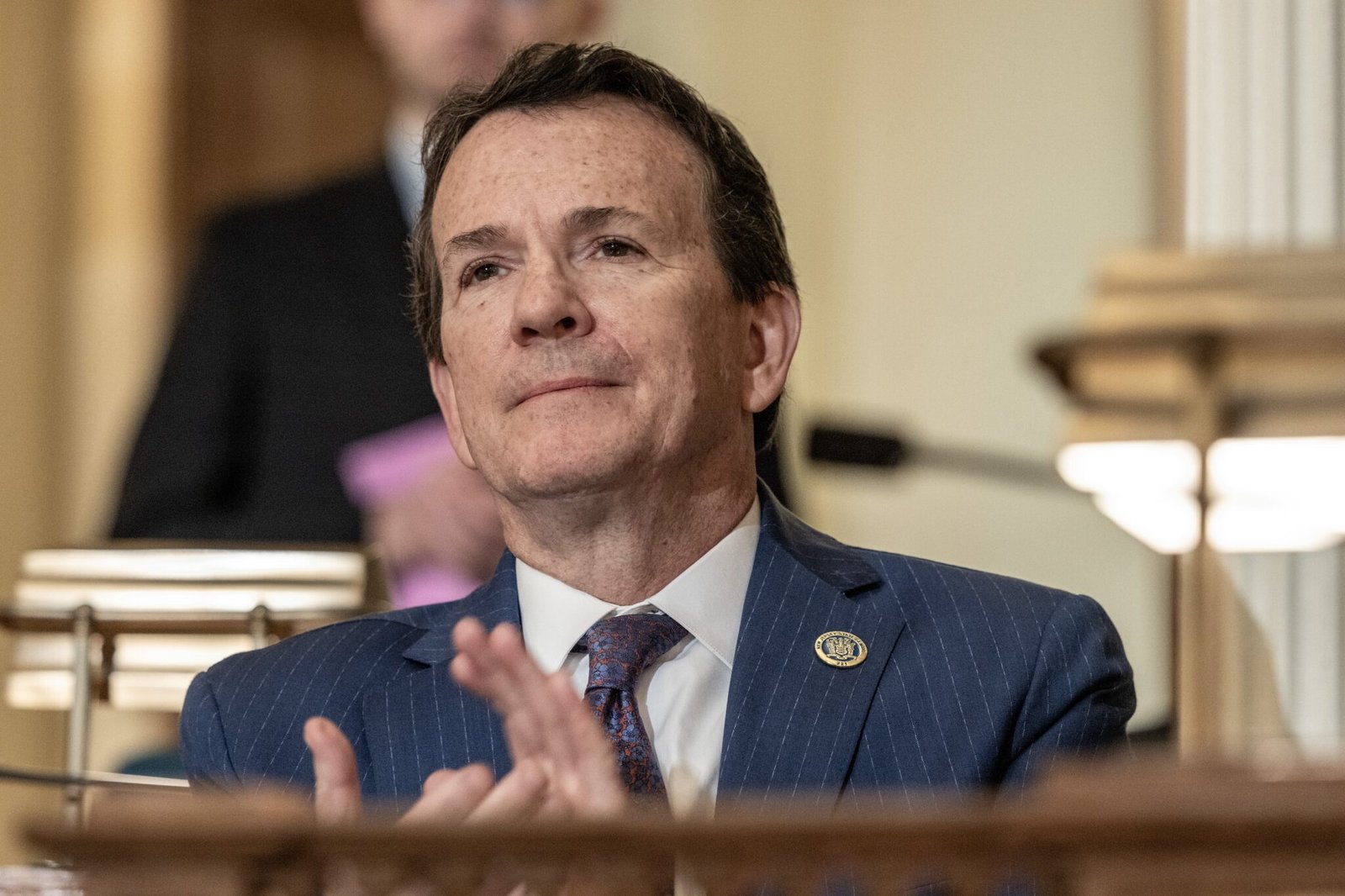
A New Jersey senator introduced legislation that would prevent ethics complaints against school board members for speaking publicly on school matters.
Sen. Declan O’Scanlon’s bill comes months after an Alloway school board member sued the School Ethics Commission, arguing a complaint filed with the body over social media posts she made about possible school tax hikes impermissibly chilled her speech.
“When we start telling elected officials they cannot speak openly with the very people they were chosen to represent, we’re not promoting ethics, we’re eroding transparency,” O’Scanlon (R-Monmouth) said in a statement. “If we continue down a path where public officials are discouraged or prohibited from speaking candidly, trust will only disintegrate.”
NJ Republicans demand federal and state reviews of ‘fiscal failures’ in Newark schools
Gail Nazarene, the school board member, in November sued over the complaint, arguing the ethics commission’s interpretation of the School Ethics Act, memorialized in a 2022 advisory opinion, amounted to an unconstitutional restraint on speech. The complaint was filed by a fellow member of the Salem County town’s school board.
The advisory opinion found school board members who discuss school matters with stakeholders risk ethics violations, including when they append disclaimers making clear the statements reflect their views alone.
State attorneys have sought to dismiss Nazarene’s lawsuit, arguing that it misstates the type of speech the commission seeks to regulate and saying that she is free to speak so long as she avoids creating a public perception that her statements come on behalf of the board.
They said she has no standing to sue because the School Ethics Commission has not ruled on the complaint against her and she has, to this point, faced no punishment for her speech.
“It does not matter that Nazarene’s fellow board member, and an unnamed school administrator, allegedly press a broader view of the Code of Ethics,” the state said in January filing.
Nazarene’s attorneys contend otherwise. They argued people facing limits on free speech do not need to wait until punishments were meted out to lodge court challenges, especially when they face sanctions up to and including removal from office.
Other school board members had previously been sanctioned by the commission even when their statements included disclaimers, and the possibility of sanctions for online posts that reference her board position or school matters necessarily chilled her speech, especially given political opponents could file ethics complaints, they argued.
“Though the state promises Nazarene might be able to say everything she wishes without punishment, courts do ‘not uphold an unconstitutional statute merely because the Government promised to use it responsibly,’” Nazarene’s attorneys wrote in a January response, quoting a 2010 U.S. Supreme Court decision that struck as unconstitutional a federal law that barred possession of depictions of animal cruelty.
Judge Christine O’Hearn in February heard arguments for a preliminary injunction that would stop the ethics complaint against Nazarene from progressing while the trial continues, but she withheld a ruling.
State attorneys in legal filings said a preliminary injunction was unnecessary because the School Ethics Commission had temporarily paused action on the complaint against her after she filed her lawsuit.
GET THE MORNING HEADLINES.



