
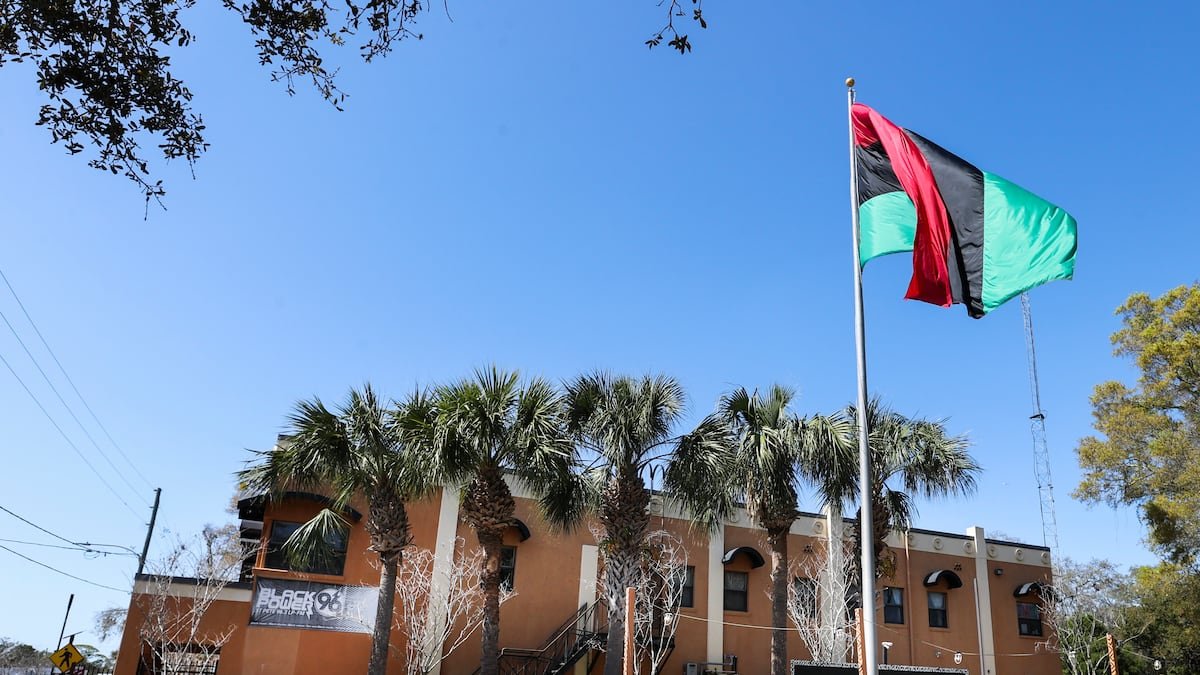
The Pinellas County Commission discriminated against a St. Petersburg nonprofit in 2023 by withholding pandemic relief money due to its association with a Black activist group, a federal appellate court panel said this week.
The three-judge panel, in the 11th Circuit Court of Appeals, agreed the County Commission discriminated against the African People’s Education and Defense Fund, which supports Black communities in St. Petersburg. The group is housed at the Uhuru House, headquarters of the Uhuru Movement, which advocates for racial justice but has also come under federal investigation.
The judges specifically referenced statements and “blatantly race-coded texts” between Commissioner Chris Latvala and his aide at the time.
“APEDF has plausibly alleged that the County treated similarly situated white-coded comparators more favorably — and, further, that the County’s explanations for its differential treatment don’t hold water,” the judges wrote in their 39-page opinion.
A Pinellas County spokesperson said the county does not comment on ongoing litigation. In a text message, Latvala said he had no comment due to pending litigation.
Luke Lirot, a lawyer who represents the nonprofit, called the federal court’s ruling “outstanding” and said it “sets the stage for some big changes.”
Now that the federal court released its opinion, Lirot said, the case will likely go back to the district court in Tampa. He said the nonprofit hopes to receive the money that was revoked and withheld, totaling $104,000.
In 2023, the federal government asked local governments to distribute money to help nonprofits affected by the COVID-19 pandemic. The money came from the American Rescue Plan Act.
The county asked the Pinellas Community Foundation to review and rank nonprofit applications. In that process, the foundation recommended funding the African People’s Education and Defense Fund. The nonprofit ranked high on the list to receive money, the panel’s opinion states.
The commission originally approved more than $36,000 for the nonprofit in 2022. That money would have purchased radio equipment and computers for Black Power 96, or WBPU. Shortly after Latvala joined the commission, he requested the funding be reconsidered.
“Google the African peoples one,” Latvala texted his aide at the time, according to court records.
“That’s the Uhuru House in St. Pete,” his aide responded at the time, court records state. “Their website doesn’t look so good.”
“I’m going to raise hell,” Latvala texted back.
At a commission work session two days after the text exchange, Latvala noted the nonprofit’s association with the Uhuru Movement. He also cited an Anti-Defamation League allegation that the Uhurus have ties to antisemitic Black nationalist groups.
Commissioners voted at the next formal meeting to revoke the funding. It was not on the agenda at the time. Latvala brought the action forward during a time that commissioners typically discuss new business.
The nonprofit’s radio station broadcasts out of the Uhuru House in St. Petersburg. That house was raided by federal agents in 2022 amid alleged connections to a Russian national who was accused of spreading pro-Russia propaganda and interfering with elections alongside U.S. groups.
The house serves as the St. Petersburg headquarters for the Uhuru Movement, which advocates for ending and making reparations for historic discrimination against Black people. It’s also where the Education and Defense Fund’s commercial kitchen and healthcare events are held.
The nonprofit is a separate entity from the Uhuru Movement, Lirot previously noted to the commission. The panel also said in its opinion that the nonprofit has a right to associate with other groups under the First Amendment.
In June 2023, the County Commission was set to approve another batch of American Rescue Plan Act funding. The Education and Defense Fund was set to receive about $67,000 for backup generator services, which would have supported its kitchen and other amenities at the Uhuru House.
Commissioners voted then to withhold funding from the nonprofit. County staff also recommended the commission eliminate that funding.
Staff wrote then that the nonprofit’s proposal “will not directly counteract the effects of COVID-19,” which was a requirement to receive money. The nonprofit’s original claim against the county, according to court records, alleges that at least four other nonprofits that serve predominately white communities received grants for similar needs.
The Education and Defense Fund’s request was the only item on the list commissioners eliminated and staff suggested pulling.
“You’re going to punish them for some association?” Lirot told the Tampa Bay Times on Thursday. “They are not the Uhuru party.”
It was after that second denial that the nonprofit sued Pinellas. It alleged retaliation for exercising First Amendment rights, as well as racial discrimination that violates the equal protection clause and procedural unfairness that violated the due process clause, both in the 14th Amendment.
U.S. District Judge Tom Barber, in Tampa, dismissed the suit in 2024 and sided with Pinellas. Now with the federal judges’ ruling, he must reconsider the previous order.



