
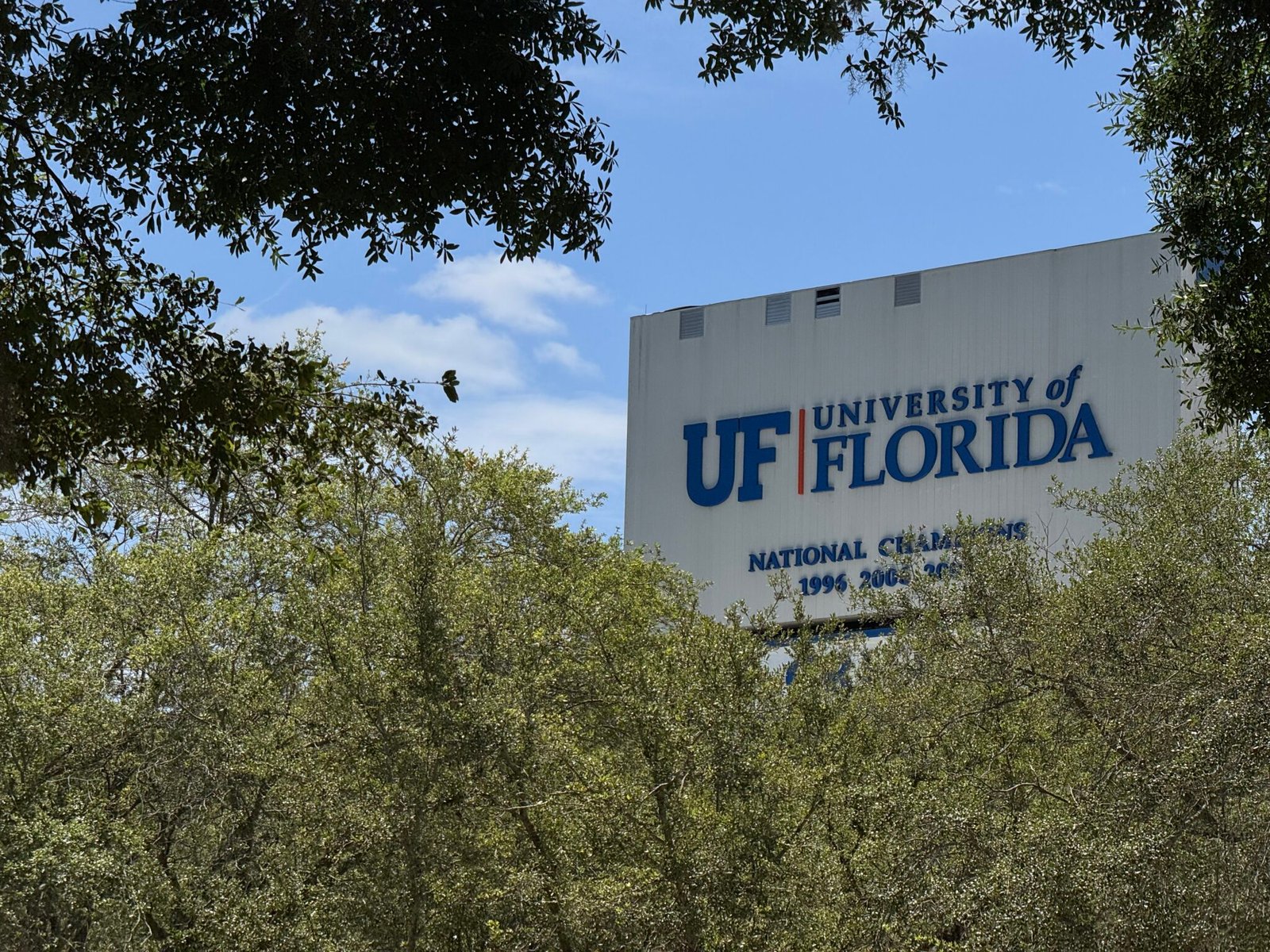
As Oscar Wilde might have said (had he lived in Florida), “To lose one university president may be regarded as a misfortune; to lose three in three years looks like carelessness.”
Or arrogance with a side of rank incompetence.
Relations between the state Board of Governors and the trustees of University of Florida, the state’s top-ranked research institution, increasingly resemble the food fight in “Animal House.”
Board chair and wealthy hospital executive Alan Levine doesn’t like the high-handed (and sometimes ham-fisted) way trustees chair and wealthy real estate magnate Mori Hosseini rules UF.
In 2023 Hosseini, a big Ron DeSantis campaign donor (check out the unseemly tale of the fancy golf simulator he provided the governor), chose former Republican Sen. Ben Sasse, to be president.
Sasse soon became notorious for spending a staggering amount of money on outside consultants, parties, salaries for his former Senate aides (re-branded as “advisers), most of whom did not live in Gainesville.
He blew $633,000 on travel during his 12 months on the job; his predecessor spent an average of $17,000.
After a year and a half, Sasse left, citing family health problems.
The trustees then chose Santa Ono, a respected immunologist and president of the University of Michigan.
But the state Board of Governors, freaked out because reactionary gadfly Christopher Rufo and educational experts such as Donald Trump Jr. called him “woke,” rejected the choice.
UF found an interim president in Donald Landry, former chair of the Department of Medicine at Columbia who kept telling faculty to maintain “institutional neutrality.” Landry looked like he had a lock on the job.
And if they didn’t give him the permanent gig, he’d get $2 million in severance pay.
Governance questions
What do you know? The trustees picked somebody else.
The somebody else is Stuart Bell, a mechanical engineer and President of the University of Alabama.
During his 10 years in Tuscaloosa, UA achieved R1 status, climbed up the rankings, grew to 40,000 students, and raked in big grants.
Plus, the Crimson Tide won a brace of national championships.
Bell’s highly qualified, not least because he’s accustomed to the pit of crazy that is SEC football.
Surely the Swamp would go wild for Dr. Bell.
But, as Coach Lee Corso likes to say, “Not so fast, my friend.”
Board of Governors chair Alan Levine initially refused to schedule a vote on Bell until certain “governance” problems with Hosseini got ironed out.
Levine wasn’t exaggerating — UF Trustees chair Mori Hosseini has been known to refer to himself as “king;” the UF provost has even been photographed kneeling and kissing his hand.
Just a joke, you know.
Hosseini didn’t attend the University of Florida, but he says he loves it.
Some of it. Maybe not the professors.
He’s threatened faculty who dared criticize Ron DeSantis’ anti-mask mandate and voter suppression laws, calling them “disrespectful,” accusing them of wasting “state money and resources,” and vowed their defiance of him and the governor “will not stand.”
Hosseini has aided and abetted DeSantis in his determination to invent an accrediting agency that won’t care about fripperies such as a diverse faculty, student representation, and intellectual freedom.
No part of the university is free from his influence. He pushed UF’s distinguished College of Medicine to hire the state’s science-challenged surgeon general.
Now UF pays Dr. Joseph Ladapo more than $300,000 per year — not that he does anything so pedestrian as actually teach classes.
‘Saving grace’
A trustee who hasn’t been identified had a hand in arranging an adjunct gig at UF’s law school for Florida’s attorney general. The average pay for an adjunct professor is between $3,000-$7,000 per course. Uthmeier’s getting $100,000 for two hours of instruction per week.
The AG doesn’t see the problem.
Uthmeier recently staged an event to announce a statewide audit: He wants to “combat public corruption” and root out “bribes, kickbacks, conflicts of interest, evidence of money being spent on special interests, personal interests, personal gain.”
So why were a bunch of unwashed journalists bothering him about a paltry 100 grand?
Don’t they realize he drives from Tallahassee to Gainesville himself? The university doesn’t even pay for his travel!
When reporters pressed him; he walked out in a huff.
Now, to be fair to Mori Hosseini, some say he’s occasionally tried to protect UF from the worst excesses of right-wing attacks on higher ed.
Hosseini is obsessed with the U.S. News and World Report college rankings (never mind they’re deeply flawed, compiled from subjective data, self-reported self-importance and occasional outright fraud) and wants UF to maintain its place in the top public universities.
Since much of the information used to compile the list comes from faculty and administrators themselves, it wouldn’t do to completely enrage them, no matter how much Florida legislators holler about killing “woke.”
One professor emeritus called this Hosseini’s “unexpected saving grace.”
Nevertheless, this is yet another depressing example of political players crashing around in our universities like mad cows in a glass factory, breaking things and leaving a mess.
Sadly, this is something of a Florida tradition. In the 1950s the Legislature’s Johns Committee went on a mission to expose and expel the “communists, integrationists and homosexuals” allegedly poisoning students at Florida’s universities.
All they did was destroy lives and make Florida a laughing stock.
Intellectual depravity
State government seemed to learn its lesson, at least for a while: Governors such as Reubin Askew and Bob Graham supported and promoted higher education.
Things have downhill from there.
In 2012, while Rick Scott was governor, he vetoed a critical higher education funding bill, demanded universities stop graduating students in “useless” subjects like the Humanities and social sciences, then “convinced” UF president Bernie Machen to postpone his retirement by dangling cash in front of him, promising to make UF a Top 10 institution.
Yet Scott’s interference in curricula and leadership positions is nothing compared to the sitting governor’s: He’s turned it up to 11 and ripped off the knob.
Ron DeSantis subscribes to the professors-are-the-enemy-and-books-are-dangerous view of higher education, accusing Florida’s universities of teaching “Marxism,” tormenting conservatives, and emphasizing such trivial subjects as race and gender.
Apparently, universities are so sunk in intellectual depravity he had no choice but to push a bill outlawing “woke” to protect innocent white students from feeling “distress” about slavery.
Federal courts subsequently blocked the part of the law that covered universities.
With UF’s latest presidential quest, it’s all come to a head: the fixation on “woke” and DEI, the dictatorial attitudes of DeSantis and Hosseini, and all those shadowy searches.
Perhaps embarrassed by Florida’s stealthy Vatican-style leadership rituals, last year the House of Representatives approved a measure to open presidential searches to public scrutiny — the status quo ante DeSantis.
It died in the Senate.
Recently, Sen. Rick Scott has come out blasting, blaming UF’s trustees for weak governance, wasting money (on AG James Uthmeier specifically), and the opaque way they chose Stuart Bell.
This may strike you as pretty rich, coming from one of Florida’s least university-friendly, most secretive former governors.
DEI
Plus, Scott doesn’t like DeSantis.
Meanwhile, there’s Stuart Bell, finally given the job, even as Levine and Hosseini say they’ll see a couples counselor.
Bell is in, but it wasn’t a sure thing: U.S. Secretary of Education and former wrestling executive Linda McMahon, implied Bell wasn’t tough enough on DEI; the conservative Manhattan Institute snarked at his Alabama record, saying he “refused to fire DEI officers even when the legislature banned it;” and former Republican House member and congressional candidate Anthony Sabatini said, “Wow — major red flags here.”
What was the problem? At UA, Bell chose to be sensitive to the past and responsive to the present life of students.
In 2019, UA forced the resignation of Jamie R. Riley, the popular Dean of Students. Riley, who is Black, had once tweeted the American flag represents “a systemic history of racism.”
People got upset, sure, but the past 250 years in this country demonstrate there’s a lot of truth there — especially at the University of Alabama, where in 1963, Gov. George Wallace famously stood in the “schoolhouse door,” where Confederate monuments dotted the campus, and most campus buildings look like supersized versions of plantation houses.
Bell had set up a DEI office in 2017, but, after students protested Riley’s departure, pledged more support for Black and Latino students and recruiting more faculty of color.
It worked, too: Black student enrollment went up by 2,000 in four years.
The University of Alabama looked like it was overcoming its history of cross-burnings and racist fraternities.
Bell’s supporters point out he shut down his DEI office as soon as the state of Alabama made it illegal.
Even that wasn’t enough for some on the Board of Governors. Before they voted him in, several asked the kind of questions you’d expect from rich people who have no business governing a university.
One implied he wasn’t yet cured of the woke mind virus. Others asked him about American Exceptionalism.
He promised never to play with DEI again and, as for the We’re Number One nonsense, he cleverly referenced UF’s Hamilton School, one of those self-congratulatory “Western Civilization” centers imposed on Florida universities by DeSantis and his legislative enablers.
Bell sounds like a canny, diplomatic guy.
But this unseemly fighting, these ideological purity tests, and the rank hostility Florida’s politicians display toward universities, make Florida look stupid.



