
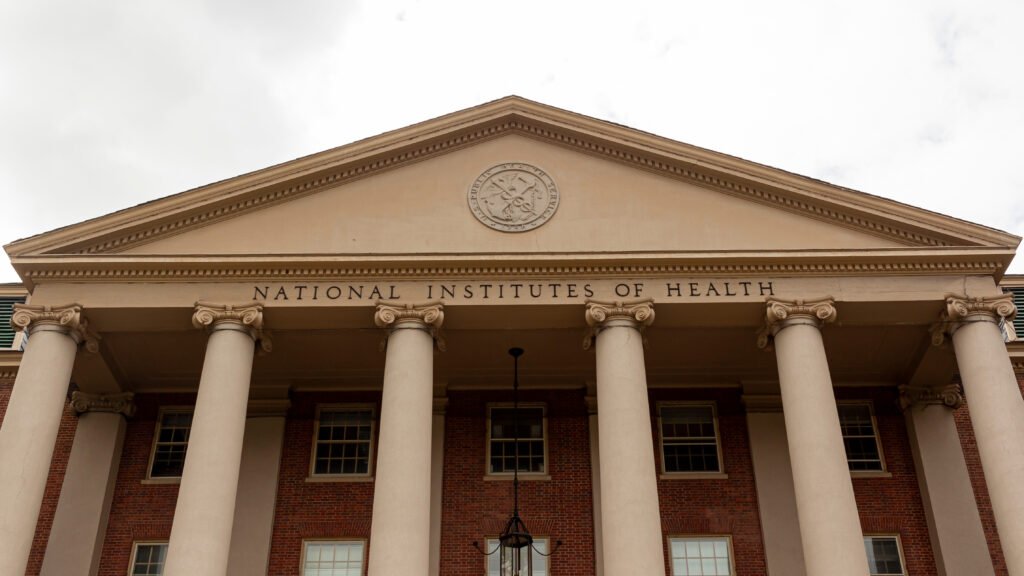
A group of researchers are suing the National Institutes of Health for allegedly infringing on their freedom of speech by screening grants for certain words and phrases when making funding decisions.
The suit, brought by 13 named and four anonymous researchers, is seeking to halt the process of searching applications and current grants for specific terms to determine if they should be rejected. The screening process has largely focused on research grants on topics that the Trump administration disfavors, including efforts to diversify the research workforce, or studies on health disparities, climate change, and vaccines. Because the case was filed as a class action lawsuit, if a judge sides with the plaintiffs, that decision will apply not just to the 17 scientist plaintiffs, but to any researcher whose work has been affected by the term searches.
When Trump returned to office, his administration began trying to remake the corpus of federally funded biomedical research in its image, terminating wide swaths of funding for research it deemed out of step with its priorities. Hundreds of those grants were later reinstated when a federal judge ruled that the slap-dash nature of the terminations violated the Administrative Procedures Act, which regulates how agencies are supposed to change policies. A number of suits challenging the administration’s policies because they did not adhere to the APA have stalled their progress.
After that ruling, the agency focused its efforts not on mass terminations, but on scrutinizing the language used in grants it funds. Officials began “renegotiating,” grants, as the process has been referred to by NIH employees and its grantees, asking grantees to tweak the language in their applications. In 2025, more than 700 grantees changed their titles to remove phrases like “equity,” “disparity,” and “racism,” among others. That scrutiny has been applied to researchers applying for new grants as well. The process of reviewing the NIH’s portfolio has been helped along by a “computational text analysis” tool.
“NIH supplemented the directives at issue in APHA with a series of additional directives, guidance, and policies that purported to replace the vacated directives, but in fact just continued the viewpoint-based purge of existing grants. It’s more of the same,” said Olga Akselrod, a senior counsel at ACLU who represented researchers in both cases.
The first suit also did not recoup funding for all researchers. Arghavan Salles, one of the named plaintiffs in the new filing, had her R01 terminated. Her project focused on the sexual harassment researchers experience during their training. It was not reinstated, and she has since struggled to apply for funding without using certain words or phrases.
“I couldn’t talk about my research on implicit bias or microaggressions or sexual harassment or belonging. I couldn’t use any of those words. It’s really hard to demonstrate that you’re a leader in a field without being able to say any of the words that describe that field and that work,” she said in an interview.
NIH director Jay Bhattacharya has repeatedly denied that his agency is screening for verboten phrases. “I am deeply against banned word lists. I don’t believe in them. I will not have my institution embrace them,” he said in a July interview with the conservative advocacy group PragerU. But, in a stipulation filed that same month in a court case from University of California researchers fighting terminations targeted at their institution, the NIH’s head of extramural research wrote that “NIH used search terms, keywords, or phrases to identify and terminate grants presumed to express viewpoints—such as subjects and/or topics of the grant — that HHS-NIH no longer wished to subsidize.”
NIH did not respond to a request for comment on the latest lawsuit.
The screening of grants for phrases, and the broader imposition of political priorities on grant funding, has been unmooring for researchers.
Michael Green, a social epidemiologist at Johns Hopkins University, initially applied for a grant to fund the transition from his PhD to his postdoctoral work in 2023 — a time when his research on the health effects of discrimination in medical settings was lauded. Last year, as he transitioned from the PhD portion of his grant to the postdoctoral portion, he was asked to remove certain words. His grant, initially titled “Assessing the Impact of Discrimination in Healthcare on the Cardiovascular and Cognitive Health of Aging Black Adults” recently dropped the mention of “discrimination” and “Black.”
To Green, if he and others don’t prevail in the suit, “the bottom falls out from under the NIH,” he said in an interview. “To this day, I didn’t get clarity on why my work was targeted.”
That opacity has made it difficult to trust the agency right now, he said. As a result, what he sees as the main draw of academia — being able to openly ask questions to better understand the world — feels tenuous. For now, that has meant he’s also stopped applying for NIH grants.
Source: www.statnews.com



