
Back when my kids were in Boy Scouts, our troop spent a lot of time at the Sand Hill Scout Reservation in Brooksville. We always brought home a lot of that sand — in our tents, in our uniforms, and in our shoes and socks.
Still, I found that place amazing. Just an hour north of where we lived in Florida’s most densely populated county were 1,300 acres where the boys could camp, hike, and swim amid Florida’s natural splendor. They could work on merit badges while seeing sand hill cranes, raccoons, and gopher tortoises.
The camp prayer, the “Sand Hill Grace,” was a way of saying thanks for this gift. It begins, “For the hills, for the sand, for the bounty of the land, for water bright and the pristine sunlight.” (I always mumbled over the mention of “sand.”)
But now it’s Sand Hill itself that’s standing in the need of prayer.
Turns out the owners of the place full of camp sites named things like “Possum Hollow” are trying to put about half of it into a new category: “Developer’s Delight.”
Scouts usually come across as a bunch of Dudley Do-rights, but this seems more like something from villainous Snidely Whiplash. A lot of people are unhappy about it, too.
“Dozens of residents and Eagle Scouts protested the potential sale of a portion of the Sand Hill Scout Reservation in Brooksville,” WTVT-TV reported last week.
They were incensed by a notice from the Hernando County Commission that the county was considering a requested change to the zoning from “recreation” to “planned development district.”
Possible uses of the rezoned land, the notice says, “would include commercial on the State Road 50 frontage and mixed use (office, professional, multifamily, etc.) south of that.”
That would go against the wishes of the landowner who first donated the property to the Boy Scouts.
There’s another group that’s alarmed about possible Sand Hill development, people whose concerns have been out of sight and out of mind for a long time: cave divers.
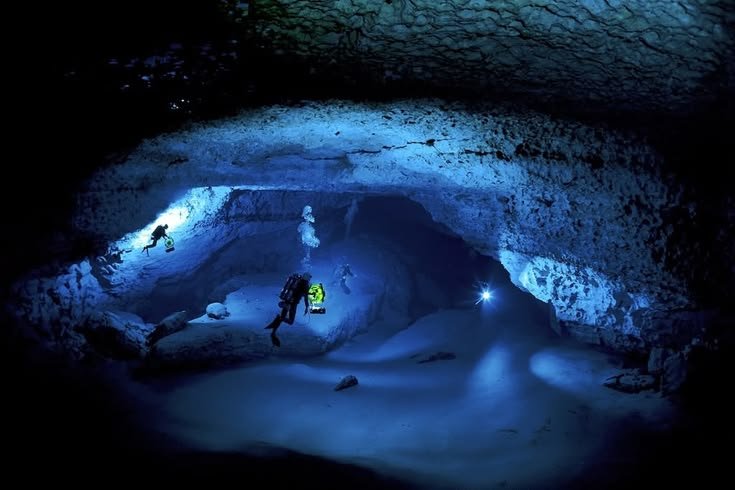
They’re up in arms because the Sand Hill property includes the entrance to the deepest cave in the Floridan aquifer, the source of our drinking water.
“Everybody’s livid about it,” said Tessa Skiles, a cave diver who runs an underwater cinematography company called Karst Productions. “I mean, it’s a reservation!”
Water’s journey
Most people in Florida have no idea of the vast subterranean world beneath their feet, even though it’s vital to their continued existence.
The fact is, some 90% of the water we use for drinking, bathing, and watering our lawns comes from the Floridan Aquifer. The aquifer is a pool of freshwater covering about 100,000 square miles from the Panhandle to north of Lake Okeechobee.
Too much pumping from that aquifer — to irrigate golf courses, boost crops, and provide lush suburban lawns — has lowered the pressure in a number of our taxpayer-owned springs, lessening their once-forceful flow.
That loss of flow is an indicator of what’s happening with our water supply. Most of the state is still dealing with drought conditions. We just went through the driest August since record-keeping began in 1895.
The safest way to experience our aquifer is by watching a movie called “Water’s Journey: The Hidden Rivers of Florida,” made by Skiles’ father, Wes, a legendary diver and photographer.
The film shows a pair of cave divers exploring the twisting, turning openings in the Swiss cheese of limestone formations beneath the earth. Meanwhile, above ground, Skiles and an electrical engineer follow radio signals showing their progress.
As they track the two divers, the aboveground pair pass through a barbecue joint, a bowling alley and a golf course. Along the way, they take note of how pollution from such mundane sources dribbles down through the ground and contaminates the source of the precious liquid we all need.
That’s why the divers are so concerned about any development replacing the natural bounty of the Sand Hill land.

The beauties and benefits
Larry DiePolder, the son of a lighthouse keeper, had been a World War I pilot and a boat builder and racer. He wound up a cattleman in Hernando County. He cared deeply about his Sandy Hills Ranch.
He died in 1978. In his will, DiePolder decreed that ranch should go to the Boy Scouts to protect it. He said that the property would allow the Boy Scouts to “enjoy the great outdoors and the beauties and benefits of nature.”
If the scouts were ever to decide they didn’t need his property, DiePolder’s will said they should sell it to the county to become a public park. That way it would remain preserved and pristine.
About a year after DiePolder donated the land, the first cave diver jumped in to explore the water-filled caverns beneath it. One is about 300 feet deep. The other is 365 feet, which according to the Cave Atlas website makes it the deepest cave in not just the aquifer but the entire continental U.S.
Other divers followed, astounded by the massive caves and the subterranean life of such creatures as the blind crayfish.
One was Wes Skiles, whose breathtaking photo from inside one DiePolder cave ran in National Geographic in 1999. He used that photo to lobby for state protection of all of Florida’s springs and aquifer.
“No place on earth better exemplifies the beauty, wonder and intrigue of cave diving inside of the Floridan Aquifer,” Wes Skiles wrote of the photo in “Advanced Diver” magazine.
“This image is his best for the sole purpose of illustrating the incomprehensible vastness of the Floridan Aquifer, and he used it for exactly that purpose,” Tessa Skiles said.

Diving can be a dangerous sport. Wes Skiles died in 2010 during a dive. But in 30 years of exploration, only one diver — an Italian tourist — died inside the DiePolder caves, according to Ted McCoy, part of a team of 12 guides who took divers into them.
“We would charge a small fee for guiding people,” McCoy told me, “and we had our own Lloyd’s of London insurance policy in case anything went wrong.”
One day 10 years ago, McCoy was preparing to take someone on a dive at the DiePolder caves when he got an email with disquieting news: “The Boy Scouts said no more diving was allowed.”
“It was pretty clear they were concerned about liability,” said Charles Roberson, who was the DiePolder dive program coordinator at the time. The fact that divers had been exploring the caves for three decades meant nothing to the Scout executives.
The guides offered to buy the 5 acres around the entrance to the caves, Roberson said, “but they turned us down. They said that wasn’t going to work for them.”
No one has seen inside the DiePolder caves since. And no one from the council seems concerned about the impact of developing that property on the aquifer.

Two digits down
The protest last week was led by a former scoutmaster named Eric Cupps. As a teen he earned Eagle, the top rank in Scouting. As an adult, he volunteered at Sand Hill as a camp manager.
His Save Sand Hill Scout Reservation group has been battling the Greater Tampa Bay Area Scout Council over the fate of Sand Hill for two years. The battle began when word first got out that the council planned to sell 50 acres of the camp to the Withlacoochee River Electrical Cooperative.

To Cupps, the council’s disregard for their donor’s desires feels disrespectful. It’s like they’ve taken the famous three-finger salute and lowered two digits, leaving just the middle finger upraised.
“I don’t think they really understand the impact of what they’re doing,” Cupps told me.
I asked him if this was part of Scouting America’s nationwide effort to raise $2 billion to pay a legal judgment against the organization. He said no, the Greater Tampa Bay Council had already sold off land in Hillsborough County to pay its portion of the debt.
This appears to be nothing but a fundraising alternative to selling Trail’s End popcorn outside Publix.
Rubbing their hands
When Sand Hill first opened to the scouts, it was way out in the country. State Road 50 was a two-lane blacktop where you could drive for miles without seeing a house or business.
Now, urban sprawl lines both sides of the six-lane highway, bumping up on the camp’s boundaries and clogging the road. The scout camp is the one piece of “Old Florida” that’s still hanging on.
“You just know the developers have been rubbing their hands waiting for access to that place,” McCoy told me.
I looked over the proposed comprehensive plan amendment that the council filed with Hernando County. I think it must have been written by some near-sighted Mr. Magoo, because it misses a lot of obvious stuff.
For instance, it says it covers 604 acres of the 1,300, which it contends “consists almost entirely of sand hills and has minimal environmental features.”
To me, that’s wrong. I think any place in Florida that’s still full of sand hills, oaks, pines, cranes and other wildlife has nothing BUT environmental features worth preserving. That’s especially true as the rest of Brooksville has become wall to wall sprawl.
Also, I noticed that the application contains absolutely no mention of the DiePolder caves. It’s as if they don’t exist and thus merit no consideration from elected officials — even though they probably drink water themselves.
The scout council has said little in public about the controversy. The one exception happened in 2024, when the council posted a statement on its website that says it’s not bound by DiePolder’s will.
“Following the passing of Larry DiePolder in 1978, there was a family dispute regarding his will,” the council wrote. Ultimately, his oldest stepson, Main Henderson, took charge of the estate. Henderson handed over the deed to the scouts, “free and clear of any use restrictions.”
To be certain they could ignore DiePolder’s will, the council took their deed to court. “In January 2024, the court confirmed the council’s full rights over the Sand Hill property,” the council wrote.
I’m no marketing expert. But it seems to me that if your only public comment is, “We know people think this looks bad, but it’s perfectly legal!” then you’ve lost the PR war.
There was also a Q&A video posted in 2024. In it, a scouting executive said they were just exploring how much money the camp might be worth. It appears that they’ve progressed beyond that now.
I tried repeatedly this week to get some more current comment from the adults who run scouting here. Unfortunately, the council continued keeping its own counsel.
I also tried reaching Hernando County Commissioner Ryan Amsler, a mortgage broker who lives near the camp and may care about the aquifer beneath it. He didn’t respond to my calls and emails, either.
I think if the scout council is serious about pursuing this development idea, members need to open up about their plans and their reasoning. They need to talk to the community and explain what their goal is. And they need to show everyone how they’re going to protect the drinking water in the DiePolder caves beneath the camp.
Otherwise, they should make some changes to the Scout Oath that every Tenderfoot has to memorize and recite.
The current version says, “On my honor I will do my best to do my duty to God and my country and to obey the Scout Law, to help other people at all times, to keep myself physically strong, mentally awake and morally straight.”
The updated version could be, “On my dishonor, I will do my best to avoid responsibility for environmental degradation, dodge what the donors want, and uphold the hypocritical legality of what makes the most money for the organization.”
You’ll have to forgive me for hoping any attempt to bulldoze this property runs into a major obstacle. Maybe it’ll wind up with a lot of sand in its gears.




