
States are continuing to sue the Trump administration over buyouts of wind leases bought by developers of anticipated offshore wind projects. The latest include two lawsuits by eight states in federal district courts in New York and Maine, and a separate federal suit by California. The suits challenge a total of $1.5 billion in payments the administration made to Invenergy and Bluepoint Wind for leases off the coasts of California, the Mid-Atlantic and New England, with the money redirected to fossil fuel and geothermal projects, largely outside of those states.
The administration has spent more than $4 billion on wind lease buyouts as of Sept. 22, according to legal filings, with suits brought against earlier buyouts still making their way through the courts.
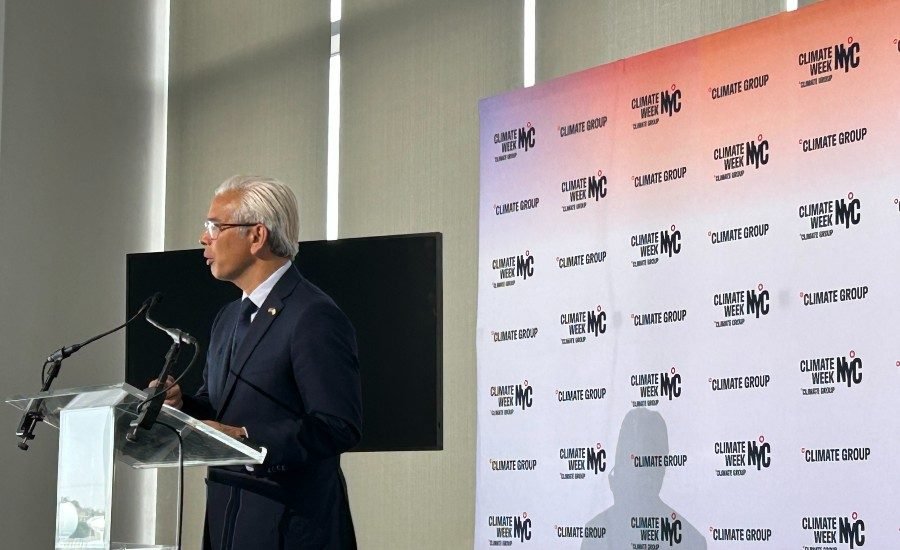
“Using taxpayer money to strike backroom buyouts that make clean energy projects disappear is illegal, as we’ve set forth in our complaint” filed in federal district court in San Francisco, said California Attorney General Rob Bonta in a press briefing Sept. 22 during Climate Week in New York City. He added that the state “has spent nearly a decade working with federal agencies, developers, tribes, labor groups, courts, fisherman, local governments and communities to responsibly develop offshore wind projects.”
Projects were expected to bring billions of dollars in investment and thousands of jobs to the states while generating more than 10 GW of electricity: 5.8 GW in capacity for Invenergy projects in the New York Bight between New York City and New Jersey and in the Gulf of Maine; 2 GW for Invenergy to develop offshore wind in the Morro Bay Wind Energy Area in central California; and 2.4 GW for a Bluepoint Wind project also in the New York Bight
Invenergy’s lease bid also included $33 million to be dedicated to workforce and supply chain development. The state has also dedicated significant resources to its nascent offshore wind development, bolstered in 2024 by voters passing Prop 4, which earmarked $475 million for developing related infrastructure. “In expectation of the wind projects being developed off its coast, including the Invenergy project, [California] has invested over $100 million to support the development of offshore wind, including creating a statewide offshore wind strategic plan and developing its ports and transmission facilities to support offshore wind,” according to the state’s court filing.
As part of its deal with the U.S. Dept. of the Interior June 17, Invenergy agreed to use the money it received for giving up the rights to its four offshore wind leases to develop gas-fired plants in Indiana, Wisconsin, Iowa, Kansas and Missouri, and a geothermal project in the Western U.S. BlackRock subsidiary Midstream & LNG, a 50% owner of Bluepoint Wind, agreed to invest in a U.S.-based LNG facility. A little over a week later, California issued a notice of intent to sue over the Invenergy deal, opening up a 60-day period for the government to address the state’s concerns, culminating in the lawsuit announced this week.
Earlier this month, Bonta announced his intent to sue the administration over an August deal with German developer RWE for a $1.22-billion buyout covering leases off New York, California and Louisiana in exchange for investments in gas powered projects—the largest single buyout deal to date. New York and other East Coast state have also signaled plans to sue.
Looking for quick answers on construction and engineering topics?
Try Ask ENR, our new smart AI search tool.
Ask ENR →
The unrealized projects will negatively impact states’ energy needs as projections show increasing demand, partially resulting from data center development, the suits contend. New York expects electricity demand to grow 8% by 2030 and 24% by 2040, it said in a press release. Similarly, New England anticipates a 9% growth in demand by 2030. “Americans are facing increasing energy costs because this administration would rather pay off energy companies than let us build the new power sources we need,” said N.Y. Attorney General Letitia James in a statement.
Bonta said that while litigation “slows the process down,” California intends “to block the federal administration from interfering and make sure that we complete these projects.”
Source: www.enr.com



