
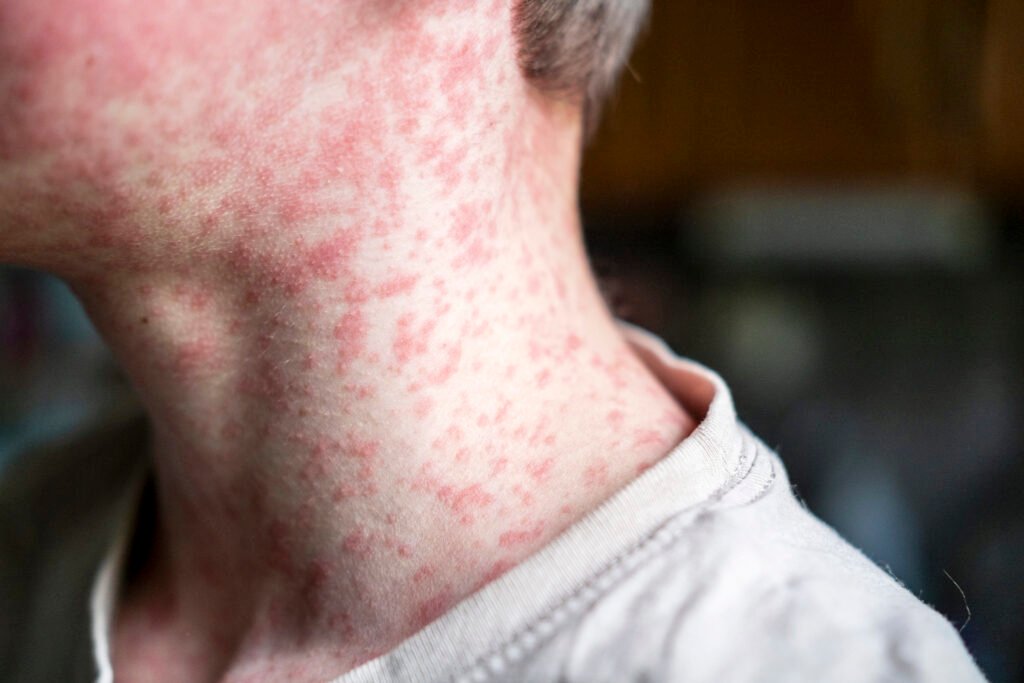
As summer vacations nears and the opportunity for travel increases, measles cases in Florida and across the United States continue to rise.
Florida Department of Health data show that between the start of the year and May 1, 150 suspected and confirmed measles cases were reported to state health officials.
Fourteen of Florida’s 67 counties have reported confirmed or suspected measles cases.
Collier County has 107 reported cases, more than any other county. Measles started to spread in the county in late January at Ave Maria University, a Roman Catholic college. There have been no new measles cases in that county for the past three weeks. Nearly every measles case in Collier County was spread locally — just three were categorized as “imported.”
About 40% of the Florida cases are in the 15- to 19-year-old age cohort but people of all ages have been infected, the data show.
GET THE MORNING HEADLINES.
Measles vaccines were first introduced in the United States March 1963. Thirty-seven years later, the disease was eliminated from the United States.
Elimination doesn’t mean there were no cases but that there were no domestically contracted cases for more than 12 months. But there’s been a resurgence of measles outbreaks amid growing skepticism about the safety of vaccines.
Department of Health and Human Services (HHS) Secretary Robert F. Kennedy Jr. and Florida Department of Health Secretary Joseph Ladapo are both vaccine skeptics. Ladapo, whose boss is Gov. Ron DeSantis, likened mandatory vaccines to “slavery” last year and announced plans to eliminate all vaccine mandates from Florida statutes.
But he hasn’t been able to get his plan — which targets mandatory school vaccines only — through the Republican Legislature.
DeSantis has vowed to continue his efforts on the vaccine front before being term-limited out office next January.
At least 95% of the population needs to be vaccinated to keep the disease under control, which is HHS’s Healthy People 2030 goal. But just 10 states reported coverage levels at 95% or above in 2024-2025, according to Johns Hopkins Bloomberg School of Public Health. Just 89% of Florida children entering kindergarten in the 2024-25 academic year had been vaccinated.
Measles is a highly contagious virus that spreads through coughing and sneezing. Symptoms include a red bumpy rash, high fever, cough, runny nose, and red, watery eyes.
Measles can lead to serious complications, such as pneumonia, encephalitis (or swelling of the brain), and even death. There were three measles-related deaths nationally in 2025. No deaths have been reported this year.
Nationwide, there have been 1,842 cases of confirmed measles, according to data published Friday by the Centers for Disease Control and Prevention. South Carolina leads the nation in cases with 669, followed by Utah with 439 cases and Texas with 182. Florida has the fourth highest number of confirmed measles cases, according to the CDC’s data, which include only confirmed cases and is based on data through May 1.
CDC data shows Florida has had 135 confirmed cases as of May 7. The CDC also reports there have been 25 new outbreaks in 2026. Outbreaks are defined as three or more related cases.
The United States is not alone seeing a rising number of measles infections. Most measles infections in the United States are contracted internationally, according to the CDC. Given the tandem of increasing infections and decreasing vaccination rates, the CDC last summer issued a Level 1 travel advisory recommending that international travelers be fully vaccinated against measles.
“The best way to protect yourself and your loved ones is by getting the measles, mumps, and rubella (MMR) vaccine. If you haven’t been vaccinated or don’t know your vaccination status you should plan to be vaccinated before traveling internationally,” the CDC said.
Independent Journalism for All
As a nonprofit newsroom, our articles are free for everyone to access. Readers like you make that possible. Can you help sustain our watchdog reporting today?



