
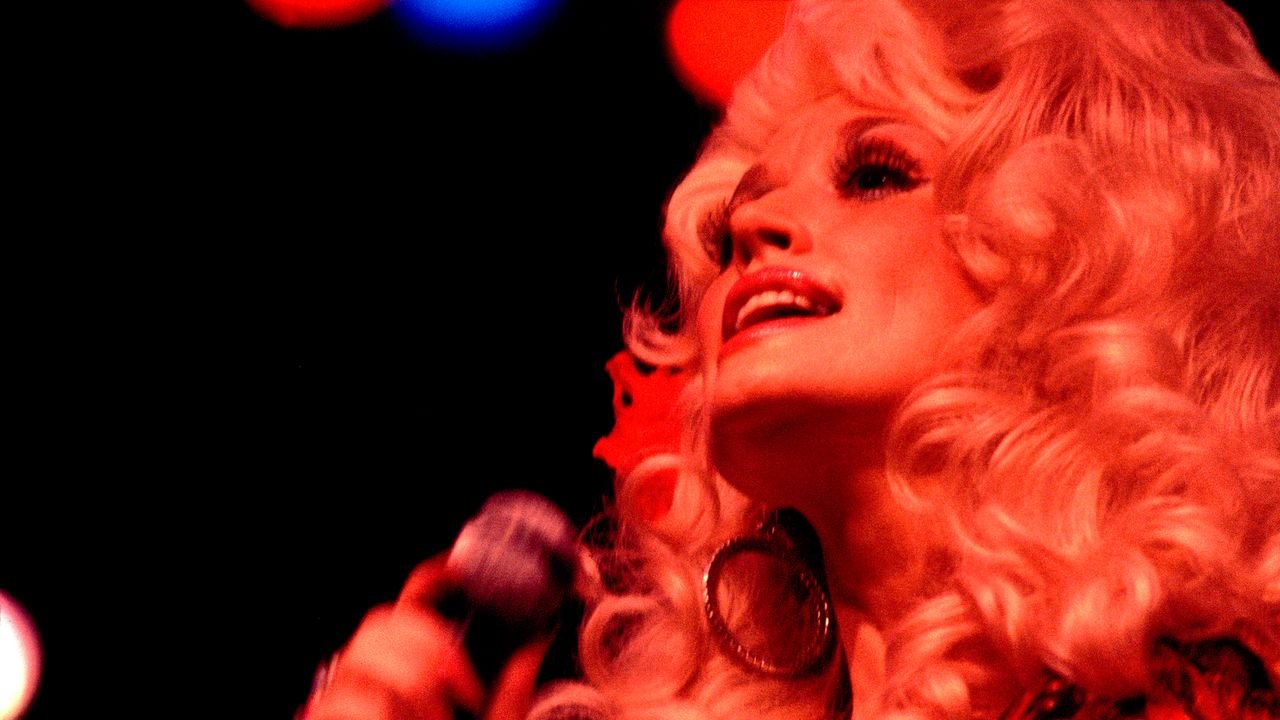
Dolly Parton seemed closer to God than just about anyone. (The hair helped.) One of the most beloved humans on the planet, Parton—who we all seemed to believe would be the first person to live forever, but passed away yesterday at 80—seemed to float through decades of pop culture on a cloud of good humor and joy, and the world already feels like a more bitter place without her. She has joined the ranks of good-hearted, genius celebrities who seemed eternal—David Lynch comes to mind—whose passing has left us with the question: How are we supposed to keep the world going without them?
There were countless reasons to love Dolly Parton: the songs, the low camp, the wise-cracking sense of humor, the down-home charm, the sheer vitality and kindness. And she returned that love in such abundance that her fame appears to have been literally universal, even transcendent: When news of her passing was publicized on August 25, both Donald Trump and Zohran Mamdani paid tribute.
Parton has influenced public health, literacy, children’s publishing, and tourism in the South. Just her breasts alone — and I know journalists shouldn’t write about an artists’ breasts, but I’m confident Parton would want them included in her tributes — influenced science and architecture. A sheep cloned from a mammary-gland cell was christened “Dolly” in honor of its namesake; the General W. K. Wilson Jr. Bridge in Mobile, Alabama, is informally known as the “Dolly Parton Bridge” because of its distinctive arches; the Soviet/Russian T-72A tank’s distinctive frontal armor has been nicknamed “Dolly Parton” for reasons you can imagine.
But far above all of that, Parton was a peerlessly rigorous songwriter. Raised in Locust Ridge, Tennessee, as one of 12 children in a poor family of Dutch-Irish heritage, she started playing guitar before she even learned how to hold a pencil. She graduated school in 1964 and packed up for Nashville the very next day. From there, she embarked upon one of the most illustrious careers in country music history (and music at large), recording some 49 studio albums and she was credited with writing around 3,000 songs—several of which can easily be considered standards. Here are 10 of the best from that deathless catalog.
10. “Gonna Hurry (As Slow As I Can)” (1962; released 2009)
Co-written with her uncle Bill Owens—one of the first people she ever wrote with as a child—“Gonna Hurry (As Slow As I Can)” is a demo recorded in 1962 that finally saw the light of day in 2009 as part of a legacy box set. Parton was a genius of vocal variety, but here she plays it almost straight, sending an arrow straight to the heart with a kind of controlled weeping. “Well, I’m gonna cry / Cry myself to death,” she sings with uncharacteristically simple dejection. The piano nudges her vocal line, trying to hurry Parton along, while she resists, stretching and slowing the syllables. It has the buoyancy of country music with the ache of a ’50s slow-dance doo-wop ballad. There is so much brightness here, and so much ache. No one has ever managed to make a lover stay by pleading, but Parton might have come close.



