
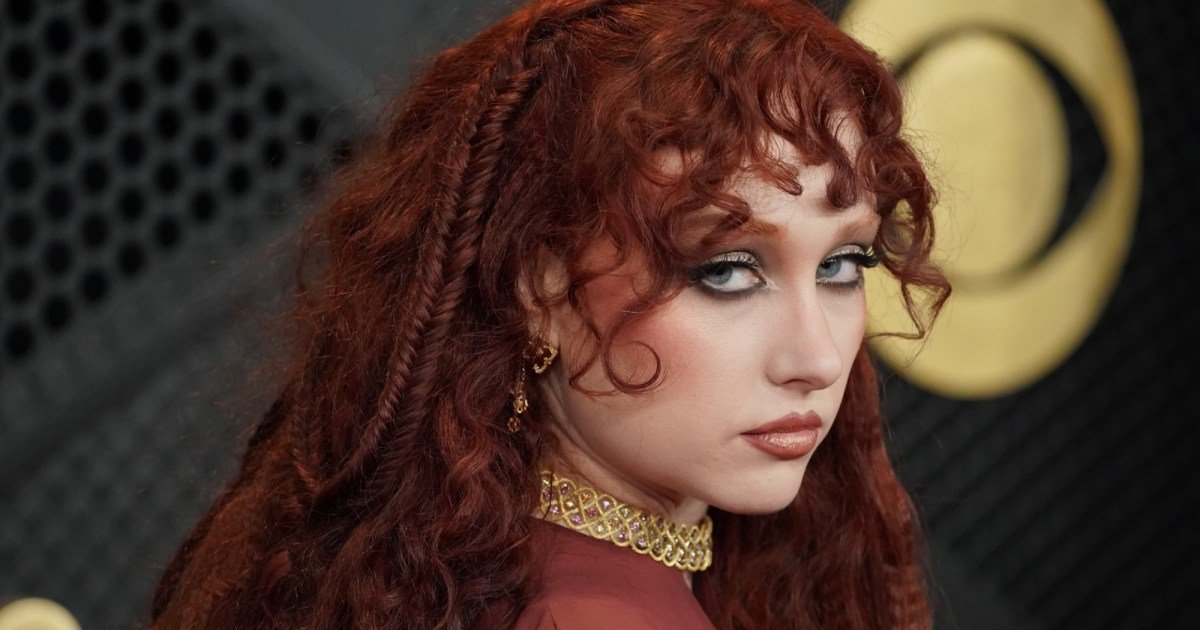
Chappell Roan arrives at the 68th annual Grammy Awards on Sunday, Feb. 1, 2026, in Los Angeles. Jordan Strauss/Invision/AP
Justice for Chappell Roan! On Monday, Jorginho, the soccer star who alleged that the bestselling artist was responsible for a security guard making his stepdaughter cry—supposedly because the child stared at Roan—made an apology on his Instagram story: “I made my initial statement in the heat of the moment after hearing that my child and wife had been approached by an adult male security guard in an intimidating way.”
The incident took place last month during the Lollapalooza music festival in São Paulo, Brazil, where Jorginho claimed in a social media post that a security guard “aggressively” confronted his wife Catherine and stepdaughter Ada and upset the child after she walked past Roan’s breakfast table. He tagged Roan at the end of that post: “@chappellroan WITHOUT YOUR FANS, YOU WOULD BE NOTHING. AND TO THE FANS, SHE DOES NOT DESERVE YOUR AFFECTION.”
The post went viral, leading to an ongoing online harassment campaign against Roan, and even led Rio de Janeiro Mayor Eduardo Cavaliere to post on X that he intended to ban her from performing in the city’s highest-profile international music festival.
Despite Roan saying at the time that she “didn’t even see a woman and a child” and that “no one bothered her,” the online backlash continued. There appeared to be no clear direction to the criticism: it isn’t about Roan’s behavior but about people’s collective eagerness to participate in a misogynistic pile-on: Was she at fault in the incident, unrepentant, and possibly the worst person to have ever existed? Is she only famous because her family offered her the financial stability for her music career to flourish? (According to the Springfield News-Leader, her hometown paper, Roan put on a fundraising performance as a teenager to raise funds to attend Grammy Camp in New York City.)
In his Monday statement, after Roan’s own public statement and their respective teams’ discussion of the incident, Jorginho acknowledged that the artist had “no knowledge of what took place at breakfast and had not asked anyone to approach them.” The soccer player also noted that the security guard in question has since publicly stated that, at the time, he was representing another artist at the hotel.
“I regret the impact the situation has had on Chappell Roan, Catherine, Ada, and our family,” Jorginho continued. “I do not support or encourage hate speech or online attacks from any side…As far as I am concerned, this matter is closed.”
But is the matter actually closed? The harassment that resulted—something completely unjustified even if Roan was, in fact, mean to a child—is illustrative of how famous women have to be perfect, even when mistreated. As culture writer Rayne Fisher-Quann wrote in 2022, women in the public eye exist in “a system that builds [them] into untouchable fantasies just so we can watch in glee as the facade inevitably crumbles.” Compare public coverage of the Roan incident with the muted response to the long list of famous men who have inflicted real harm on others, and who continue to insist that holding them accountable is “cancel culture.”
Roan demonstrated more moral courage than many powerful people in her February decision to leave Casey Wasserman’s talent agency after reports revealed the entertainment executive’s ties to convicted sex trafficker Ghislaine Maxwell. Yet she received far more social backlash over a non-event than praise after taking a material risk for the sake of her principles.
As Kat Tenbarge, a reporter on internet culture and its intersections with misogyny and violence, wrote last month about the Chappell Roan backlash:
This is what happens to women and marginalized people all the time: people make stuff up about you and it becomes your reputation, even though you never did what they accused you of doing. This is supposedly the great threat of the #MeToo movement to permanently tarnish innocent men’s reputations, but in reality, it happens all the time to women over significantly less serious allegations.
That pattern applies to how society treats all women, including those lacking the means to shine a light on their harassment. In workplaces alone, according to a 2026 report by online compliance training firm Traliant, at least a third of workers said they would only report harassment if they were able to do so anonymously, about a quarter said they had personally witnessed retaliation for pointing out misconduct, and one in five said they were personally subjected to it. The result: according to a 2022 global survey by the International Labour Organization, a United Nations agency, only about half of victims worldwide told someone else about their experiences.
The normalization and justification of Roan’s harassment is part of a pattern—one that ultimately normalizes, and justifies, parallel treatment of much less powerful women.



