
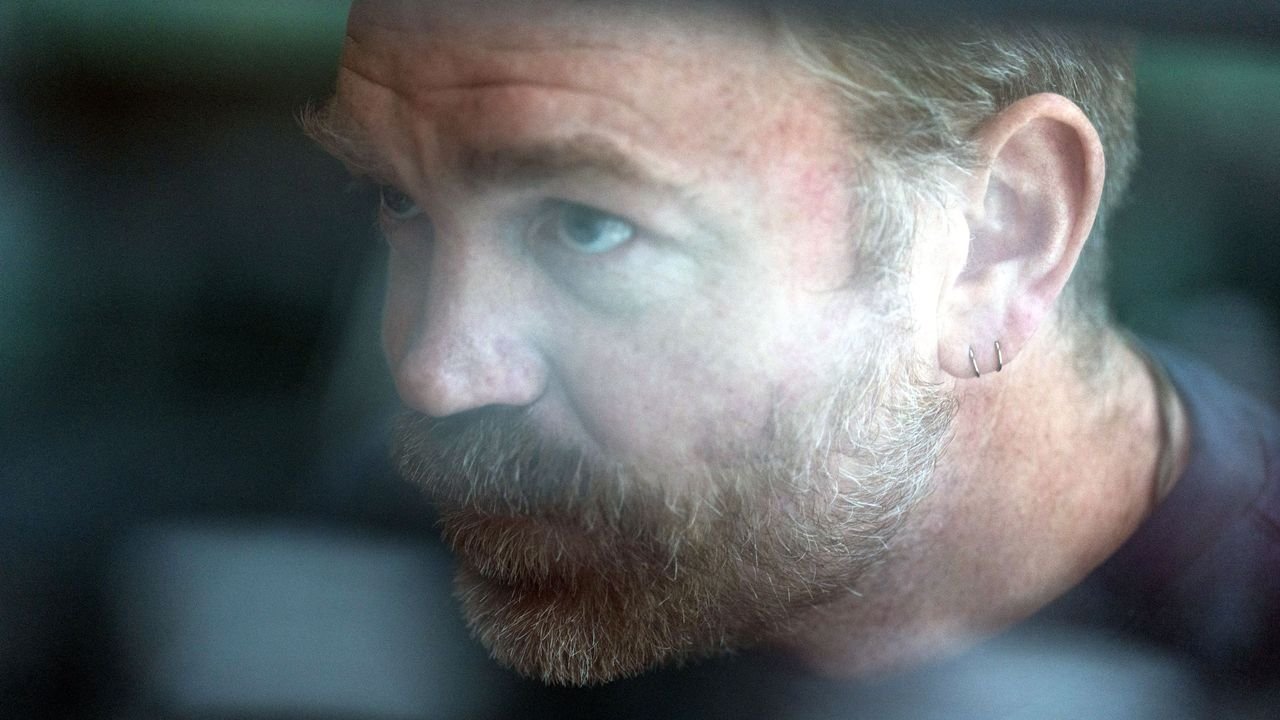
When Briere first met Platner, he thought that Platner had accidentally boarded the wrong bus. He was “way smarter than the rest of us,” Briere said, and engaging with him “felt like walking into an upscale winery” when you were used to drinking Miller Lite drafts. But his skepticism waned after he saw Platner confidently lead men during training. “His voice helps,” Briere added.
The unit’s first major combat came in April, 2005, during a surprise evening mortar and small-arms attack on the prison, which included suicide car bombers targeting the complex’s perimeter. Ursone, a squad leader at the complex, recalled coming upon the aftermath of a different mortar attack by the mujahideen: “There’s bodies everywhere,” he said, “limbs blown up and all that stuff.” One of the casualties was a young boy. On another operation during this deployment, Platner’s vehicle got hit by an improvised explosive device northeast of Fallujah, which gave his friend a serious head wound.
Platner’s tour was punctuated by hopeful moments, too, including his first mission: monitoring the 2005 Iraqi elections. “We managed security at a voting site,” he recalled. “All these people came down and lined up to vote, and we worked really hard to keep the crowd calm. And it was excellent. It was cool.” But Platner also came to doubt the doctrine he’d been trained to trust; the military’s dehumanization of the enemy, and its often indiscriminate attacks, seemed at odds with “hearts and minds” missions, such as handing out water and candy to locals. “I really don’t understand what’s going on,” he remembers thinking.
He described his experience in the military as both stunting and transformative. It didn’t promote growth but, rather, a “hardening” of his angsty, boyish instincts, he told me. Briere agreed. “You don’t fully mature in the military,” he said. “You, as a human, stay a teen-age boy.” This is especially true of the infantry, he argued, which fosters a hyper-insular “primitive” subculture.
Ursone reckoned that the distinct rites and language of their marine tribe would, to polite society, resemble hieroglyphics. “It has its own language, its own swagger, and this whole all-encompassing—and, when we were in, it was all-male—vibe,” he said. That culture, several veterans told me, is a stew of pent-up sexual energy, existential anxiety, and brotherhood, producing a mix of childish dick jokes, homoerotic hazing rites, sexism, and self-destruction. “You almost have to, like, live in a world of offensiveness, because what you do for work is offensive to the soul,” Platner said.
Thomas Brennan, a former marine who served in Iraq the same year that Platner did—and later exposed a marine revenge-porn ring for the news nonprofit he founded, The War Horse—said that all-male infantry units made it “widely accepted to look down on women marines, to talk negatively about women marines, to hypersexualize women marines.” Brennan admitted that he had participated in that culture himself. Coughlin, the veteran who exposed the 1991 Tailhook scandal, recalled a female marine being called “a walking mattress,” in her day: “It was really baked in.” Indeed, a 2017 article in the Journal of Peace Research argues that military sexual violence is inculcated through core military socialization processes that treat sexualized hazing and assault as appropriate forms of punishment or bonding. In a 2020 Reddit post, Platner wrote that he envied West Coast marine veterans because “they get to bang LA chicks, whores in TJ [Tijuana], and hit up Vegas.”



