
The Islamic Republic of Iran was built to be governed by clerics. It is now widely acknowledged as being run by something else. But the story of by whom, and how that shift occurred, has been widely misunderstood.
Many have suggested that the war with the United States and Israel has pushed the Iranian government into the hands of its hard-line security establishment. It is a compelling story, but radically incomplete. The militarization of Iranian politics did not begin with the current war, nor with the crises of the past decade.
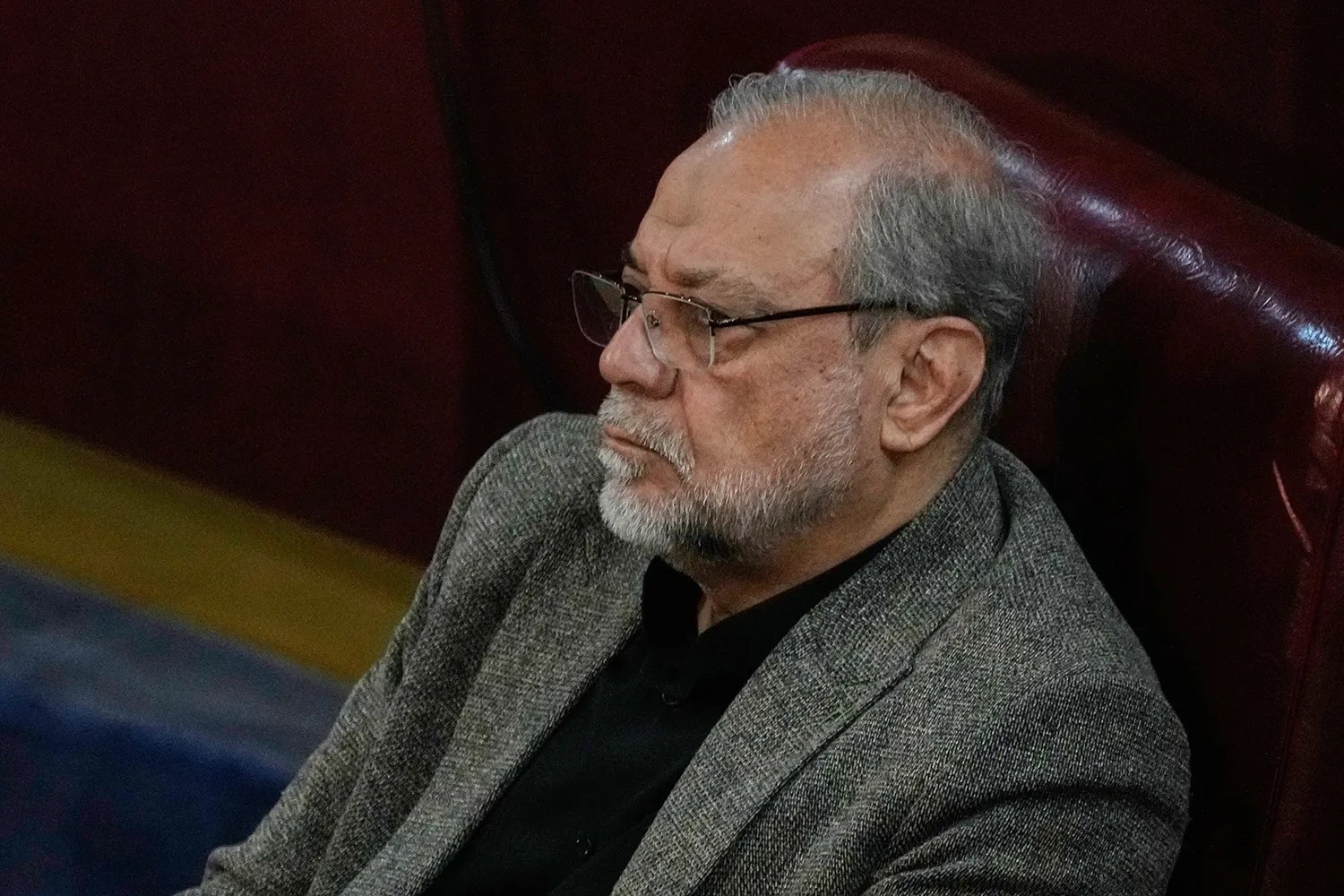
What we are witnessing today is not the emergence of a secularized security state, but its culmination. And to understand how Iran arrived here, it is useful to begin not with ideology or geopolitics, but with the career of a newly ascendent Iranian leader, Mohammad Bagher Zolghadr.
The appointment of Zolghadr to replace Ali Larijani, the senior security advisor who was killed in the war in mid-March, is not just another bureaucratic reshuffle. It marks the quiet arrival of a type of figure who has long shaped the Islamic Republic from behind the scenes and who is only now more clearly stepping into view.
Zolghadr is not a politician in any conventional sense. He has never relied on elections, public appeal, or even sustained visibility. His career unfolded almost entirely within what might be called the regime’s “hard architecture”: the Islamic Revolutionary Guard Corps (IRGC), the intelligence system, and the dense networks that link them to the state.
He belongs to a generation formed before the state fully took shape. His early political home was Mansourun, a clandestine revolutionary network whose members would later populate the upper ranks of the IRGC. In this milieu, ideology, security, and organization were not separate spheres—they were one and the same.
The Iran-Iraq War hardened that formation. Zolghadr’s role in an IRGC unit called the Ramadan Headquarters placed him at the intersection of warfare, intelligence, and proxy operations. This was not simply battlefield experience. It was also training in a particular way of exercising power: indirect, networked, and embedded across borders and institutions.
After the war, he did not transition into politics. Instead, politics gradually came to resemble the world that he already inhabited. Over more than a decade at the top of the IRGC, including as deputy commander, Zolghadr accumulated influence not through public authority but through institutional depth. He became, in effect, a man of the system’s internal wiring.
Zolghadr’s trajectory only makes sense in the context of a broader shift, one that began in the late 1990s. The presidency of Mohammad Khatami briefly opened the political field. Reformists spoke of civil society, the rule of law, and political pluralism. For a moment, the Islamic Republic seemed capable of evolving.
That moment triggered a reaction. During the student protests of 1999, senior commanders of the Islamic Revolutionary Guard Corps issued a blunt warning to Khatami, signaling that the military would intervene if reform went too far. Among the signatories was Mohammad Bagher Ghalibaf, who would later move into high office.
This was not technically a coup, but it was far more consequential than one. The IRGC did not seize power; it defined its limits. From that point forward, the military was no longer just a pillar of the system. It was its ultimate referee.
At roughly the same time, another episode revealed a darker layer of the state. The serial killings of dissidents and intellectuals—later traced to elements within the Ministry of Intelligence—exposed the existence of a coercive apparatus operating beyond formal accountability. The official explanation of “rogue actors” convinced few. The message was clear: Violence in defense of the system did not require public authorization.
These two developments—one overt, one covert—marked a turning point. They showed that beneath the visible institutions of Iran lay a parallel logic of power, one that was less concerned with representation than with control.
That logic became impossible to ignore in 2009. When millions of Iranians took to the streets to contest a disputed presidential election, the response came not through political negotiation but through force. The Islamic Revolutionary Guard Corps and the Basij militia moved decisively to crush the Green Movement, while the judiciary followed with mass arrests and harsh sentences.
The significance of 2009 was not simply the scale of repression. It was also the clarity that it provided. The system’s center of gravity had shifted. Institutions that once operated in the background had moved to the foreground. Elections would continue, but they would unfold within boundaries enforced by actors willing—and able—to override them.
From that point on, the trend was unmistakable. What had once been hidden was now visible. What had been exceptional became routine. The security state was no longer an emergency mechanism. It was becoming the default mode of governance.
The careers of key figures illustrate what this shift has meant in practice. Larijani represented an older model of power: part ideologue, part technocrat, part mediator. He could navigate between institutions and speak to multiple audiences, including those outside Iran.
Ghalibaf represents a transitional figure. A former IRGC commander, he moved into civilian roles—police chief, mayor of Tehran, speaker of parliament—combining security credentials with administrative experience. His career reflects the militarization of politics, but in a hybrid, technocratic form.
Zolghadr represents something different. He is not a bridge between worlds, but a product of one. He does not mediate between the political and the military. He embodies their fusion. And that is the deeper meaning of his rise. It is not simply that security officials have entered politics. It is that the need for political mediation itself is receding.
Today, the security establishment is no longer content to set boundaries, but, rather, governs directly. The Islamic Revolutionary Guard Corps and its affiliated networks are embedded across the state: shaping foreign policy, controlling key economic sectors, and influencing political outcomes. Figures such as Ahmad Vahidi, currently the commander of the IRGC, exemplify the convergence of operational and administrative authority. Decision-making increasingly occurs within networks that blur the distinction between military and civilian roles.
At the same time, the clerical establishment—the original source of the regime’s legitimacy—has become increasingly peripheral. Its language remains. Its institutions endure. But its role in shaping outcomes has diminished. To be sure, Iran is not abandoning its ideological identity. But it is reorganizing it around a different center of gravity. Seen in this light, the current moment looks less like a rupture than the end point of a long process.
Modern Iranian history has repeatedly produced moments in which the search for order overrides other forms of legitimacy. From monarch Reza Shah to Supreme Leader Ayatollah Ruhollah Khomeini, political authority has often coalesced around figures capable of imposing coherence on a fragmented system.
The IRGC’s ascent follows this pattern. What is new is not the turn toward disciplined power, but the extent to which it now defines the entire system. External pressure has accelerated these trends, but it did not create them. The foundations of today’s security state were laid decades ago—in war, in the suppression of reform, and in the gradual expansion of institutions that were never fully accountable to the political process.
For policymakers, the implications are significant. First, increasing pressure on Iran is unlikely to produce political moderation. If anything, it reinforces the position of those institutions most invested in resistance and control.
Second, hopes for change through electoral politics should be treated with caution. Elections remain, but they operate within a system whose ultimate arbiters lie elsewhere. Third, Iran’s external behavior is likely to reflect the priorities of a system that sees the world through a security lens: deterrence, resilience, and survival.
None of this means that the system is static. Internal tensions remain. But the direction of travel is clear. Iran is not becoming a military regime in the classical sense. But it is becoming something close: a state in which power rests less on clerical authority or political negotiation than on the organized force of a security establishment that has moved from the shadows to the center and is now firmly entrenched there.
The Islamic Republic still speaks in the language of clerical rule. But it is increasingly governed by those who no longer need it.



